Vance’s 2028 stock drops: Ranking top 5 presidential GOP contenders after midterms
Historic Republican losses on Tuesday have blurred the picture of the party’s presidential field about 15 months before the GOP primaries begin. Vice President Vance’s path to succeeding President Trump has become rockier, while figures including outgoing Florida Gov. Ron DeSantis (R) and Sen. Ted Cruz (R-Texas), both former presidential candidates, are quickly carving out…
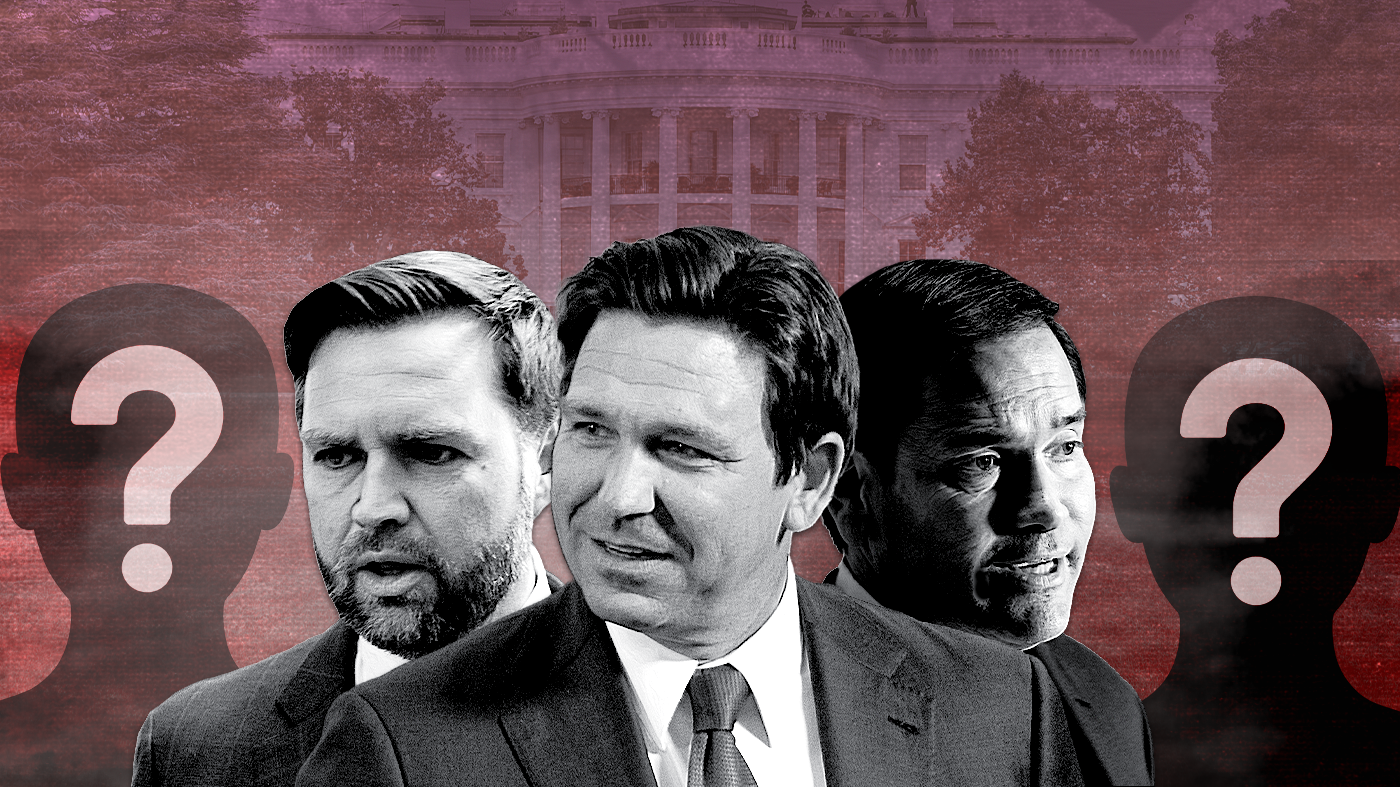
Historic Republican losses on Tuesday have blurred the picture of the party’s presidential field about 15 months before the GOP primaries begin.
Vice President Vance’s path to succeeding President Trump has become rockier, while figures including outgoing Florida Gov. Ron DeSantis (R) and Sen. Ted Cruz (R-Texas), both former presidential candidates, are quickly carving out a postmidterm path of their own.
And there’s no shortage of high-profile Republicans who could jump in as the party searches for a new torchbearer. Here’s the top five contenders — for now:
Vance, 42, still has the inside track to the Republican nomination, but his intimate role in the White House midterm campaign looks like a liability.
The vice president now faces the daunting challenge of being a part of an increasingly unpopular administration, while trying to convince voters he represents some kind of change.
“It’s the MAGA base that’s still the decider of the presidential nominees, and Vance is still probably the best embodiment of the MAGA base, but you know he also has to own every decision that is made the past two years and the next year,” Arizona-based GOP strategist Barrett Marson said.
Vance has proven an adept, if adaptable, political messenger. He was a sharp critic of Trump before running for Senate in Ohio and then joining his 2024 ticket. And after the midterms, Vance quickly pinned the blame on the war Trump started more than eight months ago.
“The reason we lost is the war. The president himself said so last night,” Vance said in a lengthy social media post. “If you’d like to argue it was worth it, that losing the Senate for the next 6 years was worth it, then do so.”
Trump said he thought Vance’s statement was “good” but continued to dodge questions about whether he would endorse Vance for 2028.
“Maybe you have a lot of people running. Maybe nobody’s going to run. Maybe he won’t run. I don’t know who’s going to run,” Trump told reporters Wednesday.
Vance is close to Trump’s oldest son, Donald Trump Jr. The vice president himself has said he is undecided about running and hasn’t spoken to President Trump about a 2028 campaign.
One national political consultant involved in competitive races suggested Vance may be thinking about whether to run at all, given the postmidterm environment.
“I think Vance is no fool,” the consultant said. “He’s probably asking, ‘Am I going to commit the next two years of this when the odds of success are pretty slim?’”
Secretary of State Marco Rubio is seen as the most likely presidential candidate within Trump’s Cabinet. The State Department denied reports this week that he’s considering stepping down to prepare for a presidential run.
Rubio, 55, won his Florida Senate seat in 2010; the seat will be occupied by Sen. Ashley Moody (R) for the next six years. Rubio ran against Trump for the 2016 GOP presidential nomination.
While Vance remains the favorite in betting markets and Republican straw polls, Rubio fares better in hypothetical 2028 presidential match-ups against Democratic candidates, according to a survey taken by Emerson College and The Hill back in August.
Like Vance, Rubio was critical of Trump before becoming a close ally. Rubio, who is also the national security adviser, is seen as a driving force in Trump’s operations in Venezuela: removing Nicolás Maduro and transforming relations with his former government.
As a son of Cuban immigrants, he has long said he wants to bring regime change to Cuba as well.
Rubio hasn’t said anything publicly about Tuesday’s midterm election results. He mostly kept his distance from Trump’s midterm campaign, though in the homestretch he was pulled onto the stage and spoke for 11 seconds.
Rep. Marlin Stutzman (R-Ind.), who won his reelection Tuesday, told Fox News Digital that he was throwing his support behind Rubio following the GOP’s midterm performance.
Tim Chapman, president of former Vice President Mike Pence’s Advancing American Freedom, said “one thing Rubio has going for him is that he does have just instinctively coalitional capabilities.”
The consultant said, “I agree that Rubio is a much stronger candidate than Vance. But I think Rubio is again asking, ‘What’s the nomination worth?’”
DeSantis has been very public since the midterms, despite not being on the ticket himself.
The term-limited governor has placed blame squarely on Trump for Tuesday’s disaster. He called the midterm outcome an “extinction-level event” for Republicans. He said the results are “no question … a rebuke of the president and the Congress by Democrats, independents and some Republicans that crossed over.”
DeSantis ran against Trump for the GOP presidential nomination in 2024 and was an early favorite before Trump shored up party support. The 48-year-old looks like a rare GOP winner from the midterms, with Florida maintaining its red status as other states like Texas and Kansas flipped blue.
Marson said DeSantis has a potentially convincing case.
“Ron DeSantis is trying to repeat his moment from four years ago, and this time it actually could stick, because he gets to point to a lot of great things in Florida, including one of the only red states that actually remained red,” he said.
Chapman predicted DeSantis will “become much more critical of some of the excesses of the second Trump term.”
Cruz is the most likely senator to throw his hat in the ring, but he may not be the only one. Sen. Tom Cotton (R-Ark.) and Sen. Josh Hawley (R-Mo.) are seen as having bigger ambitions, though Hawley said recently he had “no intention” of running.
Cruz hasn’t ruled out another presidential run. He’s up for reelection to his Senate seat in 2030. Like Rubio, Cruz was a Trump rival in the 2016 presidential race before backing the president in the years since.
He said the midterm loss to Democrats was a “blue tsunami” and an “a– kicking.”
“Nowhere are the consequences of this election greater than Texas,” Cruz said on his podcast. “In the Lone Star State, we lost every single statewide election.”
Vance said last month it’s “really obvious” that Cruz is running for president. Cruz said in an August MS NOW interview that Vance does not automatically have the 2028 GOP nomination and that he wants to “certainly be part of the discussion.”
Speaking with Politico in September, he said the party needs to question whether it’s a “small-government, free-market conservative party” or a “big-government, nanny-state party.”
He also said he thinks there’s a divide over the party’s foreign policy, one centered on whether the GOP is an “isolationist party that wants to withdraw from the world” or one that believes “in American leadership in the world.”
Chapman said Cruz is “clearly making a play for the free market wing of the party.”
Former Virginia Gov. Glenn Youngkin, 59, is among a handful of current and former governors who might see a more moderate path to the presidency. Georgia’s outgoing governor, Brian Kemp, is another.
Youngkin served as Virginia’s governor from 2022 to 2026. He has sidestepped questions about his political future but praised Vance earlier this year, saying he would be a “great nominee.”
In August, Youngkin founded a national policy group that promotes school choice, called Empowering America’s Parents. He told Bloomberg in August that he’s been asked about running for president many times.
“I’ve answered it the same way every time, which is I don’t anticipate being on the debate stage,” he said.
During his time as governor, the multimillionaire investor put a focus on education reform, parental rights and economic growth. He also vetoed a bill in 2025 that would have imposed more regulations on data centers, an industry that proved very unpopular in state elections.
Marson described Youngkin as a “national darling” but noted that maybe “his time has passed.”
The consultant described Youngkin as “a Christian Mitt Romney.”
“The party may get back to that someday, but it’s certainly not ready for a Glenn Youngkin today,” the consultant said. “That’s fine for a governor in a purple-slash-blue state, but I just don’t see how that appeals to primary voters.”
Topics in this story
Gathered from external sources. Rights to this text belong to whoever originally published it.