Supreme Court allows Big Bend border wall plans in win for Trump
Texans in the Big Bend area say a border wall threatens their land, lives and livelihoods. The Trump administration has fast-tracked construction.
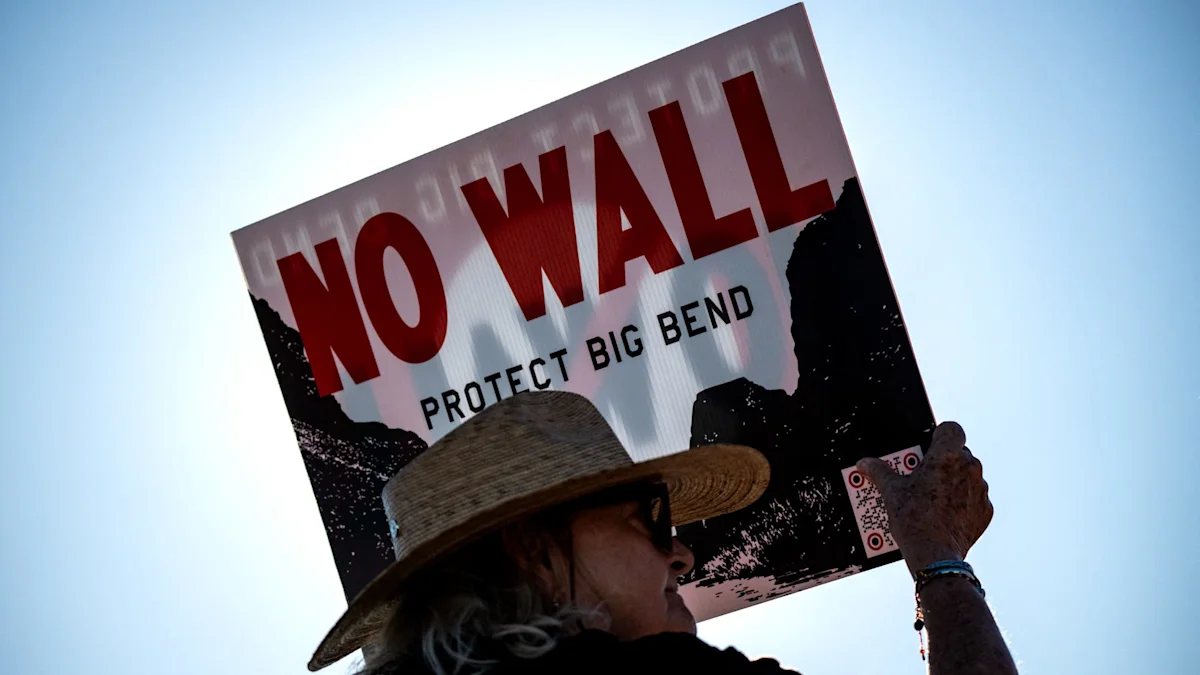
WASHINGTON – The Supreme Court said the Trump administration can move ahead for now on plans to build a border wall in a remote swath of West Texas that includes Big Bend National Park.
The court on Nov. 9 paused a judge's order that halted controversial construction of roads and barriers across the Big Bend region while a challenge brought by a riverboat guide, environmentalists and a group formed to preserve a church is being litigated.
Opponents say the construction will result in the permanent alteration of "one of the most remote and ecologically and culturally significant landscapes in the United States."
In an unsigned opinion, the court said that Congress has expressed a "clear preference for expeditious border construction," which outweighs "any aesthetic, recreational, and environmental harm."
Justice Ketanji Brown Jackson, one of the court's three liberals, was the only justice to publicly dissent.
Go inside Big Bend as border wall resistance lines the Rio Grande
President Donald Trump campaigned on tough immigration enforcement and border controls, and he has made expansion of the border wall a key campaign promise.
The administration has fast-tracked construction, waiving dozens of environmental regulations.
The administration argues that Congress gave the secretary of the Department of Homeland Security the ability to bypass legal requirements if they are slowing construction of border barriers.
"Congress was hardly shy about the major powers it granted the Secretary," the Justice Department told the Supreme Court in the administration's emergency appeal .
A federal judge in Texas ruled last month that the law limits waivers of regulations to "areas of high illegal entry."
The Big Bend region spans 517 miles – more than a quarter of the entire U.S.-Mexico border – but the rugged area has the lowest number of apprehensions of any Southwest border sector, according to U.S. District Judge Kathleen Cardone.
The Justice Department said Cardone lacked authority to intervene because the waivers can only be challenged if they violated the Constitution and the dispute is over how to interpret a statute.
Cardone said the dispute raises the larger constitutional question of whether it would be a violation of the separation of powers for Congress to have given the administration as much authority as it says it has.
But the Supreme Court said the administration was "exceedingly likely" to win its argument that there is no constitutional dispute.
The judge also said a temporary halt was needed while the legal battle continues because construction could result in the permanent loss of protected wilderness that benefits tourism, recreation, farming, ranching, spirituality, aesthetic sensibilities and education.
In August, the administration paused construction after local residents staged a protest.
While federal officials did not plan to build a wall through Big Bend National Park, public lands advocates were outraged when contractors began bulldozing access roads through the area in early to mid-August. Videos recorded by activists captured bulldozers and track hoes cutting through the desert soil and across cliffs.
Texans in the Big Bend area, including some Republicans, say a border wall in the region threatens their land, lives and livelihoods. Any physical barrier could jeopardize the landscape that draws more than half a million visitors annually and drives the local economy.
Topics in this story
Gathered from external sources. Rights to this text belong to whoever originally published it.