Supreme Court appears wary of former inmate’s quest for damages over prison medical care
The Supreme Court on Monday appeared unlikely to allow a Hawaii man’s damages claim to go forward against a prison nurse for allegedly ignoring his medical needs, but some justices signaled reluctance to do away entirely with a decades-old precedent that lets federal officials be held individually liable for violating constitutional rights. Early into oral…
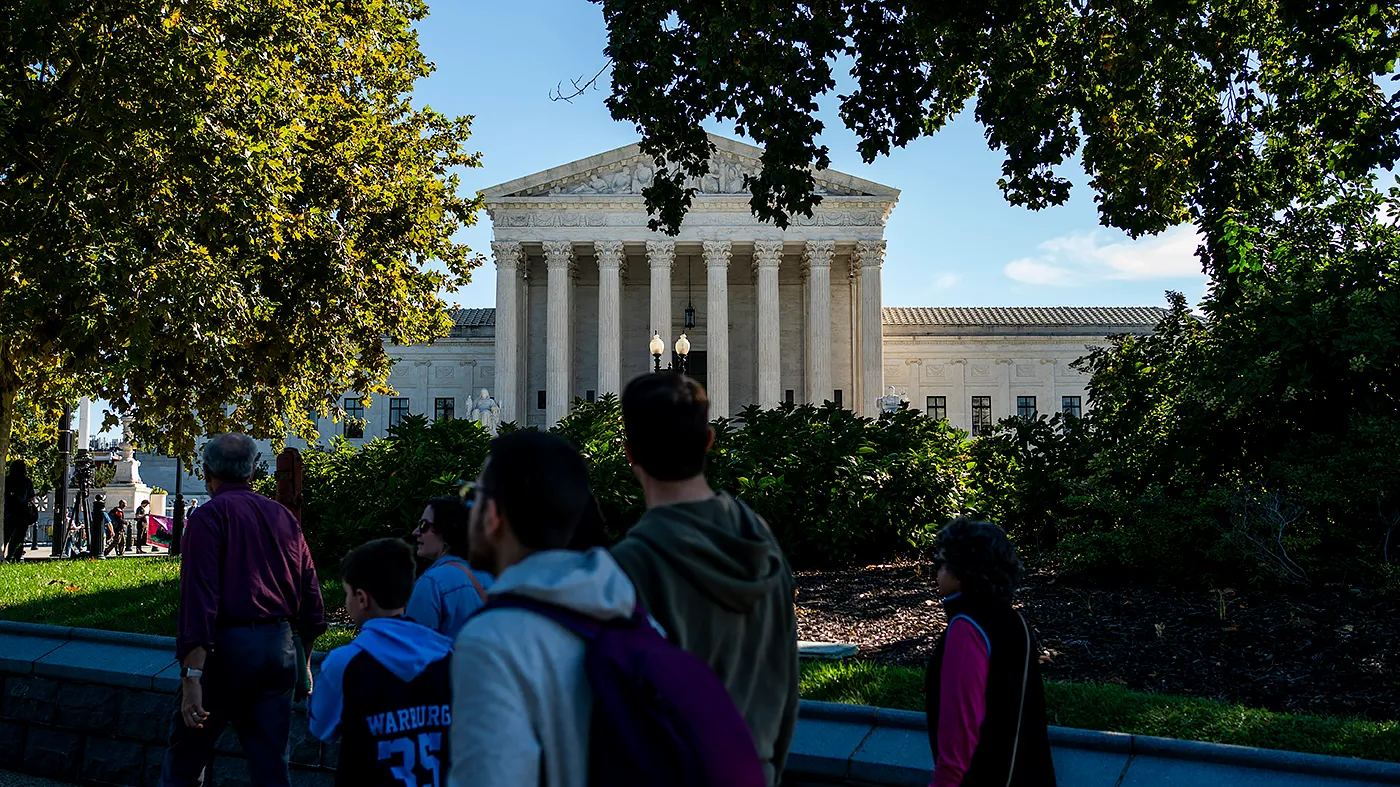
The Supreme Court on Monday appeared unlikely to allow a Hawaii man’s damages claim to go forward against a prison nurse for allegedly ignoring his medical needs, but some justices signaled reluctance to do away entirely with a decades-old precedent that lets federal officials be held individually liable for violating constitutional rights.
Early into oral arguments, Chief Justice John Roberts appeared open to a narrower ruling sought by the Trump administration that wouldn’t completely eliminate such lawsuits, known as Bivens claims .
“The Solicitor General expressly does not ask us to overrule Bivens, and of course, they have broad experience in this context,” Roberts said, questioning why the court shouldn’t defer to the government’s “cautious, incremental” approach.
The case involves Kekai Watanabe, a former federal prisoner who claims he was denied a hospital visit after being seriously injured during a July 2021 prison fight between rival gang members at a federal detention center in Honolulu.
Wantanabe sued the nurse, Francis Nielsen, for allegedly dismissing his complaints of back pain — later determined to have been caused by a fractured tail bone — and sought damages. The suit was initially dismissed, but the 9th U.S. Circuit Court of Appeals later revived it.
It is the latest opportunity for the court to examine its 1971 decision in Bivens v. Six Unknown Named Agents of Federal Bureau of Narcotics, which allows federal officials to be sued for constitutional violations.
The Supreme Court has repeatedly limited when Bivens actions can be brought, having extended it in the prison context only once. In the 1980 case, Carlson v. Green, the court held that an Eighth Amendment claim could proceed after an inmate died in prison due to an asthma attack.
Watanabe’s lawyers argued that the circumstances in this case were the same, and allowing such claims was necessary to deter individual officers from engaging in unconstitutional conduct.
Lawyers for Nielsen, meanwhile, argued there were meaningful differences between the two, and the dispute could be resolved through other remedies prescribed by Congress, such as the Federal Torts Claim Act.
“The Court may conclude that it’s time to end the Bivens experiment and hand accountability for providing damages remedies back to Congress, where it belongs,” said Lucas Walker, who was arguing on behalf of Nielsen. He further contended that restricting prisoner lawsuits without fully eliminating Bivens would create confusion in the lower courts.
Much of the questioning from the justices focused on Congress’s role.
“What do we do with the fact, in thinking about your overrule Carlson, overrule Bivens argument de facto doing so, that Congress has had 55 years since Bivens and 46 years since Carlson to do so and has not done so?” Justice Brett Kavanaugh asked.
A decision in the case is expected by early next summer.
Topics in this story
Gathered from external sources. Rights to this text belong to whoever originally published it.