Are the Russians coming?
Winter is soon coming, and so too is a growing dread across Europe. It is dawning on European capitals that Russian President Vladimir Putin’s only conventional path to victory in Ukraine may lie through the Baltic States. Kyiv’s fortress Donbas in eastern Ukraine remains largely impenetrable. Despite Russian claims in advance of last week’s Duma elections that…
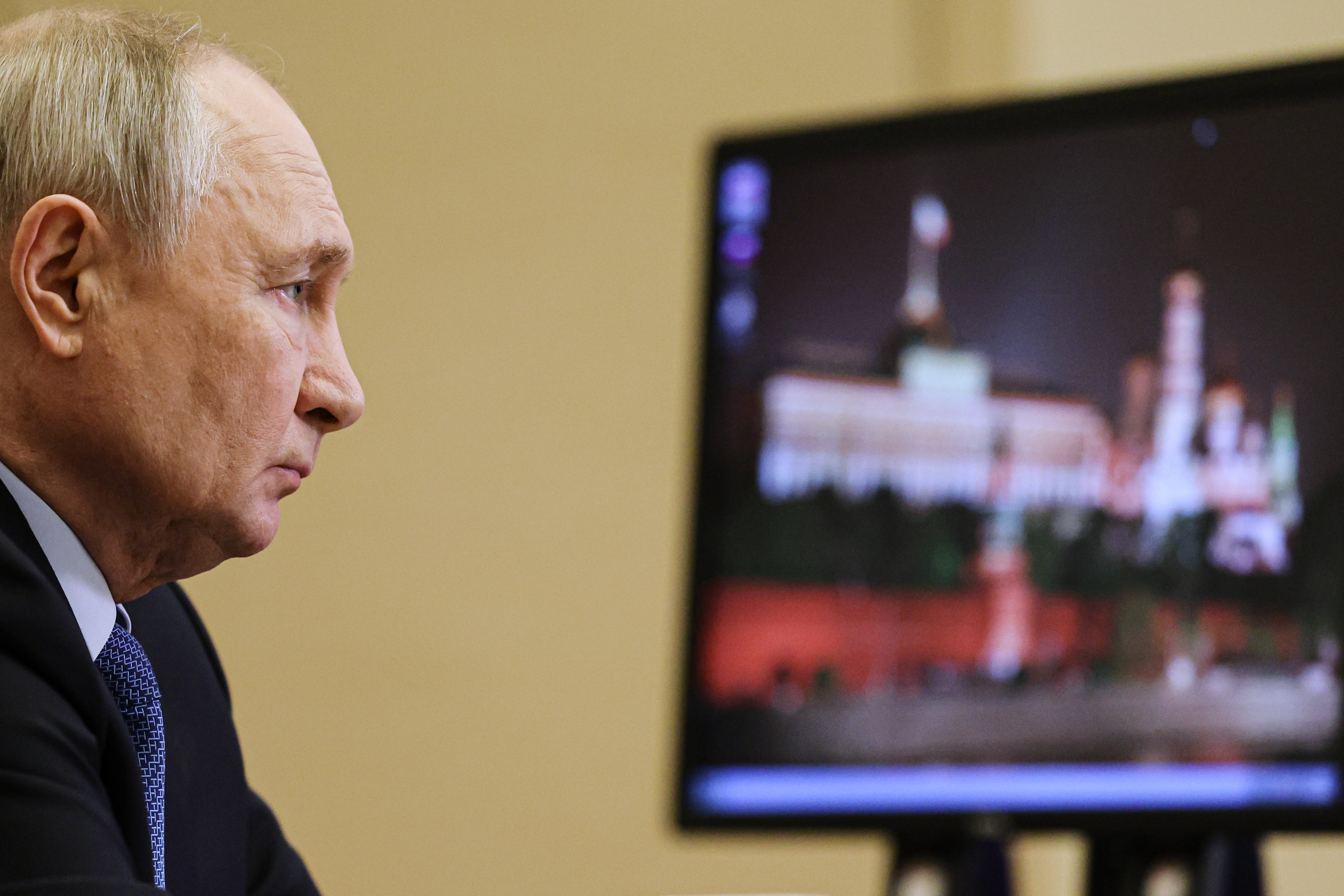
Winter is soon coming, and so too is a growing dread across Europe. It is dawning on European capitals that Russian President Vladimir Putin’s only conventional path to victory in Ukraine may lie through the Baltic States.
Kyiv’s fortress Donbas in eastern Ukraine remains largely impenetrable. Despite Russian claims in advance of last week’s Duma elections that it had seized 5,300 square kilometers of Ukrainian territory, the reality is far more humiliating. According to the Institute for the Study of War, Putin’s army has only managed to capture only 147.7 square kilometers , and at an appalingly high cost — 314,530 Russian casualties this year to date, according to the latest Ukrainian estimates .
That backs Putin into a corner, which should alarm everyone.
Moscow needs another way to get to Kyiv — especially since Ukrainian President Volodymyr Zelensky – no matter how many times President Trump’s special envoys Steve Witkoff or Jared Kushner foolishly ask — is not going to give it to Putin without a fight. He would be committing national suicide, giving up a region that is essential to Ukraine’s defense.
But if not through the Donbas, then how can Putin win? So far, to hedge his bets in Ukraine, he has directed the Kremlin to wage an asymmetrical war against the European Union and NATO member states. Increasingly, that war has become kinetic as evinced by the armed drone placed next to a Ukrainian cargo jet at the Halle Airport in Leipzig, Germany.
Berlin accused Russia of responsibility. Putin, in turn, claimed Germany had fabricated the incident to blame Moscow.
Putin’s decision to respond directly was noteworthy. Reading between the lines, he wanted Berlin to see what Moscow is doing. In effect, despite his denial, Putin is signaling that he intends to increase Russian hybrid attacks against Europe.
Europe is finally sounding the alarm. Last Friday, French President Emmanuel Macron called a hastily arranged emergency meeting of France’s top political leaders. He urgently warned that “no one is safe” given Putin’s goal of finding new ways “to intimidate us and break our support for the Ukrainians.”
Europe has not been safe. As we have long argued, Putin has been at war with the West ever since he invaded Ukraine in February 2022. Ever since, on an increasing basis, Moscow has been conducting a grey-zone war in the open against Europe via sabotage , espionage , assassination , and election interference .
Thus far, Putin’s hybrid war in Europe has only produced small returns. Although it has failed to get Brussels or the major powers — including France, Germany, Poland and the United Kingdom — to back down, it has created growing political divisions within the NATO alliance and the European Union.
Using Russian gas and oil, Moscow succeeded in intimidating Slovakia and Hungary into effective geopolitical submission. Both countries repeatedly obstruct military and economic aid for Ukraine. To date, they have thwarted Ukraine’s accession talks to join NATO as well as the European Union.
Yet at best, those Russian successes have been speedbumps. Putin needs a bigger return from both countries if he is to succeed in cutting off European support for Ukraine. One way for the Kremlin to achieve this would be to attack the Baltics, militarily dividing NATO in the process.
Slovakian Prime Minister Robert Fico recklessly played into this scenario when he told medical students, “I do not want Slovakia to be part of any military conflict because of some Article five.” Article five is the collective NATO defense clause originally designed to protect Europe from a Russian invasion. In denying his intention to respond appropriately to a Russian attack on his NATO allies, Fico planted a large Russian target on Lithuania, Estonia, or Latvia’s back, and potentially Poland’s as well.
Moscow does not have to conduct a full-scale ground invasion of the Baltic States to try to change the equation. Simply launching a large drone and ballistic missile attack, precipitated by a Russian false-flag event, would suffice.
Putin would be counting on NATO being paralyzed and failing to respond. If so, Brussels would rethink its support for Ukraine.
Europe is clearly worried about this very scenario becoming a reality. Polish Prime Minister Donald Tusk warned about it. So too did Michal Koudelka , the head of the Czech Republic’s security service.
Are the Russians coming to Western Europe? Maybe — and maybe sooner than Finnish President Alexander Stubb believes. He warned against overreacting to Russia’s growing kinetic attacks against Europe. In our view, he is getting it wrong.
Europe, to deter Putin in the Baltic States, must go on the offensive. Implementing an active defense would be one way for Europe to signal to Putin that it has no intention of backing down in its support of Ukraine.
NATO — or a coalition of the willing — could declare an active defense zone over Western Ukraine and make it clear they will shoot down any Russian drone or ballistic missile before they can approach European territory.
Putin is expanding his kinetic war to Europe. To counter it and forestall any Russian attack on the Baltic States, Europe must expand its defense of Ukraine.
Mark Toth writes on national security and foreign policy. Col. (Ret.) Jonathan Sweet served 30 years as a military intelligence officer and led the U.S. European Command Intelligence Engagement Division from 2012 to 2014. They are the cofounders of INTREP360 and the INTREP360 Intelligence Report on Substack.
Topics in this story
Gathered from external sources. Rights to this text belong to whoever originally published it.