Maine senators push for Senate to take up House whale bill championed by lobster industry
Maine’s two senators are urging the Senate Commerce Committee to take up and advance House-passed legislation that would extend a pause in rulemaking on protections for the right whales in an effort to safeguard the state’s lobster industry. The House passed the Northeast Lobstermen Protection Act earlier this month after two Democrats, including sponsor Rep.…
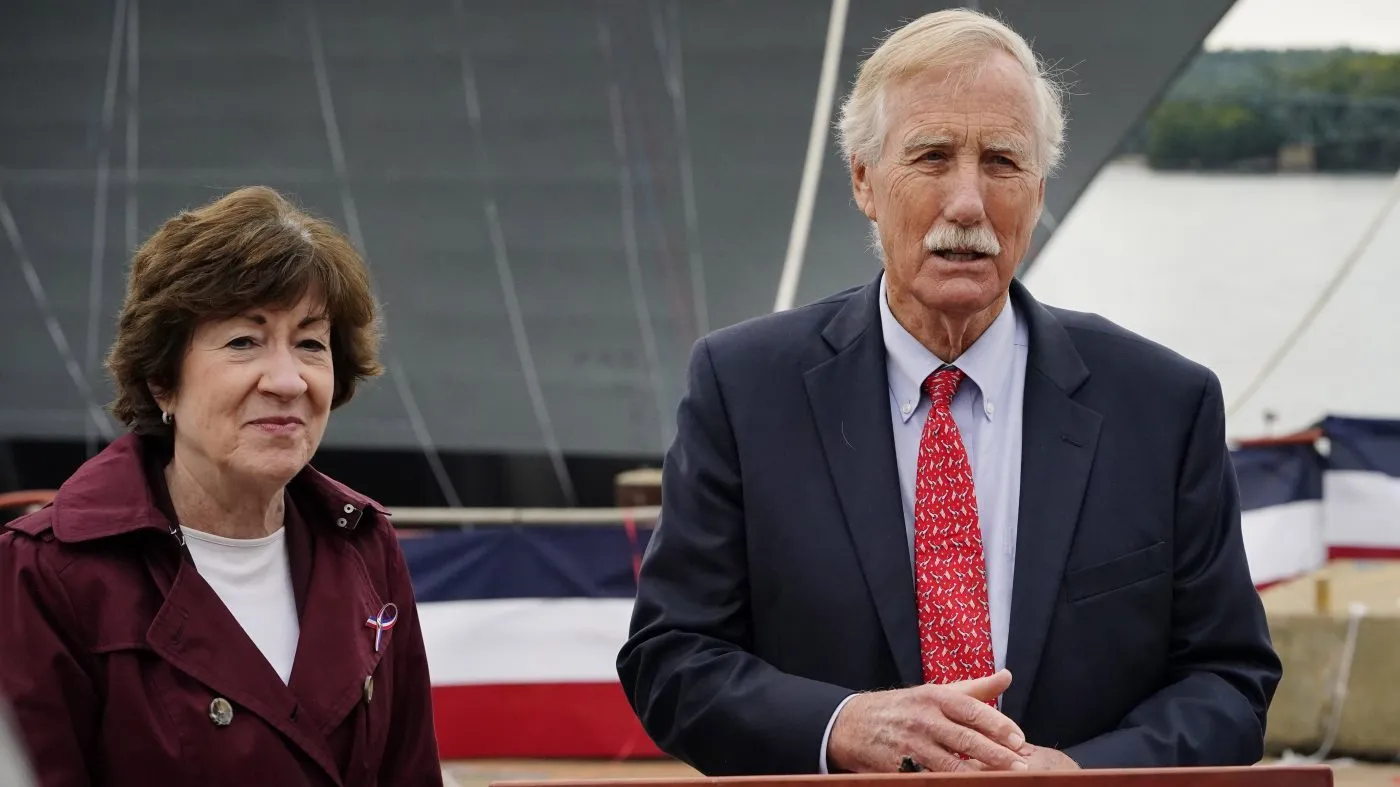
Maine’s two senators are urging the Senate Commerce Committee to take up and advance House-passed legislation that would extend a pause in rulemaking on protections for the right whales in an effort to safeguard the state’s lobster industry .
The House passed the Northeast Lobstermen Protection Act earlier this month after two Democrats, including sponsor Rep. Jared Golden (D-Maine), crossed party lines to back the procedural vote to allow the bill and other GOP priorities for a vote on the floor.
Sens. Susan Collins (R) and Angus King (I) said the regulations would have “effectively shut down the fishery,” in throwing their support behind the House bill.
“This pause is necessary to protect Maine’s lobster fishery, which is essential to the state’s economy and coastal communities. According to the Maine Lobstermen’s Association, the lobster industry supports an estimated $2 billion in annual economic activity and more than 17,500 jobs,” they wrote in a letter to the panel’s leadership.
In 2022, the pending whale regulations were punted to 2028 along with funding to further study whale migration patterns and the extent to which they overlay with lobstering territory.
King at the time called that legislation “a Christmas miracle for the lobster industry” and noted that a right whale had never become entangled in Maine lobster gear.
The bill Golden sponsored alongside Rep. Mike Lawler (R-N.Y.) would delay that again until 2035.
Collins previously called for passing the House bill to protect the lobster industry from “undue harm.”
Maine’s lobster industry is hopeful that more time to collect data will show improvements in the current population of less than 400 right whales as well as shifting migration patterns that may lie largely outside of the lobster fishing zone.
The whales have been killed in both ship strikes and entanglements in fishing gear. However, deaths have dipped significantly in the last two years , and the lobster industry notes that many of the entanglements have not been in lobster gear and occurred far beyond Maine, as the whales migrate up and down the Atlantic coast.
“In 2022, the Maine lobster fishery faced punitive regulations based on flawed science that would have effectively shut down the fishery,” the two senators wrote, noting the ongoing research.
“This work is ongoing, and extending the pause would allow it to continue and provide scientists and regulators with better data to inform future management decisions,” the duo continued. “It is critical that any future regulatory actions appropriately balance protecting North Atlantic right whales with the economic and practical realities facing Maine’s lobster industry.”
Alexa Dayton, executive director of the Maine Center for Coastal Fisheries, previously told The Hill that extending the deadline for rulemaking on the whales could prove to be a “double edged sword.”
“We can track the whales now. We have a much better understanding of their patterns and where they are, and that’s informing the spatial question of where is the risk the highest,” she said.
The state and federal government have made significant investments in tracking the whales — but the federal funding provided to do that research is set to lapse in 2033, two years before the deadline that would be adopted under the new bill. It would take another appropriations rider to continue the study in parallel with any extended deadline.
Collins, who is up for reelection this year, is chair of the Senate Appropriations Committee.
“If we don’t kind of jump on the bandwagon and go with the process and kick it out four or five years, we could be sitting here five years from now with no data, more whale deaths, and a much different regime and administration that will look at the rulemaking more stringently,” Dayton said.
“It could be a worse outcome for the lobster industry four or five years from now than if we just take it on today,” she added.
It’s been a tough year for the lobstering industry, which was briefly the target of Canadian tariffs during trade negotiations and has also seen the price of lobster fall to a 50-year low.
Lobstering issues don’t fall cleanly along party lines and in the House, 10 Democrats broke ranks to back Golden’s bill.
The Senate has a more comfortable GOP margin than the House and may be able to back the bill without Democratic support. However, in the House, the bill did lose two Republican votes.
“I think there’s a balance of what needs to happen. I support lobstering. I support seafood. I come from a seafood town. I’m right on the beach,” said Rep. Aaron Bean (R-Fla.), whose district includes coastline outside of Jacksonville, Fla.
“So, I just I didn’t think the bill striked the balance of where it needed to be between protecting livelihood and protecting the few whales there are,” he continued. “There’s only a handful of whales. We need to do everything we can to protect them.”
Topics in this story
Gathered from external sources. Rights to this text belong to whoever originally published it.