Rubio defends Trump’s banning media organizations, arguing there aren’t ‘soldiers kicking down the doors’ of the outlets
Secretary of State Marco Rubio defended the Trump administration’s decision to bar three media organizations from the White House, saying in an interview on NBC News’ “TODAY” that President Donald Trump was not closing outlets or arresting reporters.
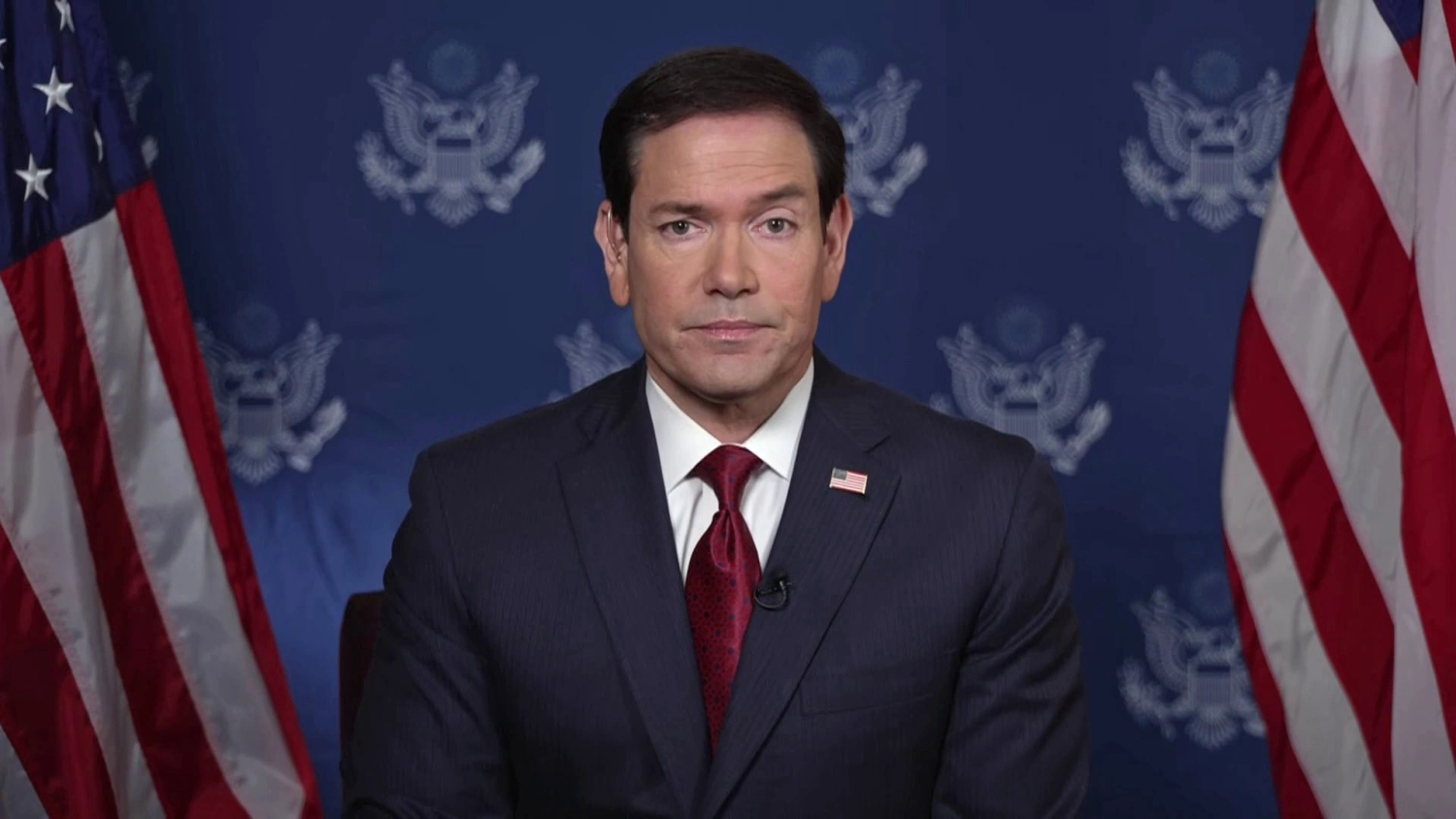
Secretary of State Marco Rubio defended the Trump administration’s decision to bar three media organizations from the White House, saying in an interview on NBC News’ “TODAY” that President Donald Trump was not closing outlets or arresting reporters. “We’re not closing CNN,” Rubio said of the ban on CNN, MS NOW and Politico. “There aren’t a bunch of police officers or soldiers kicking down the doors of MSNBC or MS NOW, whatever it’s called, and arresting people and unplugging it from the grid. They’re just not allowed to work from the workspace at the White House.” In the Tuesday interview, Rubio also addressed the war with Iran, including its impact on oil and gas prices, arguing that if Tehran were allowed to develop a nuclear weapon, it would use the threat to constrain oil shipments and drive prices up even further. He also discussed concerns about the rapid advancement of artificial intelligence and the need for a developmental framework to maintain the benefits of the technology while lowering the risks. Trump’s ban on the media outlets marked the president’s most extreme instance so far of blocking access for news organizations whose coverage he dislikes. The three banned outlets sued the Trump administration Monday, and major television networks, including NBC News, refused to provide TV pool coverage of the president at least through Monday. Pool coverage allows media members and subscribers to share video, editorial information and costs for newsworthy events where space is limited. Individual TV networks, including NBC News, continue to provide coverage of White House events that are open to the press, outside of the pool. Outside of events, NBC News reporters continue to report on the administration’s activities. Television pool coverage of other administration officials, including Rubio, has continued. On Monday, CNN provided TV pool coverage of him. When asked by “TODAY” host Craig Melvin whether he planned to make changes to his pool coverage, Rubio said, “We haven’t discussed it.” Rubio told “TODAY” that the three banned outlets would be able to continue covering the president from outside the White House, adding that Trump believed that the outlets have shown bias against his administration and therefore did not have a right to remain in the White House building. “What he is arguing is, why should I have these people, what right do they have to be embedded in this building?” Rubio said. “They can cover the White House. They just can’t have a desk there.” In their lawsuit, the outlets argued that the ban violated their due process and First Amendment rights, claiming the ban “retaliates against protected newsgathering and speech” and bars the outlets “from a nonpublic forum for unlawful reasons.” In his Truth Social announcement of the ban last week, Trump said the move was “as a result of their constant ‘reporting’ FAKE NEWS!” In a separate post Monday, Trump again criticized media as “fake news,” calling it “a threat to our National Security” that “must be stopped.” Trump is set to address world leaders Tuesday at the United Nations General Assembly, followed by a high-stakes summit in Washington, D.C., with Chinese President Xi Jinping later this week. Iran war impact Asked whether Trump plans to meet with Iranian President Masoud Pezeshkian, who will attend the assembly, Rubio said Trump “has said that he’s open a meeting with anybody.” Trump said in an interview with Fox News on Sunday that he would “probably” be open to meeting the Iranian president. Iran’s president is an important official of the country, but not the top official. The top Iranian official, Supreme Leader Mojtaba Khamenei, has not been seen in public since taking over the position in March after his father, Supreme Leader Ayatollah Ali Khamenei, was killed in airstrikes at the start of the war. The war with Iran has sent economic effects rippling around the world, and the cost of oil and gas has spiked since the conflict began. An NBC News poll found that 62% of registered voters think the war has not been worth the costs. Pressed on rising prices and Americans’ sentiment on the war, Rubio said that “anyone who’s concerned about prices itself is not wrong.” “Obviously, if the war is being blamed for that, then of course you’re going to hear and you’re going to see responses like that,” he said, referring to the polling. Rubio argued, however, that prices would be far higher if Iran had a nuclear weapon and could “choke off the world’s energy supply any time they wanted.” Concerns about AI Later this week, artificial intelligence is expected to be a major topic at the Trump-Xi summit. Concerns about the future of AI have risen in recent weeks after industry insiders warned of potentially catastrophic impacts of the technology. Trump has argued for maintaining the accelerated development of AI in the U.S., saying it is necessary to ensure that America keeps its lead on the technology over global rivals like China. At one point, he posted on social media that the only guardrail needed for AI is “is a STRONG AND SMART (High IQ!) PRESIDENT, and the U.S.A. has that, in spades!” Rubio said in his interview Tuesday that the reality of AI is that the technology cannot be stopped. “Like every technological advance in human history, it’s impossible to stop it,” he said. “It will happen. The question is, how can we put guardrails and frameworks around it so that we can get the benefits of AI while mitigating the risks?” Rubio did not propose specific guardrails or frameworks, saying, “I don’t think anyone has an easy answer” for AI yet.
Topics in this story
Gathered from external sources. Rights to this text belong to whoever originally published it.