Pete Hegseth? Haley Stevens? Hakeem Jeffries faces slew of lame-duck challenges
House Minority Leader Hakeem Jeffries (D-N.Y.) is flying high following a midterm landslide that gives Democrats a huge majority next year and makes him a shoo-in for the Speakership. But first, he’s facing some tough choices in the lame-duck session. Congress returns to Washington this week with several high-profile topics on the docket that are…
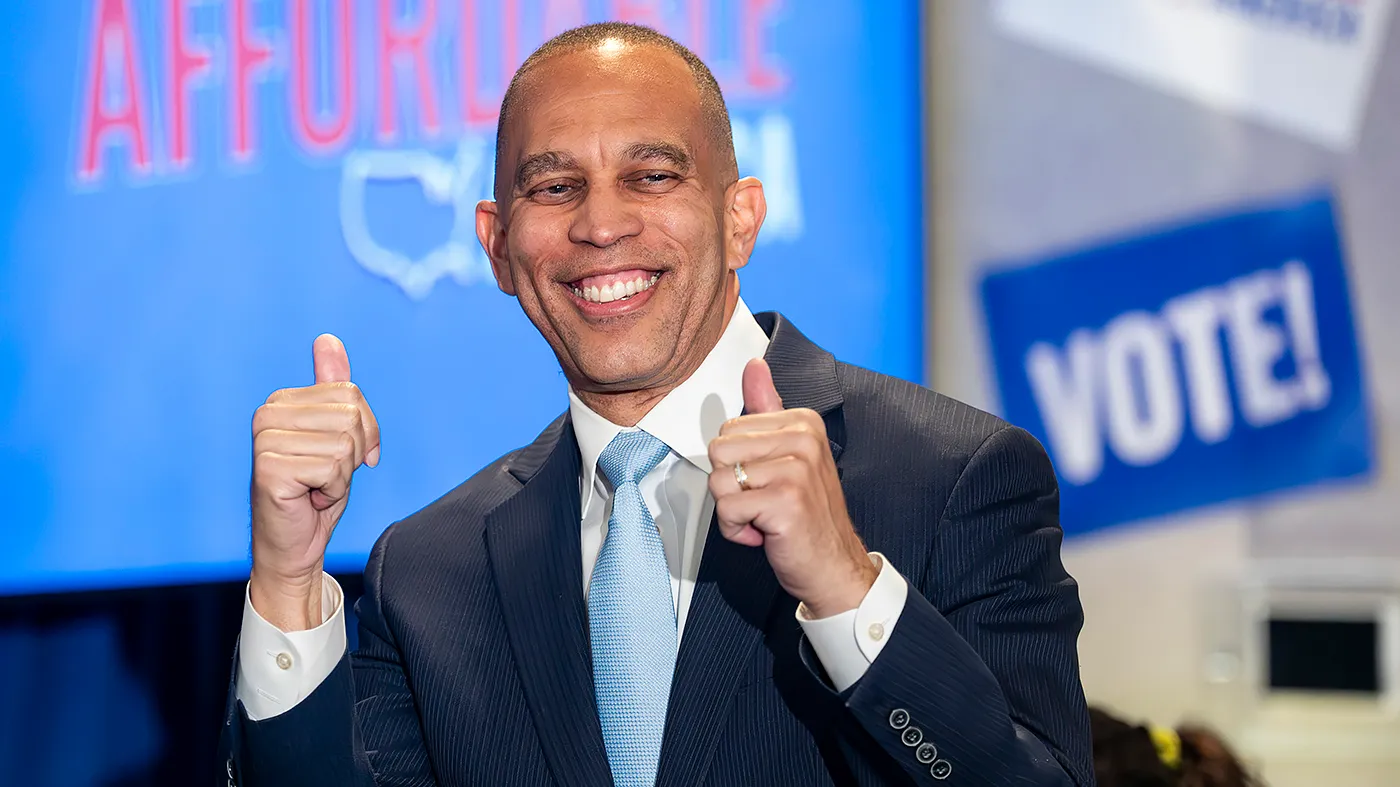
House Minority Leader Hakeem Jeffries (D-N.Y.) is flying high following a midterm landslide that gives Democrats a huge majority next year and makes him a shoo-in for the Speakership. But first, he’s facing some tough choices in the lame-duck session.
Congress returns to Washington this week with several high-profile topics on the docket that are likely to divide Democrats and pose challenges for Jeffries and his leadership team just as they’re gearing up to transition into the majority.
The list includes the impeachment of Defense Secretary Pete Hegseth, which Jeffries has declined to endorse, and permitting reforms governing energy projects that are splitting liberals and centrists within the ideologically diverse caucus.
Jeffries is also facing the tough question of how to approach Rep. Haley Stevens (D-Mich.), whose extraordinary, eleventh-hour move to endorse Republican Mike Rogers in Michigan’s Senate race has infuriated many Democrats and led to calls for a disciplinary response.
Jeffries has left open that possibility, saying Stevens made a “terrible decision.” But any such action would highlight Democratic divisions just as the party is working to demonstrate a unified front following its massive election victory. Jeffries punted any decisions to the lame-duck session.
In similar fashion, Democrats are still weighing whether a pair of centrist colleagues, Reps. Jared Golden (D-Maine) and Marie Gluesenkamp Perez (D-Wash.), should face repercussions after jumping the aisle to help Republicans advance their messaging agenda ahead of the midterms.
None of those debates rises to the level of the internal strife facing Republicans, whose election drubbing has sparked leadership fights, a rash of finger-pointing, and harsh new questions about the direction of the GOP in the twilight years of the Trump presidency.
Still, each one of those issues will, in its own unique way, pose an early test for Jeffries and his leadership team even as they celebrate their midterm rout.
The question of Hegseth’s fate will likely be the first to arrive. Rep. Thomas Massie (R-Ky.) moved to force a September vote on eight articles of impeachment against the Defense secretary, half of them related to his handling of the Iran war. Speaker Mike Johnson (R-La.) avoided that preelection vote by calling an early recess, but Massie is promising to revisit the issue as soon as lawmakers return this week.
Hegseth is despised by Democrats, and most appear ready to support Massie’s resolution. But at least some centrist Democrats are likely to oppose the effort. And Jeffries, who will have to work with the administration to get anything done legislatively in the next Congress, has refused to get behind it, saying only that Trump should fire the Pentagon chief.
Asked last week, after the elections, about the Democrats’ approach to Hegseth, Jeffries again leaned on the idea that Trump, not Congress, would deal with him.
“Is Pete Hegseth still around?” Jeffries asked reporters in Washington.
Permitting reform may pose a tougher test. The Senate is poised to vote Monday to advance a bipartisan bill designed to accelerate the approval process for energy and infrastructure projects. Liberals are adamantly opposed to the legislation, warning that it undermines landmark environmental protection laws and threatens the sovereignty of Native American communities.
Jeffries is siding with the liberals, saying he won’t support the package without changes addressing those concerns. But his position is getting pushback from more moderate Democrats, who see the reforms as a key piece of the party’s affordability agenda.
“Modernizing our permitting process is an important way to lower utility costs, create good-paying local jobs, and secure our energy future, and we need to get it done,” Rep. Sharice Davids (D-Kan.) said in a statement, which emphasized that she was breaking from her own leadership.
Rep. Nikki Budzinski (D-Ill.), who’s expected to lead the New Democrat Coalition in the next Congress, is also gunning to move permitting reform in the lame-duck session.
“This is a truly, I think, an example of a negotiated, bipartisan bill on a very complicated set of issues related to energy and energy generation,” she said last week by phone. “If it gets out of the Senate, I want to be a part of helping to bring it out of the House and get it to the president’s desk.”
The decision surrounding Stevens is much more personal. The Michigan Democrat stunned the country by endorsing Rogers in the final days of the campaign, infuriating Democrats of all stripes. And Curtis Hertel, the head of the Michigan Democratic Party, quickly moved to expel her.
“Congresswoman Stevens is not a current member of the Michigan Democratic Party, nor will she be in the future,” Hertel posted on social platform X.
Some Democrats in the Capitol would like to see a similar punishment. It’s unclear, however, if party leaders want to back such a drastic step, which would highlight internal divisions, especially on the thorny issue of Israel, in a moment that’s been otherwise triumphant. Stevens, who lost in the Senate primary, is not returning to Congress next year, and some Democrats will wonder if it’s worth picking that fight with just a few weeks left in her tenure.
Jeffries has punted the decision, saying he would weigh the options after talking to the broader caucus this week.
“Haley Stevens made a terrible decision, blindsided everyone and isolated herself from the House Democratic Caucus,” Jeffries said in a statement. “We will have a discussion about appropriate next steps upon our return.”
The controversy surrounding Golden and Gluesenkamp Perez has faded amid the focus on the elections. But just two months ago, Democrats were up in arms after the two moderates joined forces with Republicans to pass rules that allowed GOP leaders to advance legislation designed to hurt Democrats in the midterms. Some wanted to strip Gluesenkamp Perez of a plum committee seat. (Golden is retiring and faces less scrutiny.)
Jeffries responded to the outcry by calling a special meeting of the Democrats’ Committee on Caucus Rules to examine potential changes to the party’s internal guidelines heading into the next Congress. The panel left Washington for the long election recess without reaching any conclusions, but members of the committee said they would resume that work in the lame-duck session.
“The process will play out,” Rep. Steven Horsford (D-Nev.), a member of the committee, said at the time.
Topics in this story
Gathered from external sources. Rights to this text belong to whoever originally published it.