The Far Right Is Done With Trump — And Probably JD Vance
At an edgy conference in Texas, far-right influencers planned for an uncertain post-Trump future.
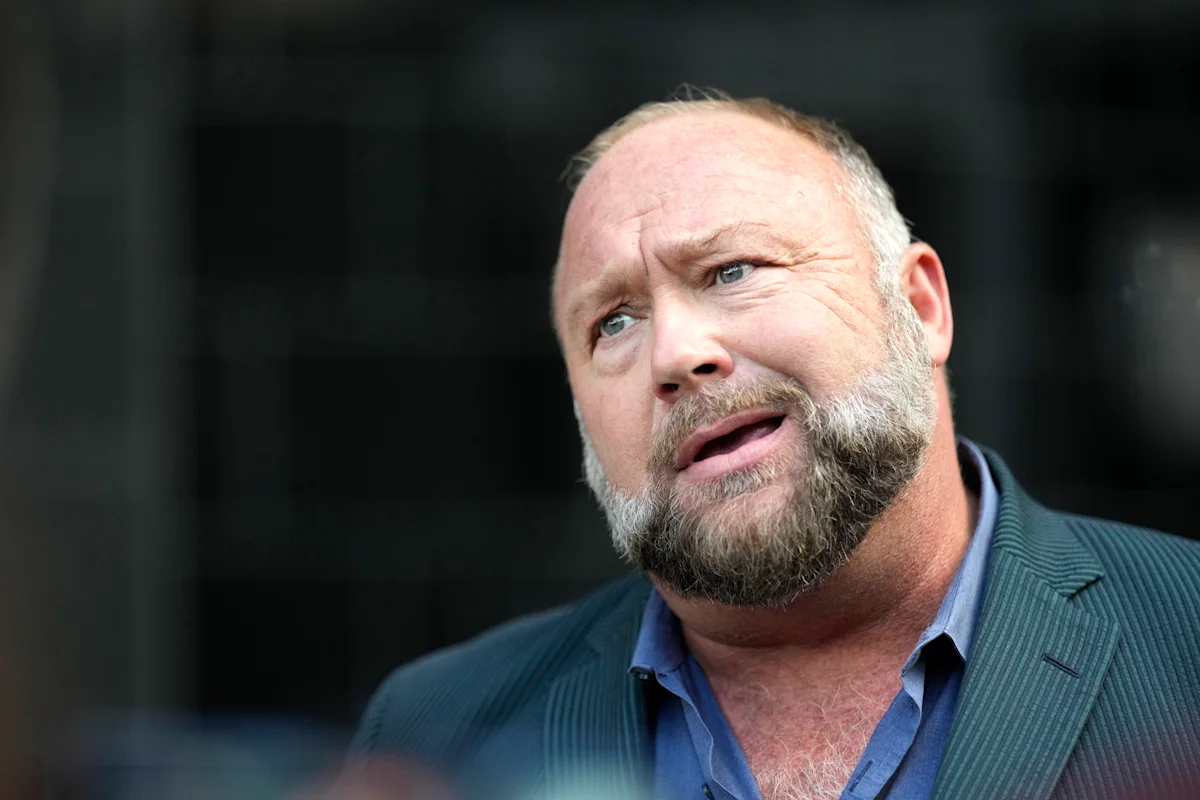
Some on the far-right had expected to lose. But losing in a brutal rout, as the GOP had during the midterms?
"I'll be honest, even I was surprised," said Joel Webbon, as he walked across a hanger-sized room inside a convention center just north of Dallas, Texas — a state that had just turned blue for the first time in over 30 years. Yet Webbon, once a firm supporter of President Donald Trump, sounded pleased at the Republicans' historic loss. "The plan-trusters and MAGA-tards are in shambles," he said. "The cope is strong."
We were talking on the second day of a conference that Webbon, a Christian nationalist preacher and podcaster, had organized under the name "Christ Is King: America After Trump." Webbon — and the assembly of mostly young, mostly men who had joined him in newly blue Texas — had also flipped on the Trump administration over the last two years. Like many voters, they'd soured on the president over the Iran War, or the handling of the Epstein files, or the U.S. support of the war in Gaza.
But for Webbon, the problem was also that MAGA hadn't gone far enough. He wanted even harsher deportation policies. He wanted a total repudiation of Israel. He wanted to curtail women's right to vote, to criminalize abortion and homosexuality, and to expel Jews and non-Christians from public office.
It's a political program that, to most Americans, might sound farcical. But to Webbon and others on the far-right, the searing rejection of Trump and his party at the polls has signaled an opening for a new and more extreme "America First" agenda. To them, the GOP's loss is a sign that a movement capable of harnessing the kind of populist energy that helped deliver Trump to the White House in 2024 could find victory again in the coming years. The lesson that this faction has taken from November, in other words, isn't that MAGA needs to moderate — it needs, instead, to go harder.
At the first night of the conference last week, Webbon, 40, opened the proceedings by proposing his vision for the "new Christian right." To seize the future, he argued in a speech that ran well over an hour, they had to commit to four key priorities: "ending Zionism," "ending the hatred of men," "embracing race realism" and agreeing to the fundamental principle that "Christ is King."
The event attracted a notorious set of online agitators, including conspiracist Alex Jones and Nick Fuentes, the 28-year-old white nationalist and antisemite, who made a rare public appearance as a guest speaker. Between speeches, attendees wandered under the harsh fluorescent lights of the hall, where a sparse number of vendors hawked white supremacist kitsch, including children's books with titles like "It's Okay To Be White" and conference merchandise screenprinted with quippy anti-Zionist slogans like "Diversity for Israel."
After the blue tidal wave, the movement has found itself at something of a crossroads. The far-right had cheered as young men helped Trump win in 2024, finding new purchase in the gender wars and anti-woke posturing. Its true believers had ushered increasingly extreme ideas into political offices in Washington , prompting conservative figures like Texas Sen. Ted Cruz to bemoan the GOP's "groyper problem" — a reference to Fuentes followers. The "golden age" Trump promised at his inauguration seemed inevitable.
But young conservatives had turned on the GOP in large numbers. Far-right leaders saw their own president as a failure. The future of "America After Trump" that they'd gathered to hash out seemed — for all the bluster and applause lines about how "racial egalitarianism is a lie" — uncertain.
For many of the young conservatives interested in Webbon's vision, the midterm defeat was, in a strange way, a tactical victory — underscoring that the GOP establishment should be careful not to ignore its fringes, especially as the 2028 Republican primary comes into view. Fuentes has claimed, loudly , that this victory is already here. In one recent stream, he effectively demanded that Republicans submit to his faction. "It's our party now. You need to cooperate with us. You don't have a choice," he said. "If you want to win, you have to listen to us."
That's not to say things were rosy in Dallas. A somber atmosphere hung over the weekend. In the days leading up to the conference, the right had endured additional shake-ups and shifts. Vice President JD Vance, in a post on X, attempted to separate himself from the Iran War , while Trump had announced the end of American aid to Israel. All this came in addition to the purging of Susie Wiles , the establishment's voice in the White House, whom Trump replaced with the immigration hardliner Stephen Miller as his next chief of staff.
But this pivot in strategy didn't seem to lift the moods on display at the conference. When I introduced myself to a table of smooth-faced 20-somethings sitting at a table in the exhibit hall, they refused to look up. "Fuck off out of here," said one with a waive of his hand. "We don't talk to journalists." Men huddled into tight circles whispering amongst themselves, some wearing blazers dotted with red Jerusalem Cross pins (a common badge of white Christian nationalists). The younger, single men held Monster energy drinks and tossed Zyn pouches into their mouths as they tapped out text messages. The older men, meanwhile, attached themselves to the few women in attendance, nearly all of whom pushed double strollers and shepherded herds of young children through the conference space.
Many of the conservatives in attendance that weekend had moved on from Trump — and already all but written off Vance. When I asked Webbon about Vance as a potential 2028 candidate, he spoke of the vice president as dead in the water. "His only option is to pick one half of Trump's 2024 coalition," Webbon explained. "He can shill for the president and pick up the MAGA-tards that remain, or he can say 'Trump blew it' and pick up disaffected former supporters like myself. Regardless, Trump's going to blast him from orbit."
Without a clear horse to back in the 2028 race, or any electoral prospects for that matter, the attendees turned to other matters during a panel on Saturday. It featured a cast of Webbon, Jones, former Florida gubernatorial candidate James Fishback and Buckley Carlson (Tucker Carlson's brother). In a dizzying freeform conversation, the audience listened as Fishback suggested that women who receive abortions should be jailed, while Carlson suggested that Tyler Robinson, the alleged killer of Charlie Kirk, was, in fact, innocent. Jones, talking over his panelists, jeered that Kirk's organization, Turning Point USA, had sold out to Israel. Webbon suggested that the Apostle's Creed, a Christian prayer, be appended to the Constitution. "Some people think Christian nationalism just means we're just sprinkling Jesus on things," Webbon told me later. "For me, it means a little bit more."
Despite the hardcore posturing , the movement's political future looks grim. To take one glaring reason, not even conservative voters appear to like many avowedly Christian nationalist candidates. There are, in Webbon's telling, few "guys" capable of leading this faction. (The inclusion of Jones in the program, who delivered a typically conspiratorial stream-of-consciousness sermon in which he claimed that "tyrants are harvesting body parts" and that "men are expendable," is just one measure of the movement's credibility issue.)
He did put forward a few "guys" who might fit the bill, naming electoral losers like Fishback, one of the weekend's main draws, who recently lost to a MAGA-backed candidate by 37 points in Florida. (During that same panel on Saturday, Fishback doubled-down on intentions to run for president — despite being ineligible for the office as a 31-year-old. Still, the announcement sent the audience into a minor frenzy.) Webbon also went on to name Bo French, the far-right candidate for Texas Railroad Commissioner who ultimately lost by some 670,000 votes to a Democrat after making anti-immigration a centerpiece of his campaign.
As it stands, losing — and lots of it — seems to be a certain future for this faction. Many on the far-right, like Fuentes, have suggested a steady strategy spanning years, even decades, to infiltrate and overtake conservative institutions. Webbon swung between managing expectations and holding out hope that change was near. "We're not naïve, we're not bright-eyed and bushy-tailed," he said. "We know we really can win, but it's not going to happen tomorrow. We have our guys who are running, we have something real, and we're working on things — but it's not going to happen in the next 15 minutes."
Few of the attendees I spoke with sounded confident in Webbon's ideas. "Throwing people in jail for abortion?" asked John Salazar, a 28-year-old pastor from West Texas. "I mean, I'd be all for criminalizing it, but that sounds like something that should come pretty far down the line."
"You're going to repeal the 19th Amendment? How would you even do that?" said 24-year-old Ethan Peterson. "Women have degrees, they have jobs. It would be disastrous if you took those things away," he said.
Salazar nodded along, noting that the majority of people he'd met that weekend were "skeptical" of Webbon. "I haven't met anyone that's all-in on him," he said. Then again, "people are starting to feel pushed up to the edge where we might need to let go of some of these liberties and bite the bullet. Our generation, I think, is even more radical and extreme."
On Saturday night, walking onstage to a cascade of applause, Fuentes, the de facto voice of the young America First wing, began his speech by acknowledging the midterm results with a sly grin. "I want to acknowledge that it was an historic defeat for the American last Republican party," Fuentes said, to additional applause. "But not for us."
In a weekend light on political analysis and heavy on taboo-pushing commentary, Fuentes offered his audience the most astute insight of the weekend. The GOP's loss, he argued, was a "rejection of Trump," but also an "affirmation on the right and the left of an America First, Trumpist ideology." Looking ahead to 2028, an open field for both sides, Fuentes predicted that whichever party can deliver populist reform will win the presidency.
But how would a far-right conservative do that, exactly? Here, Fuentes reverted to the mean, offering a few vague strategic steps to get an America First candidate through the door for the Republican Party. And don't forget — all in time for 2028. He suggested that "100,000 groypers" could make "100 million phones calls" and "knock on 100 million doors" in places like Iowa and other primary battlegrounds. "If we can do that, we can win during this momentous time," Fuentes promised. The model for this approach, he admitted with a shrug, was a copy and paste from the Democratic Socialists of America. "In 2016, they had 1,000 members. Ten years later: 100,000 members."
Speaking like a mentor, Fuentes closed by urging the men in the room (at no point did he acknowledge women) to enhance their lives. He told them to go out and get college degrees. ("I think 80% of the people in DSA have degrees," he suggested.) He told them to learn how to use AI. He told them to share clips of the conference. And he urged them to get involved in college Republican clubs.
After his speech, an eager crowd of men huddled near the side of the stage, hoping to take selfies with Fuentes. Webbon, surrounded by his security detail, urged for orderly calm. "I think we can get him back out here," he said, looking pleased that he'd brought Fuentes back into the public sphere.
When Fuentes finally emerged to greet his followers, the crowd surged as if an A-lister had appeared. One attendee slid next to Fuentes for a picture.
"We doing mogging face?" he asked Fuentes.
"What's mogging face?" Fuentes asked. "How about I just smile?"
Webbon stood nearby, watching the procession of young men excitedly meeting Fuentes. I asked him what his ultimate message for the GOP was now that the conference had concluded. "Just give us a seat at the table. Include us. I just want my ideas to be a part of the conversation, even if I don't get to drive the bus," he said.
He paused for a moment, looking over toward the empty rows of seats in the main hall, and added one last thought: "I mean, I'd like to drive the bus."
Topics in this story
Gathered from external sources. Rights to this text belong to whoever originally published it.