Peltola victory in Alaska completes sweeping Senate wins for Democrats
Mary Peltola’s projected victory in Alaska on Tuesday completes a sweeping set of Senate victories for the Democratic Party, which won every race seen as being contested on the 2026 map, as well as a few that didn’t seem in play at the beginning of the year. Democrats gained nine seats in the Senate, raising…
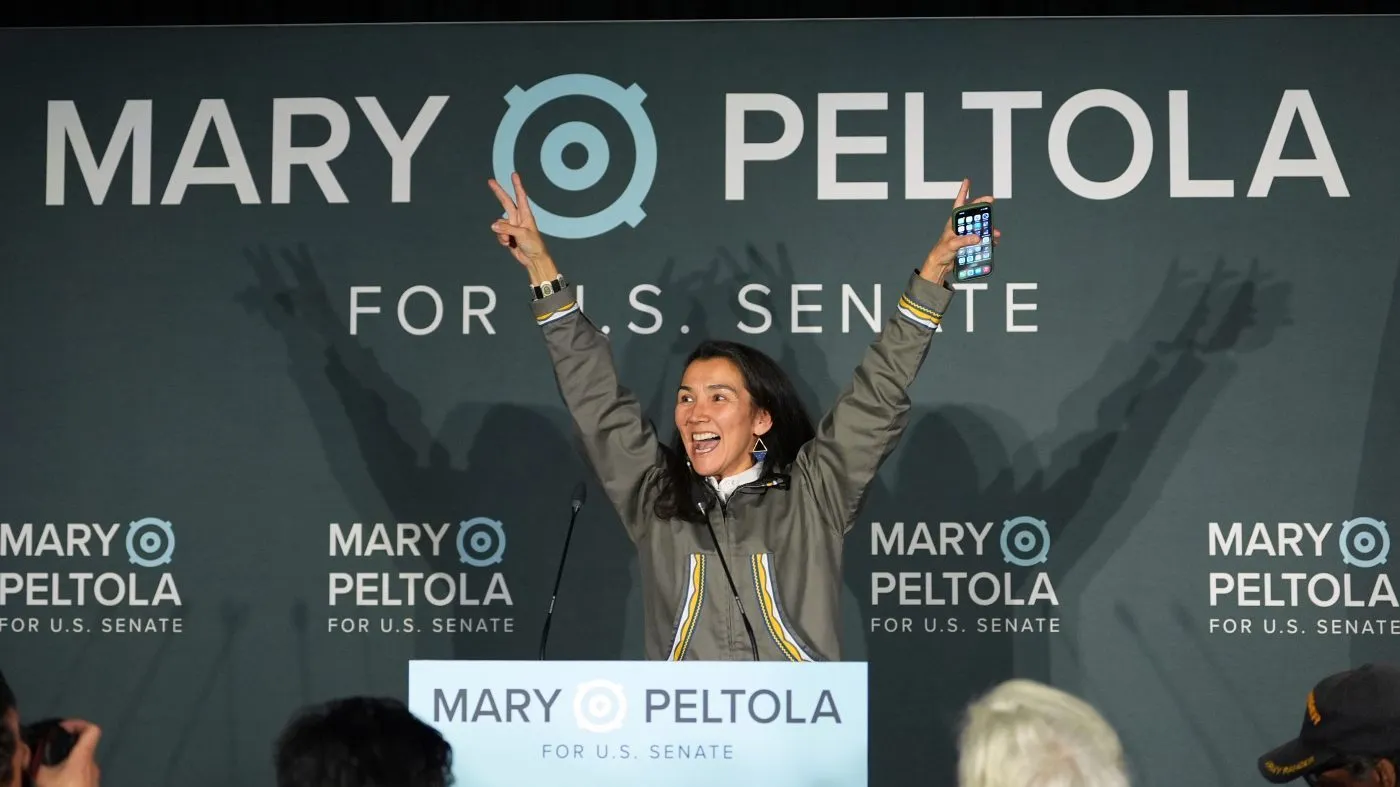
Mary Peltola’s projected victory in Alaska on Tuesday completes a sweeping set of Senate victories for the Democratic Party, which won every race seen as being contested on the 2026 map, as well as a few that didn’t seem in play at the beginning of the year.
Democrats gained nine seats in the Senate, raising their majority to 56 seats, just four short of a filibuster-proof majority.
The party had needed to gain four seats to win a majority, a number that seemed ambitious at the beginning of the year since it meant winning at least some states in which President Trump had ridden to victory in 2024.
The party ended up running way through that number, with victories in North Carolina, Maine, Ohio, Texas, Iowa and Kansas. In five of those six races, the contests were seen as toss-ups on election day. But the wins didn’t end there.
Democrats also pulled off an upset win in South Carolina, where Democrat Annie Andrews defeated Republican Darline Graham — who became the GOP nominee after the death of her brother, former Sen. Lindsey Graham (R-S.C.). Few could have anticipated a Democrat representing South Carolina in the Senate just a few months ago.
Last week, Democrats added to their total with a win in Mississippi, where Scott Colom defeated incumbent GOP Sen. Cindy Hyde-Smith in a tightly fought contest. Colom rode a series of creative online ads to his victory, including one that mocked Hyde-Smith for suggesting that people in Mississippi consider different proteins to deal with high beef prices. Colom’s ad suggested they try another senator.
On Tuesday, it was Alaska, another race that had been seen as a toss-up on Election Day.
With 94 percent of the vote reported, The Hill’s partner, Decision Desk HQ, projected Peltola as the winner. She held 50.12 percent of the vote to incumbent GOP Sen. Dan Sullivan’s 45.79 percent, which puts her above the 50 percent threshold to avoid ranked-choice voting coming into play.
“From Juneau to Utqiagvik, the message from Alaskans is clear: the status quo in DC is not working for Alaska,” Peltola, who will become the first Native Alaskan to serve in the Senate, said in a victory statement.
“Over the course of this campaign I’ve spoken with elders in tears about empty fish racks; families struggling to find housing they can afford; and parents in the Bush faced with the impossible choice of heating their homes or putting food on the table. Today we take a monumental step forward in addressing those issues and putting Alaska first.”
Peltola’s campaign was not without controversy.
A second Dan Sullivan ran as an independent candidate in the race, and reports, denied by Peltola’s campaign, connected it to the independent candidacy.
With the last ballot drop, Peltola held more votes than the two Dan Sullivans combined, but lawsuits over the race are a definite possibility.
That will do little to down the celebrations in Democratic circles on Wednesday, however.
The party sees the victories in states such as Alaska, South Carolina and Mississippi as locking in a Senate majority, possibly for years to come. The senators in those states and most of the others won by Democrats will hold their seats for six years, making it more difficult for Republicans to win back the Senate majority in 2028, or even 2030.
That has big implications for the final two years of Trump’s administration, as well as for the president in 2028. If a Republican wins, there’s a good chance they’ll need to deal with a Democratic Senate. If a Democrat wins, they may have a Democratic Senate to confirm nominees and judges and to work on legislation.
The election night victories included races that were toss-ups, but that doesn’t diminish the impact of some of the wins.
In Kansas, Adam Hamilton becomes the first Democrat to serve in the Senate in nearly a century. The party’s win in Texas was historic, as the Lone Star State had long been a great white whale for Democrats that was always out of reach. Democrat James Talarico rolled to a huge victory over Texas Republican Ken Paxton, and Democrats won the state’s governor’s race, too.
Democrat Josh Turek’s win in Iowa came in another state that once seemed purple, but had seemed in the Trump era to be turning increasingly red. And in Maine, a state Democrats typically win in presidential contests, the party knocked off long-time incumbent GOP Sen. Susan Collins.
Ohio was yet another state that seemed safely red in the Trump era, but former Sen. Sherrod Brown (D) returned two years after a defeat to regain a Senate seat. Brown is filling out the term originally won by Vice President Vance when he served as a GOP senator from Ohio. He’ll need to run for a new term in 2028 if he wants to keep the seat.
Topics in this story
Gathered from external sources. Rights to this text belong to whoever originally published it.