Warren Buffett’s favorite market signal just hit a historic extreme
Warren Buffett has $359 billion waiting as market valuations soar
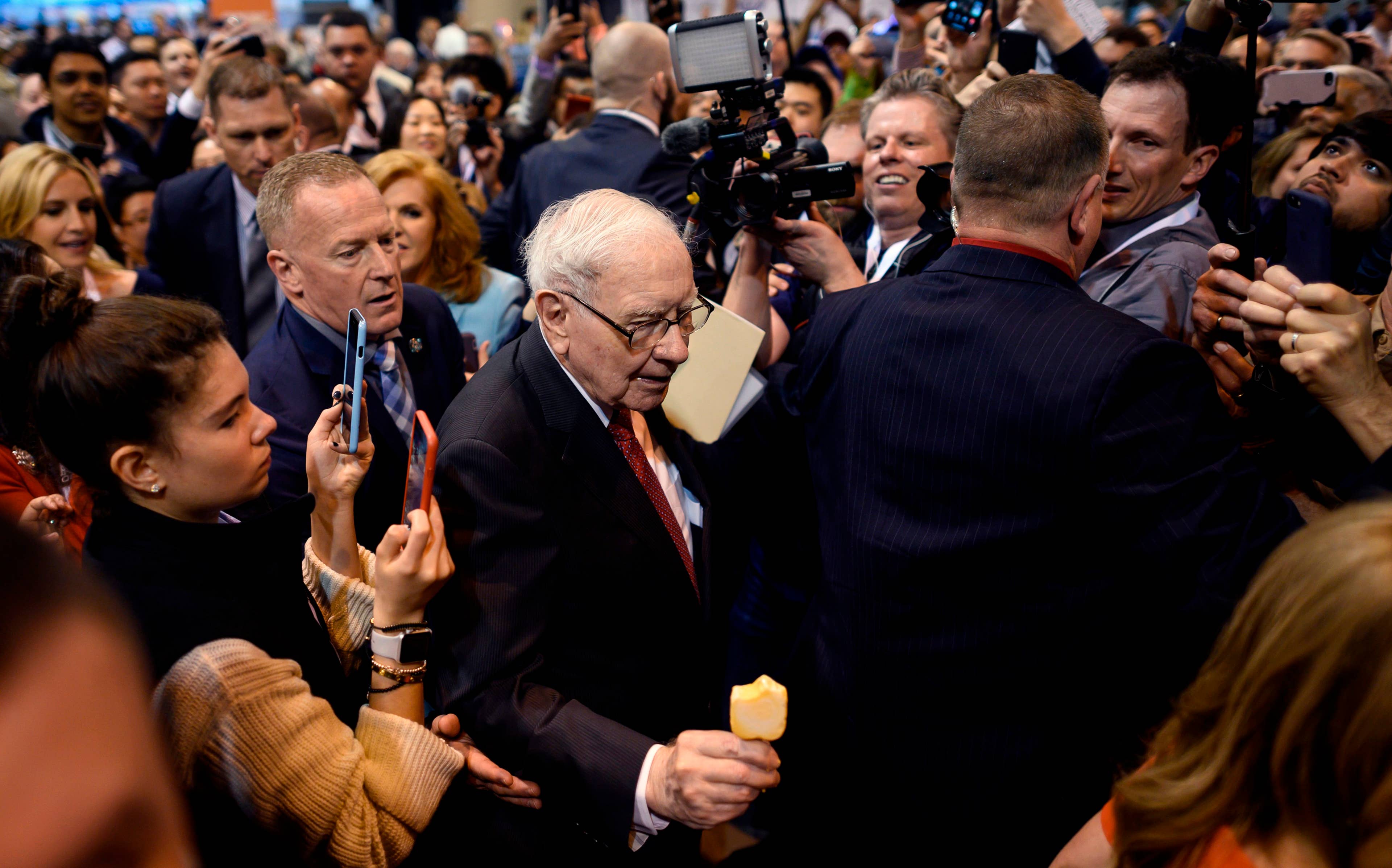
Warren Buffett gave investors a remarkably simple warning 25 years ago.
Now the market has blown straight through it.
In a 2001 Fortune article, Buffett called the value of publicly traded U.S. stocks relative to the economy "probably the best single measure of where valuations stand at any given moment," Business Insider noted.
His danger zone was clear: Investors were "playing with fire" if the ratio hit 200%.
GuruFocus data through October 2023 show that a frequently tracked version of the metric was 238.2% as of Sept. 4. Another computation puts it close to 241%, showing how various methodologies can yield different results.
In any case, equities have shot over the threshold that Buffett originally tied to high valuations.
But there's another figure that investors should consider.
Berkshire Hathaway (BRK.A) (BRK.B) held $359.2 billion in cash, cash equivalents, and U.S. Treasury bills at the end of June. Together, they suggest a more fascinating question than whether Buffett is forecasting a disaster.
That is, what happens to future returns when investors pay historically extraordinary prices for the American economy?
The so-called Buffett Indicator measures the worth of publicly listed U.S. enterprises against U.S. economic production.
The principle is simple. Stocks are claims on companies, and those firms function within an economy. As their total market value rises far faster than economic production, investors are paying larger and larger multiples for those claims.
Buffett wrote about the friendship in Fortune in 2001, according to Business Insider .
The 70%-to-80% range has traditionally been great purchasing area, he noted. But as the ratio neared 200% on the eve of the dot-com boom, investors were playing with fire.
At roughly 238%, today's reading is about 19% above Buffett's old 200% warning threshold .
That doesn't automatically imply a crash is on the way.
The indication itself is somewhat limited. American corporations earn significantly more abroad now than they did decades ago, and interest rates and changes in the mix of public and private business might affect what's considered a sensible price.
But it's difficult to see beyond the size.
Berkshire Hathaway has $359 billion waiting
Buffett's actions are another element of the picture.
Berkshire's insurance and other operations ended June with $359.2 billion in cash, cash equivalents, and Treasury bills. That contrasts with $340.8 billion invested in equity and fixed-maturity securities (excluding equity-method investments).
Gathered from external sources. Rights to this text belong to whoever originally published it.