GST Council to focus only on process reforms in Oct: Sitharaman
India Business News: Lam Research to invest Rs 10,000 crore in India for a silicon component manufacturing facility and expanded R&D, aiming to boost semiconductor ecosystem and train 60,000 students.
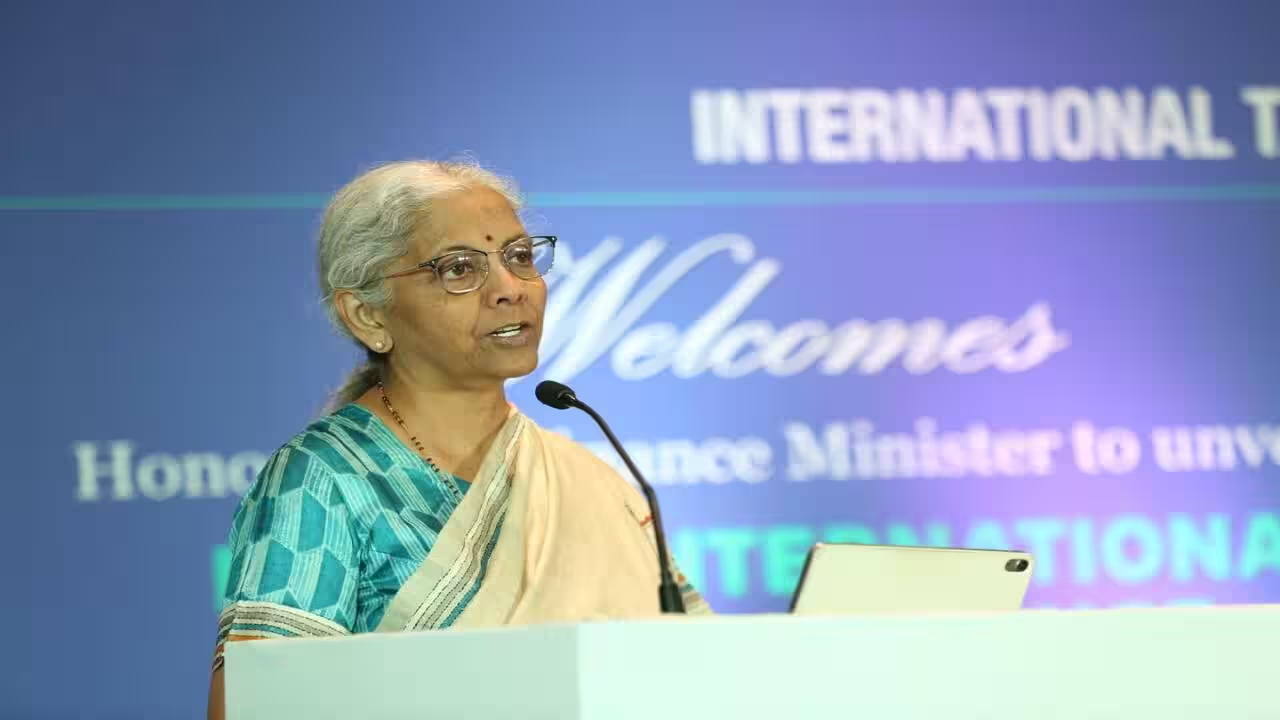
Bengaluru: The GST Council will meet in the first week of Oct with its agenda focused entirely on process reforms, finance minister Nirmala Sitharaman said on Wednesday. The Council, the Centre-state body that takes decisions on GST, is expected to examine issues around invoice filing, matching and input tax credit, while leaving rates aside.She was speaking at a curtain-raiser event for the International Tax Research and Analysis Foundation (ITRAF), a tax policy research body, in Bengaluru.An audience member asked whether e-invoicing could be extended to all taxpayers, including composition dealers, and whether input tax credit could be allowed on all accounted business spending. E-invoicing requires businesses to report invoices to a government portal as they are issued. Composition dealers are small businesses below a specified turnover threshold that pay GST at a lower rate and file simpler returns, but cannot claim input tax credit.The questioner referred to the package of changes as “GST 3.0”.“Why are you going too far too soon? GST 2.0 has the process element still not done,” Sitharaman responded. She said rate rationalisation had taken precedence over other reforms, with the September GST Council meeting extending over two days and focusing only on rates.“The process reform agenda was kept for the next meeting, which is now scheduled to happen in… October first week,” she said. “That meeting will focus only on process reforms.”Sitharaman did not spell out the measures that would be considered. “I can’t reveal before the Council talks about it,” she said. However, several issues raised by the questioner fall within the broader process-reform agenda, including mismatches between buyer and seller returns and disputes over eligibility for input tax credit. Both have been sources of litigation and compliance costs.In her address, Sitharaman said the rate rationalisation exercise was aimed partly at reducing litigation. The GST structure has been consolidated into essentially two slabs, reducing the scope for disputes over the classification of goods and services. “Fewer rates mean fewer classification disputes,” she said.She was also asked about the distinction between goods and services in the digital economy, where downloads, subscriptions and cloud services can face different tax treatment depending on their classification. She supported the idea of a standing mechanism to address such issues. “Yes, why not? I’ll be in favour of it,” she said. “Send us a proposal.”Sitharaman also highlighted other tax reforms, including the reduction of the corporate tax rate to 22% in 2019 and the increase in the income-tax exemption threshold to Rs 12 lakh. The Income Tax Act, 1961, was replaced after 64 years by a new statute that is roughly half its length.She also pointed to higher monetary thresholds for the tax department to file appeals — Rs 60 lakh at the tribunal and Rs 5 crore at the Supreme Court — saying this would help smaller disputes end sooner.Sitharaman urged tax professionals to submit specific, quantified alternatives rather than only grievances. Most pre-budget representations, she said, typically seek one of three things: a lower rate, an exemption or a concession.Get the latest Business News and Live updates. Download the TOI app.
Topics in this story
Gathered from external sources. Rights to this text belong to whoever originally published it.