IonQ vs. Rigetti Computing: Which Pure-Play Quantum Pioneer Has the Stronger Technology Advantage?
Rigetti and IonQ are taking two separate approaches to quantum computing.
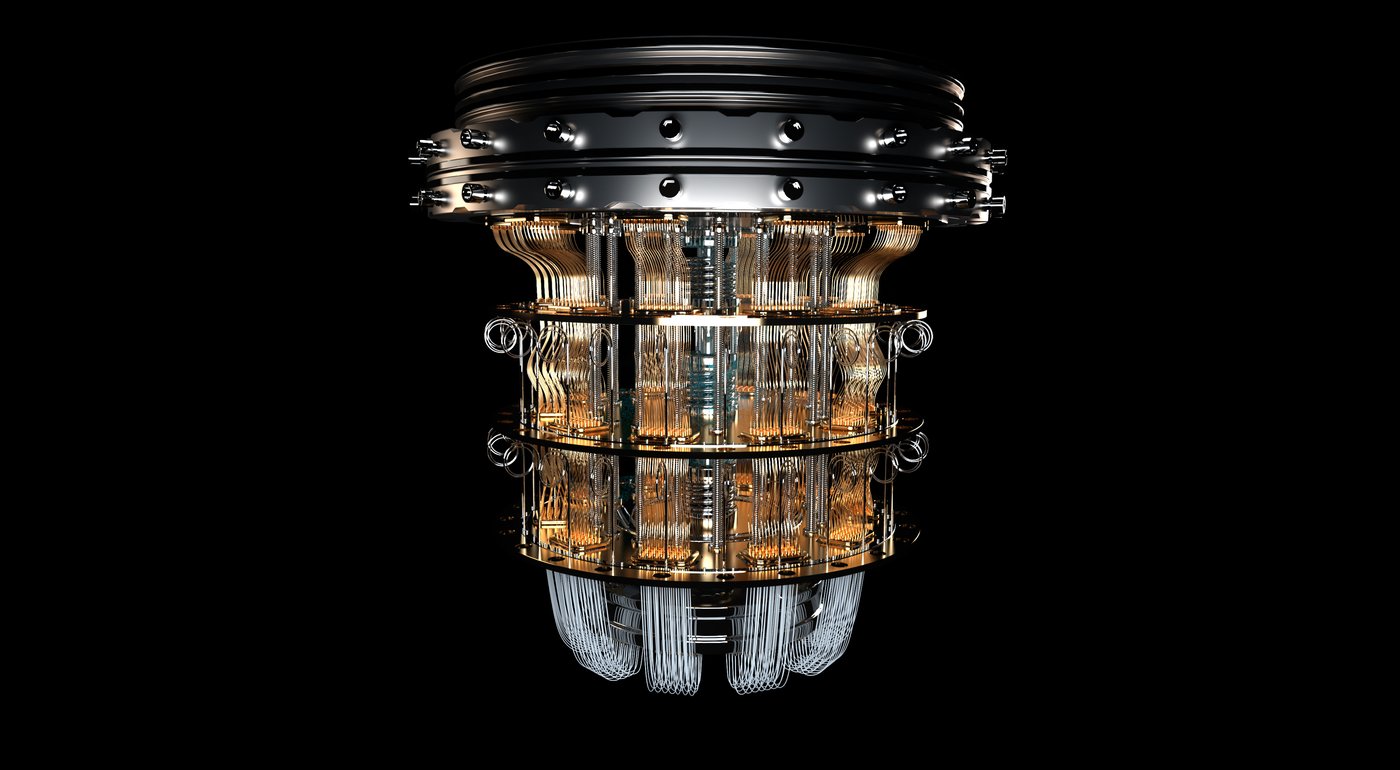
In the quantum computing investment sector, two popular stock picks are IonQ (NYSE: IONQ) and Rigetti Computing (NASDAQ: RGTI). Both of these quantum computing upstarts have a long way to go before becoming a viable investment option. However, by looking at their respective technologies, investors can get an idea as to which company has a better chance of reaching the finish line.
Let's take a look at these two and see which is the better stock pick.
Missed Nvidia in 2009? This Rare Signal Is Flashing Again. In 2009, a "Double Down" signal flashed for a little-known chipmaker called Nvidia. For the first time in years, that same "Total Conviction" signal is flashing for a company 1/100th the size of Nvidia. Continue »
The primary way most companies do quantum computing is via superconducting. This involves cooling a particle in a chamber to near absolute zero temperatures so it can be controlled for the purposes of quantum computing. Rigetti utilizes this technique, but that's also the same process that many of the legacy tech companies are using . That may prove to be a problem, as Rigetti is competing against some heavyweights with huge resources.
IonQ is taking a far different approach. There's really nobody else doing what IonQ is doing, which could be good or bad. Instead of cooling a chamber, IonQ uses lasers to pinpoint and cool a particle, then utilizes an ion trap that's similar to a maze to trap the particle and utilize it for quantum computing purposes. This yields superior accuracy, but at the cost of processing speed.
The typical accuracy measurement utilized by companies in the quantum computing industry is the 2-qubit gate fidelity test. This measures whether a calculation is still accurate after passing through two logic gates, and is done multiple times to compile a score. Rigetti's most advanced 108-qubit computer achieved a 99.1% 2-qubit gate fidelity score. Meanwhile, IonQ's score totaled 99.99% in a 256-qubit system.
Larger qubit systems tend to be less accurate, so the fact that IonQ did this on a larger system than Rigetti also makes it more impressive. Furthermore, even though the difference between these two scores looks small, it's actually astronomical. So, the technology advantage IonQ has over Rigetti is massive, at least from an accuracy standpoint.
However, IonQ's products prioritize accuracy over speed, and that's where a superconducting approach, like Rigetti's, shines. Yet if quantum computing cannot be accurate, it's not all that useful. Speed will be something that comes later on in the quantum computing world, so that puts IonQ at an advantage over Rigetti to begin with.
Topics in this story
Gathered from external sources. Rights to this text belong to whoever originally published it.