Star Trek: Will the Saga of the Resurrected Captain Kirk End in Triumph or Tragedy?
IDW's critically acclaimed Star Trek: The Last Starship has reached its endgame. We chat with writers Collin Kelly and Jackson Lanzing to find out more about how it caps off the story of the resurrected James T. Kirk.
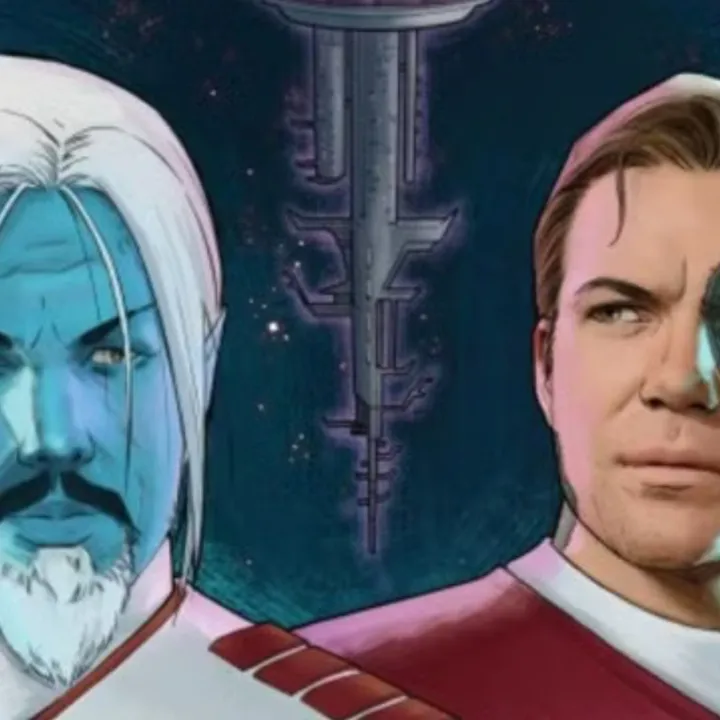
The Star Trek franchise may be in a bit of a weird place right now following the cancellation of Star Trek: Starfleet Academy and the impending end of Strange New Worlds , but never let it be said that there aren't great stories being told in this iconic sci-fi universe. Look no further than IDW's Star Trek: The Last Starship, a book that explores the aftermath of the horrific event known as The Burn. This series has seen the resurrection of Captain James T. Kirk in the 31st century, but can even a man as heroic as Kirk guide the Federation through its darkest hour? Is that even his goal anymore?
Everything in the series is coming to a head now as writers Collin Kelly and Jackson Lanzing prepare to wrap up their dramatic saga with The Last Starship #12 in October. It all comes down to the two driving forces of the series - Kirk and Captain Delacourt Sato - as they seek to put aside their differences and forge an alliance to save the galaxy from ruin.
First, check out an exclusive preview of Star Trek: The Last Starship #11 (due out on September 16), and then read on to learn more about how Kelly and Lanzing aim to cap off the series with a bang to rival that of The Burn itself.
Star Trek: The Last Starship #11 Preview Gallery
IGN: It was more than a little bittersweet to learn that the series is ending after 12 issues. Was it always the plan to come in and tell a leaner, more focused story than you did with Flagship?
Lanzing: Rest assured, it’s always been the plan.
Kelly: In our minds, 12 issues was always the target. The Last Starship was designed as a prestige maxi-series - four three-issue chapters that cover 100 years of the Burn. This was never meant to go forever - with Disco on the horizon, we even know how things will end up. But HOW it ends - that’s where our story lives, and that finale gives the entire story its shape.
Lanzing: The most important part of a story is its ending - and we’ve known the ending of TLS since before we wrote page 1.
IGN: So much of the series has revolved around the complex dynamic between Sato and Kirk. Has it been fun writing them as full-blown enemies in these recent issues? Are they going to be able to put aside their differences in the final arc?
Kelly: I know I just said that it wasn’t meant to go on forever, but that doesn’t mean we wouldn’t like to write these two forever, ESPECIALLY when they’re at odds. Two men, so alike but so different, who - in their conflict - bring out the best in one another, but through that conflict, make something incredible? After writing together for almost 20 years, that’s the kind of relationship that Jack and I have some affection for. Kirk and Sato are clashing furiously over the how and why …but when it comes to the what , to their shared drive to save the Federation, and preserve the legacy of all that makes Starfleet great - that’s something that will force the two men into alliance. And through that alliance…they will achieve something bold .
Lanzing: The conflict between Kirk and Sato is the center of the series, so of course turning that all the way up has been a total delight. They bring out both the best and the worst in each other - up until the very end.
IGN: The series has been relying on time dilation to push the story forward lately. Does that introduce extra challenges for you as writers dealing with such a tricky sci-fi narrative device?
Kelly: Absolutely, but it’s a challenge we signed up for. The time-dilation element of the story - while it’s mechanically a great way to assay the 100 years our tale takes place over - made its way into the narrative purely as a thought experiment: how does relativistic space travel function without the dilithium to magically foreshorten every distance? But more importantly - what are the emotional consequences for the crew? We wanted the Omega’s mission to take everything from its crew - and that includes every semblance of the lives they’ve known. Everyone they’ve ever loved “back home”, wherever that may be - by the time we hit Issue 11, those people are assuredly dead, or at least well close to dying. It has caused a lot of headaches on the narrative side, absolutely - but the pay off we get from the trauma it puts our characters through is well worth it.
Lanzing: It’s what makes this story unique in all of Star Trek, and it’s a challenge we’re really proud to have taken on.
IGN: At its core, The Last Starship is about exploring whether the Federation’s ideals can survive the galaxy’s darkest hour. Will we get a definitive answer to that question by the end?
Kelly: We’ve been writing Star Trek for over seven years for IDW - “can the ideals of the Federation survive” is a theme that we circle, over and over. It’s a question we’re all hungry for, because the ideals of the UFP are the ideals that so many of us want to see thrive in the real world. If Starfleet can face the worst of the universe and still make it, perhaps we can too.
Lanzing: Will you get a definitive answer? Yes. Issue Twelve is waiting.
You introduced the concept of the Emerald Chain as a mob-like protection racket in this post-Burn climate. Did you see that organization as the ultimate expression of everything the Federation isn’t?
Kelly: That’s a fun question, because…no, I don’t think the Chain is the Federation's opposite, any more than Klingons are humanity’s opposite. But a dark reflection? Absolutely. And that’s what’s particularly great about using them as our villain in this story, here at the seeming end of the Federation’s life. Because they’re not a massive hegemonic AI with the power of a god; they’re not aliens that exist outside of time; they’re capitalists. They’re liars and abusers and usurers, but they also understand that wealth comes from a system of exploitation, which means that the system must maintain populations to be exploited. They’re not evil…they’re selfish.
And ultimately, that’s the real enemy of the UFP, which is to say the enemy of Gene Roddenberry’s IDIC - Infinite Diversity in Infinite Combinations. If you care only about yourself and what you can gain, it’s impossible to celebrate the differences that make other people incredible. The Chain wants to lock us down; the Fed wants to lift us up. Being lifted - lifting - it takes far more effort…but it’s the only way to see the incredible things on the horizon.
IGN: I’m sure the two of you have more collaborations planned in general, but is there any chance we’ll see more Star Trek projects from you after The Last Starship #12?
Kelly: We’ve had an incredible time on Star Trek - genuinely, being trusted to tell these stories is one of the greatest high points of our career. But now, indeed, it’s time for us to cede the captains’ chairs to two new commanders - Christopher Cantwell and Charlie Jane Anders, both of whom have new flagship Star Trek books coming, both of which are INCREDIBLE - and step back to other projects that need our love. In November, we’re launching a new Dungeons & Dragons #1 from Dark Horse, and we have a creator owned horror series coming out through IDW Dark called You'll Never Leave This Place Alive.
Lanzing: Now, is that to say that you’ll never see us on a Star Trek comic again? I think we love it too much to stay away forever. There is still space for new stories in the The Last Starship-a-verse, even with the main plot concluded…
Kelly: …but truthfully? We hope the next time you see our name attached to Star Trek, it’ll be on TV.
Star Trek: The Last Starship #12 will be released on October 21, with a final order cutoff of September 14. You can preorder a copy at your local comic shop .
Jesse is a mild-mannered staff writer for IGN. Allow him to lend a machete to your intellectual thicket by following @jschedeen on BlueSky .
Topics in this story
Gathered from external sources. Rights to this text belong to whoever originally published it.