I Play Rocky Attempts to Answer the Question of Which Came First, the Rocky or the Sly?
I Play Rocky review: Which came first, the Rocky or the Sly?
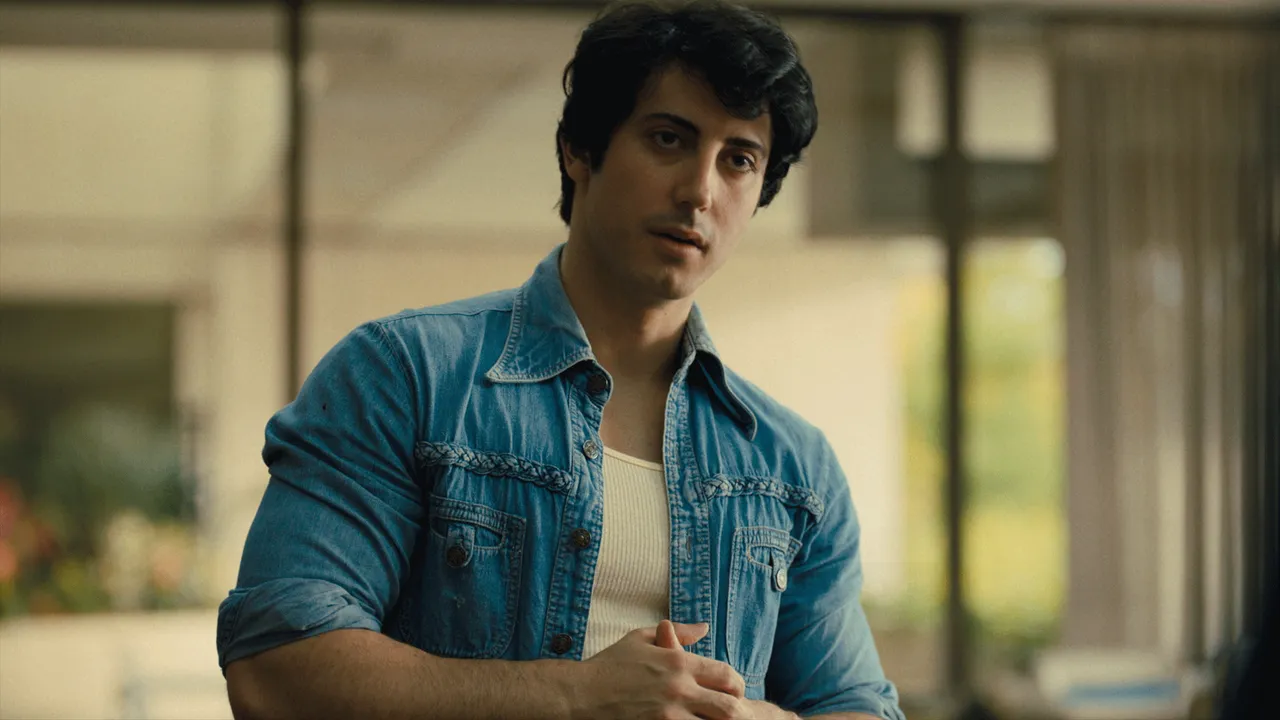
This review is based on a screening timed to the Toronto International Film Festival. I Play Rocky will be released in limited theaters on November 6 and expand nationwide on November 20.
Sometimes you can absolutely feel a movie trying oh-so-hard to evoke a reaction out of you and yet still find yourself giving in to that reaction thanks to how skillfully it’s done, and that’s very much the case with I Play Rocky.
This movie’s reason for existence and its intent feels pretty shameless, starting with Amazon MGM wanting to make more use of their Rocky franchise in a somewhat outside-the-box manner (while they wait for Michael B. Jordan to return for another Creed installment ) by putting out their own origin story movie for the original 1976 film. Then there’s the fact that the very unsubtle approach is to hammer home that Sylvester Stallone was writing something deeply personal with Rocky and that hey — if you think about it — Stallone getting the movie made, with him in the starring role no less, was like a real life Rocky story!
Like I said, it’s shameless… But damn it, it sure is effective.
Anthony Ippolito plays Stallone, who we meet in the early 1970s as he’s trying and mostly failing to make it as an actor, frequently being told that he doesn’t have movie star looks, and that his slurred speaking voice especially will stop him from ever being a leading man. His new girlfriend Sasha (AnnaSophia Robb) is the one who suggests that he begin writing screenplays himself, which eventually leads him to write Rocky after he gets a meeting with successful producers Irwin Winkler (P.J. Byrne) and Robert Chartoff (Toby Kebbell), who are encouraged by his previous work.
The first half of I Play Rocky is incredibly engaging as we track the early days of Stallone and Sasha’s relationship, their financial struggles, and his quest to make it as an actor; Stallone hopes his screenplays will help open the door to that future. Ippolito is terrific as Stallone, overcoming the considerable obstacle of playing such a famous and distinct celebrity who has loomed large in pop culture for so long. Yes, he has a strong resemblance to Stallone, and yes, he manages to sound incredibly similar to Stallone; fortunately, this doesn’t feel like just skillful mimicry, but rather a fully formed onscreen character in its own right. Thanks to Ippolito’s grounded performance, you believe in his Sly Stallone’s intelligence, drive, and determination, and you believe in his deep investment in himself, even when it seems like he might be foolishly stubborn.
Robb makes for an excellent onscreen partner for him, bringing a ton of likability and feistiness to Sasha, and completely selling you on both their bond and her own belief in her eventual husband’s talent and potential. Robb gives a wonderfully emotive performance, including an especially well-played scene where she meets Sly’s dad, Frank Sr. (Matt Dillon), for the first time, and we watch as she listens to what’s being said by both men. Robb expertly shows us Sasha painfully realizing just what kind of a verbally and sometimes physically abusive household the man she loves was raised in.
The center of the film focuses heavily on the excitement Winkler and Chartoff have for the Rocky script and the willingness of studio head Sandy Maddox (Tracy Letts as a composite character based on multiple execs) to make it, only to hit a massive impasse thanks to Stallone’s outright refusal to sell the script unless he also gets to star in the movie. There’s some great material here, with Byrne conveying Winkler’s enthusiasm mixed with frustration, and Letts conveying Sandy’s pessimism mixed with intense frustration. The movie gets a lot of comic mileage out of funny moments where these Hollywood veterans are baffled by encountering someone as unwavering as Stallone, who keeps turning down increasingly huge offers.
I Play Rocky is directed by Peter Farrelly from a screenplay by Peter Gamble; it stands out as easily the director’s best film since he and his brother Bobby went their separate ways. Even fans of Farrelly’s Academy Award-winning Green Book (I am not one of them) would likely struggle to love his three straight-to-streaming follow-ups: The Greatest Beer Run Ever, Ricky Stanicky, and Balls Up. I Play Rocky, however, is not only genuinely engaging and heartfelt, but also frequently quite witty, with Farrelly reminding you that he and his brother were once delivering consistently strong comedies like Dumb and Dumber, Kingpin, and There’s Something About Mary.
The second half of I Play Rocky, where we move into the actual production of Rocky, is not quite as strong as the first. We jump through big moments and hurdles in production along the way, such as injuries sustained by Stallone or his trying to film with a non-union crew without being caught (how amusing you find that subplot will likely be fueled by your personal feelings about unions), but it feels a lot more episodic than what came before. There’s also some curious decisions made when it comes to Rocky’s supporting cast, with Carl Weathers (played by an appropriately bombastic Stephan James) given a big entrance via an audition scene followed by multiple looks at the boxing training he went through with Stallone, only to vanish completely from the movie once we’re in the actual scenes on set in which he appeared.
Meanwhile, there’s no depiction at all of the casting of other key Rocky players like Talia Shire (Kiki Seto), Burgess Meredith (Robert Morgan), or Scot Teller (Burt Young), who just appear without introductions or larger context in scenes on the Philadelphia set. This feels particularly odd for Talia, given that Stallone is shown fighting to retain standout moments in the film involving Rocky and Adrian, correctly arguing that they’re pivotal to the movie.
Still, there are some undeniably well done and exciting sequences here as we follow the fast-paced, run-and-gun approach of director John G. Avildsen (Jay Duplass) and the essential work of Garrett Brown (Michael Fuchs), whose still-new steadicam was crucial to pulling off some of the film’s iconic shots such as the run up the steps of the Philadelphia Museum of Art. In the midst of this, Ippolito is rather remarkable in a sequence where he’s not only asked to replicate one of Stallone’s career-best scenes as an actor but also let us feel the extra meaning behind it to Stallone the man (or at least Stallone the movie character), doing so in a notably impressive and impactful manner.
I Play Rocky ends on a bit of an abrupt note — it feels like it could use an extra scene or two — and you can easily nitpick the way it changes up, streamlines, or alters real-life events and specifics throughout, as you can with any biopic. But even elements that feel like they’re told through rose-colored glasses have a melancholy shadow to them as well, because we know that in real life, Stallone would eventually cheat on Sasha and they’d divorce. We also know that he’d eventually post online tirades against Winkler , calling him untalented and “unhuman” while saying he wanted the rights to Rocky back. But I Play Rocky lets us look back at an earlier time, even if it’s through the haze of nostalgia, and root for both the talented young Sly himself and those around him who helped him oh-so impressively achieve his considerable goals.
Topics in this story
Gathered from external sources. Rights to this text belong to whoever originally published it.