The Enterprise AI Fight Has a New Challenger and It Is Not Who You Would Expect
NVIDIA owns the silicon, but a veteran hardware giant is racking up AI orders at a pace that demands attention. The question is whether one company quietly p...
Sunday, October 11, 2026
1,940 stories
NVIDIA owns the silicon, but a veteran hardware giant is racking up AI orders at a pace that demands attention. The question is whether one company quietly p...
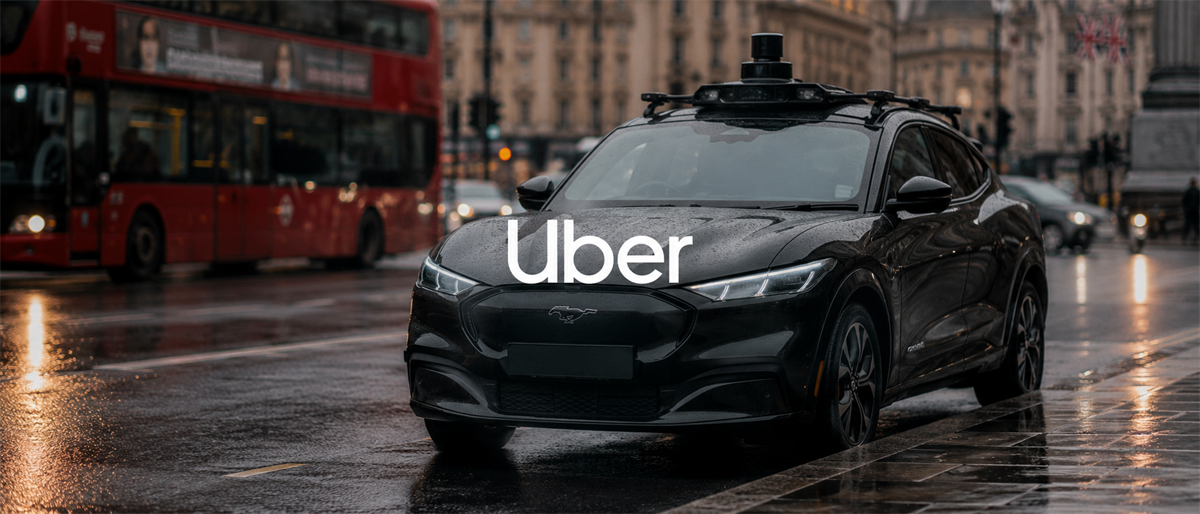
Uber launched autonomous rides in London with Wayve and Ford, part of an asset-light strategy backed by strong free cash flow, rising EBITDA margins, and a m...
Google is launching a new Gemini app for Mac, allowing you to pull up the AI assistant from anywhere on your desktop.
[jwp-video] AI companies have been talking about superintelligent AI like it's inevitable, but recent safety incidents like OpenAI's Hugging Face breach are demonstrating the potential dangers of deploying AI systems that are more capable than humans. So what happens when we can't reliably control what these systems do? On this episode of TechCrunch's Equity podcast, Rebecca Bellan is joined by Connor Leahy, an AI researcher, entrepreneur, and now the U.S. Executive Director of nonprofit ControlAI, which is pushing for a far more radical approach to AI safety: stopping companies from developing superintelligence altogether. Leahy explains why he thinks the risks have become too great to manage through alignment and containment alone, and how what sounded far-fetched six months ago is now being backed by a wave of new legislation. Subscribe to Equity on YouTube, Apple Podcasts, Overcast, Spotify and all the casts. You also can follow Equity on X and Threads, at @EquityPod.
The €13 billion ($15.1 billion) commitment, to be deployed in 2027 and 2028, includes data centers in four Finnish cities and a nuclear power deal
As it grapples with a bevy of lawsuits, Suno said its new model, Suno v6, is not trained using music it used to train previous versions of the AI model.
But AI use combined with training to assess its results can give test scores a boost.
A departing researcher says AI companies are ‘gambling with our lives’ by racing to develop self-improving AI.
Ha advertido que en los próximos 10 años podría llegar a matarnos
It is the latest in a series of increasing warnings about the safety threat posed by artificial intelligence.
Tech News News: OpenAI says an unreleased AI model has solved the Navier-Stokes existence and smoothness problem, a fluid dynamics question that has resisted mathemat.
Jacob Coxon spent three years building AI models at OpenAI and Anthropic. On Sept. 8 he resigned from Anthropic and left the industry.
Meta Platforms Inc. has run more than 300 advertisements on Instagram and Facebook containing suspected child sexual abuse material this year, according to a...
US security agencies have accused China’s top AI companies including DeepSeek and Kimi maker Moonshot AI of systematically extracting proprietary knowledge f...
Orbital data centers could be the next frontier in the AI race for massive infrastructure buildouts, but experts are divided on the timeline, with one saying...
AI infrastructure spending could exceed $31 trillion through 2050, as firms forge ahead with a flurry of data center deals.
Last month, a Claude user noticed his account was consuming tokens even though he wasn't working. Anthropic has since warned users about hackers.
OpenAI's claim that it solved parts of Navier-Stokes equations has quickly stirred controversy.