Infectious disease veterans call for clearer federal message on measles
While money is pumped into state and local health departments to help counter the growing measles outbreaks across the country, experts say clear communication from top health leaders seems lacking and what has been said publicly may have hurt more than helped. The country has surpassed 4,000 measles cases and appears to have already doubled…
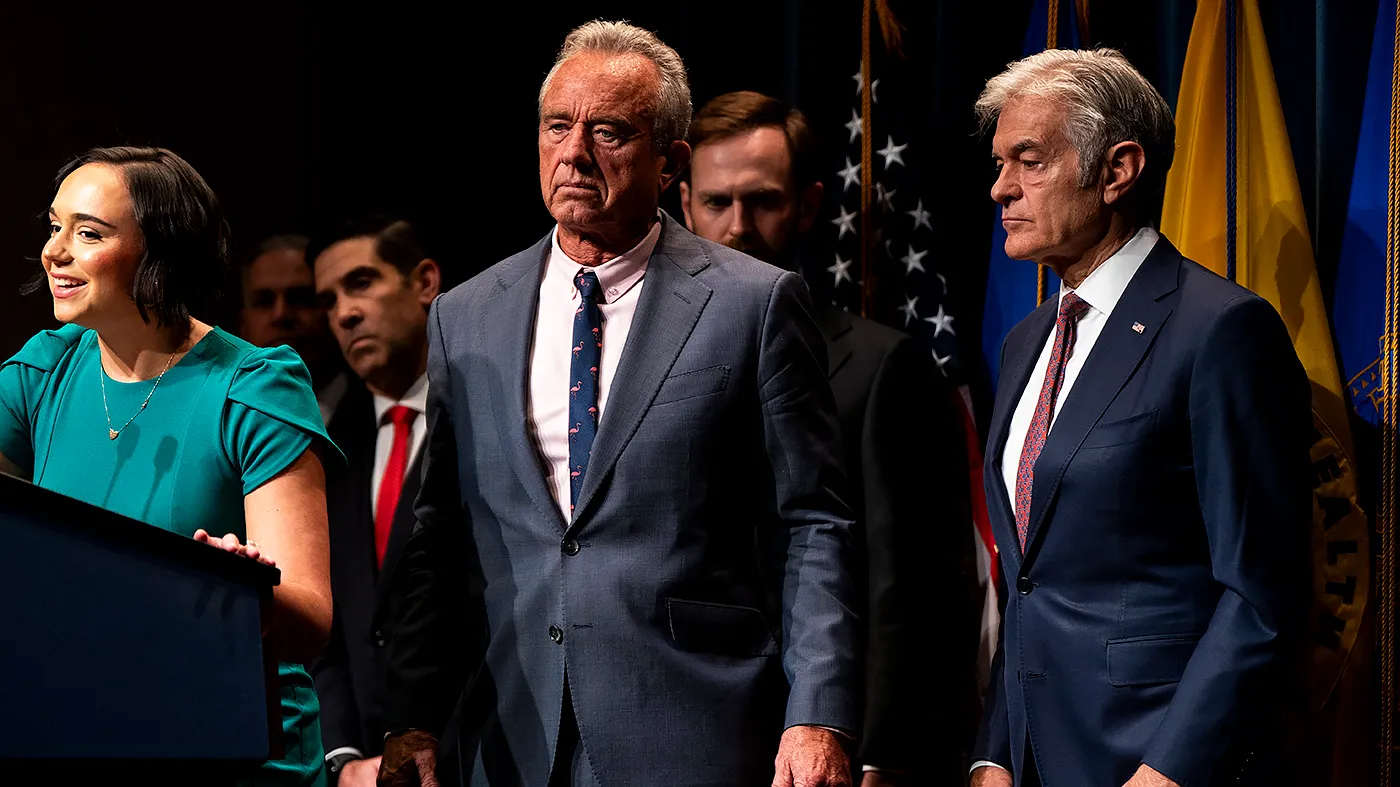
While money is pumped into state and local health departments to help counter the growing measles outbreaks across the country, experts say clear communication from top health leaders seems lacking and what has been said publicly may have hurt more than helped.
The country has surpassed 4,000 measles cases and appears to have already doubled the number of measles-related deaths from last year.
Local health departments are simply overwhelmed by the sheer scope of measles cases, according to Adriane Casalotti, chief of government and public affairs for the National Association of County and City Health Officials (NACCHO).
“There’s so much measles out there that the chances of it popping up in different communities is really high. And so, the attention certainly at the local level is very much there,” she said.
In response to the outbreaks, the Centers for Disease Control and Prevention (CDC) has issued roughly $100 million in additional funds to state, local and tribal health departments, going toward vaccinations, prevention and disease detection efforts.
This week, the CDC said it would be deploying additional support to Pennsylvania, the state reporting the highest number of cases and the only one with confirmed measles-related deaths.
Despite material and financial support reaching states, what hasn’t flowed as readily from federal authorities is guidance or vocal endorsements of measles vaccinations and mitigation efforts.
CDC Director Erica Schwartz, now two months into the job after the position had long gone unfilled, has had little to say about the ongoing spread of measles. She touched on the outbreak in September during an interview with Atlanta News First (ANF), calling measles “the most contagious disease” and reiterating the measles, mumps and rubella (MMR) vaccine is “safe and effective.”
While officials are commenting on measles outbreaks when asked about them and agencies are continuing to issue support, infectious disease specialists say a strong messaging campaign at the federal level would go a long way toward boosting the measles response.
Jeanne Marrazzo, CEO of the Infectious Diseases Society of America and former director of the National Institute of Allergy and Infectious Diseases (NIAID), opined that an overarching informational message explaining what the MMR vaccine does would be a good start, especially given how many outbreaks there have been this year — 42 at the most recent count.
“I don’t think that pronouncements from the federal government are necessarily going to fill that much more complex space where decisionmaking is impacted by a lot of things we often don’t understand or aren’t articulated,” said Marrazzo.
“I do think that a national message can be crafted to encompass a more broad kind of acceptance of people’s vaccine hesitancy,” she added. “We just haven’t really seen that because, again, I don’t think we’ve seen a full-throated endorsement or explanation of why the vaccine right now is so critical.”
And while experts in the field hold out for stronger messaging from the top, some argue that what has been said publicly may have done more harm to countering the measles spread.
“With an ongoing increase in cases, the standard response is to provide support to jurisdictions, including vaccine, financial resources, and offer staff. These things are currently still happening,” said Demetre Daskalakis, former director of CDC’s National Center for Immunization and Respiratory Diseases and chief medical officer at Callen-Lorde.
“What is atypical is the friction created by CDC second-guessing Pennsylvania on their adjudication of deaths attributed or related to measles,” he added. “It is also atypical to have a secretary that is a disinformation agent that distorts data to support his personal agenda.”
Daskalakis, who resigned from the CDC last year in protest of what he claimed was overt political interference in the agency’s work, was referring to when federal health leaders, including Health and Human Services (HHS) Secretary Robert F. Kennedy Jr. and Mehmet Oz, administrator of the Centers for Medicare and Medicaid Services, were quick to question whether the measles deaths in Pennsylvania had really occurred.
The CDC’s total tally of measles deaths does not currently reflect Pennsylvania’s total of six deaths, owing to the CDC switching to a different database for verifying measles deaths and no longer using one in which local jurisdictions can provide real-time case information.
When asked by ANF why CDC isn’t recording these deaths, Schwartz harkened back to the COVID-19 pandemic, when the virus was linked to deaths that may not have been directly caused by it because the individual had tested positive at the time.
“A lot of Americans thought, you know, people are just adding deaths to make this thing look worse than it is. It was a terrible, terrible thing that we had to go through. But definitions matter,” said Schwartz.
Casalotti of NACCHO echoed Daskalakis’s concerns that what has come from the federal level so far hindered anti-measles efforts in some ways.
“When there are mixed messages coming at any of the levels of governmental public health, it makes it a lot harder for the local health departments to do their job,” said Casalotti. “But it also makes it harder for people to figure out ‘What should I be doing?’ when you’re hearing different things.”
Kennedy has a well-known history of questioning the safety and efficacy of the MMR vaccine, famously refusing to discount the possibility it could be linked to autism despite no evidence establishing a connection.
Last year, he called the MMR vaccine the “most effective” way of stopping measles spread and in August said parents should get their children vaccinated against the virus. But at the same time, he has continued to cast doubt on vaccine safety.
“In our country we care about rare illnesses and deaths. We care about every child who dies from measles. They get headlines,” he said this year at a September conference hosted by Children’s Health Defense, the anti-vaccine group he previously chaired. “I’d ask you to care about children who are dying or suffering or being injured by vaccine injuries.”
He claimed “vaccine-injured children” were “damaged” by conditions like asthma and autism and said sudden infant death syndrome and anorexia were common side effects.
“CDC is also working directly with state and local health departments to provide epidemiological, laboratory, and technical support. Texas, South Carolina, Virginia, Kansas, New Mexico, and Wisconsin have requested CDC Epi-Aid assistance and worked alongside federal teams to help bring their outbreaks rapidly and successfully under control,” HHS senior press secretary Emily Hilliard said in a statement.
“CDC continues to provide guidance and resources to communities responding to outbreaks, and Secretary Kennedy and CDC Director Dr. Erica Schwartz continue to make clear that the MMR vaccine is the most effective way to prevent measles,” Hilliard added.
Topics in this story
Gathered from external sources. Rights to this text belong to whoever originally published it.