Pentagon No. 3 frustrates senators in closed-door briefing on Iran war, Trump defense strategy
Democratic and Republican lawmakers alike emerged Thursday from a closed-door briefing frustrated by what they said was a lack of clear answers from Pentagon policy chief Elbridge Colby on the Trump administration’s National Defense Strategy and the ongoing Iran war. The briefing with the Senate Armed Services Committee started off rocky, with Colby immediately opening…
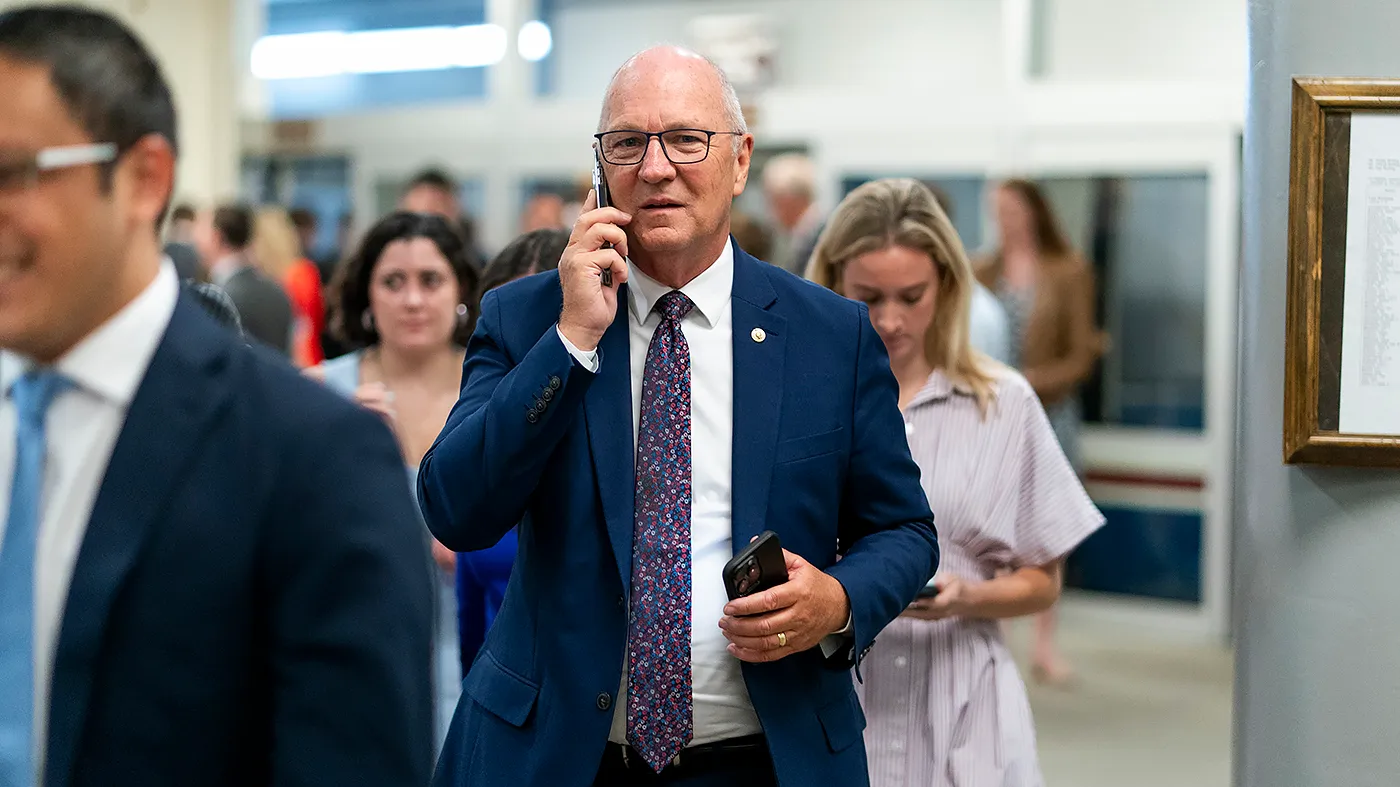
Democratic and Republican lawmakers alike emerged Thursday from a closed-door briefing frustrated by what they said was a lack of clear answers from Pentagon policy chief Elbridge Colby on the Trump administration’s National Defense Strategy and the ongoing Iran war.
The briefing with the Senate Armed Services Committee started off rocky, with Colby immediately opening the floor for questions without first giving an opening statement, Sen. Kevin Cramer (R-N.D.) told The Hill.
“There were a lot more questions than answers,” Cramer said, noting that it was “very peculiar” and “weird” that Colby — at the Capitol to give lawmakers a congressionally mandated update — did not have a statement prepared.
Cramer also said the exchange seemed “very disrespectful to say the least” and was a “dodge and punt” on Colby’s part.
“You don’t have to go far in Congress to have a sort of confrontational view of Elbridge Colby, but boy, he just blew her up right from the beginning,” he said.
Sen. Joni Ernst (R-Iowa), likewise, said she was “very disappointed” by the briefing.
“I did not stay to ask questions because he was not giving any clear responses,” Ernst told The Hill.
Sen. Mark Kelly (D-Ariz.) said Iran was the main focus of the gathering, even as it had been scheduled to discuss the National Defense Strategy.
But, “like a lot of the briefs we get from this administration, we walk out with more questions than we had when we went in,” he told reporters.
Senate Armed Services Committee Chair Roger Wicker (R-Miss.) and ranking member Jack Reed (D-R.I.) declined to comment.
Lawmakers have become exasperated over the Trump administration’s ongoing war in Iran, known as Operation Epic Fury, which has stretched into its seventh month with no clear end to the fighting.
President Trump, who initially predicted a swift victory that would come within weeks when the war began on Feb. 28, earlier this month said the deeply unpopular conflict that has sent energy prices soaring will likely last through the November midterm elections.
On Thursday, Trump told Axios he had “ a big decision coming up ” regarding Iran.
“Do I want to go in and annihilate them [the Iranian regime] or do I not? It’s a big decision. Anything could happen with me,” Trump said.
The president is slated to meet with the leaders of six Persian Gulf nations on the sidelines of the United Nations General Assembly next week.
Sen. Jim Banks (R-Ind.) offered a rare, positive view of Colby’s briefing, saying “he was very detailed and constructive” and “didn’t hide from any question, he answered every question with substance.”
Democratic lawmakers “are going to politicize these hearings no matter what,” Banks told The Hill.
Colby’s briefing came the same day all of the Senate Democratic Conference, minus John Fetterman (Pa.), signed a letter led by Sen. Elissa Slotkin (Mich.) pressing Defense Secretary Pete Hegseth for answers on the cost of the Iran war.
The lawmakers, which also include Independent Sens. Bernie Sanders (Vt.) and Angus King (Maine), demanded by the end of the month a detailed breakdown on the costs incurred since the start of the war, how the Trump administration’s supplemental request would be spent, and how some $34 billion in remaining funding from the One Big Beautiful Bill Act will be allocated.
“Despite asking for tens of billions of additional taxpayer dollars, you have so far failed to provide basic information on how this money has and will be spent,” according to the letter. “Congress must have access to this information to carry out our oversight responsibilities.”
The Pentagon told Congress last month that the cost of the Iran war has now climbed to more than $42 billion — a $4.5 billion increase to the most recent public estimate from the Defense Department.
The nonpartisan Congressional Budget Office, meanwhile, earlier this week said the conflict could cost around $2 billion per month for as long as it continues.
Alexander Bolton and Helen Huiskes contributed.
Topics in this story
Gathered from external sources. Rights to this text belong to whoever originally published it.