State Department warns of travel to Nepal after flooding
The State Department on Sunday warned Americans against traveling to certain parts of Nepal, days after a deadly flash flood swept through the border of Nepal and Tibet. The department advised Americans not to travel to the Rasuwagadhi-Timure-Syafrubesi area of the Rasuwa district, which includes the Nepal-China border crossing, due to flood damage, disrupted transportation…
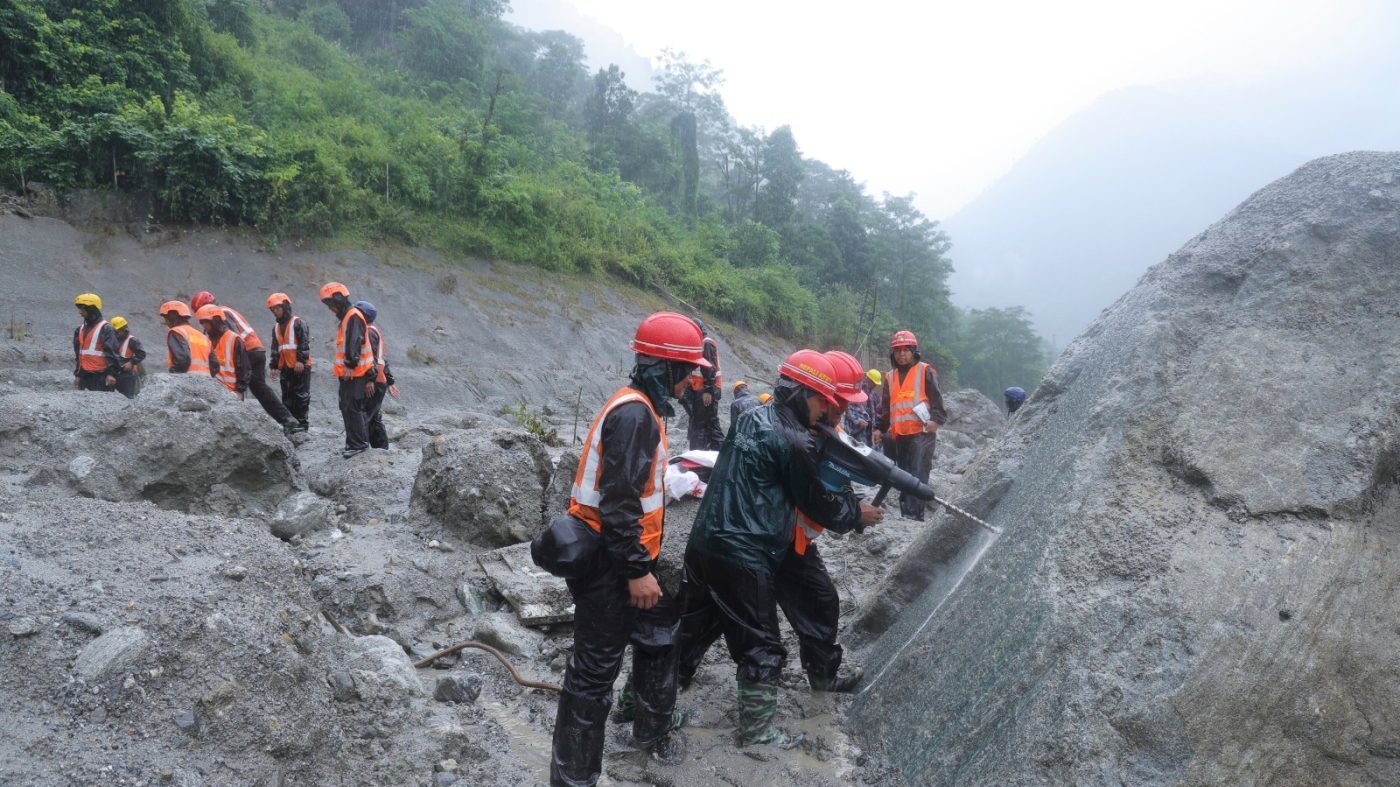
The State Department on Sunday warned Americans against traveling to certain parts of Nepal, days after a deadly flash flood swept through the border of Nepal and Tibet.
The department advised Americans not to travel to the Rasuwagadhi-Timure-Syafrubesi area of the Rasuwa district, which includes the Nepal-China border crossing, due to flood damage, disrupted transportation and communications, search-and-rescue and recovery operations.
There is also the risk of additional flooding and landslides in the area, the department noted. The impacted area includes communities along the Bhotekoshi, Trishuli and Narayani rivers, the U.S. Embassy in Nepal wrote Monday on the social platform X.
“Stay away from riverbanks, low-lying areas, damaged bridges, and unstable slopes,” the embassy added in a statement. “Follow evacuation orders and safety instructions from Nepali authorities.
“Do not enter the disaster area independently to search for a missing person. Do not travel to the disaster area for any reason,” it continued.
More than 800 people have died in Nepal and Tibet due to the floods, with 3,000-plus people missing across both countries, local authorities said Sunday.
State Department spokesperson Tommy Pigott said Sunday about 85 Americans are still missing after the flash flood, which occurred early Wednesday after the Bhotekoshi River flooded at roughly 9 a.m. local time.
“This morning, I can say we now have 85 Americans, approximately, that are unaccounted for. We’ve also now seen nine Americans be safely evacuated,” Pigott told host Martha Raddatz on ABC’s “ This Week .”
He noted that the department was “currently unaware of any U.S. citizen deaths at this time.”
While the cause of the incident is unclear, the U.S. Geological Survey (USGS) pointed to a glacial collapse that took place near the China-Nepal border at 8:37 a.m. local time Wednesday.
The event was seismically equivalent to a 5.2 magnitude earthquake, the USGS noted.
The U.S. Embassy in Nepal said Monday that medical services in the country have “limited ability” to handle regular and emergency care.
“Hospitals in Kathmandu are usually better than in other areas, but they can be crowded, may lack some equipment or medicines, and often ask that you pay before treatment,” the embassy continued.
It added that travelers should bring the medicines they need, get travel health insurance that covers medical evacuation and anticipate going to another country for “serious” treatment.
In response to the flash flood, the State Department has surged assistance to its Nepalese and Chinese embassies, Pigott said Sunday.
“We have activated from the State Department $3.6 million in emergency humanitarian assistance that includes up to three months of emergency food for up to 10,000 flood-affected households,” he told Raddatz.
Prior to the flash flood, the Trump administration advised Americans to exercise increased caution while traveling to Nepal due to civil unrest, as nationwide anti-corruption demonstrations began in September.
While those wide-scale protests have ended, the department noted demonstrations and local unrest “can still happen, particularly in cities.”
Topics in this story
Gathered from external sources. Rights to this text belong to whoever originally published it.