Trump announces Medicaid drug pricing deals with 9 firms
The Trump administration on Monday announced new Medicaid drug pricing agreements with nine mid-sized biotechnology and pharmaceutical companies. Every drug “will be at the lowest prices available anywhere in the world,” President Trump said in the Oval Office, surrounded by company executives. Under the agreements, the companies will charge state Medicaid programs the same…
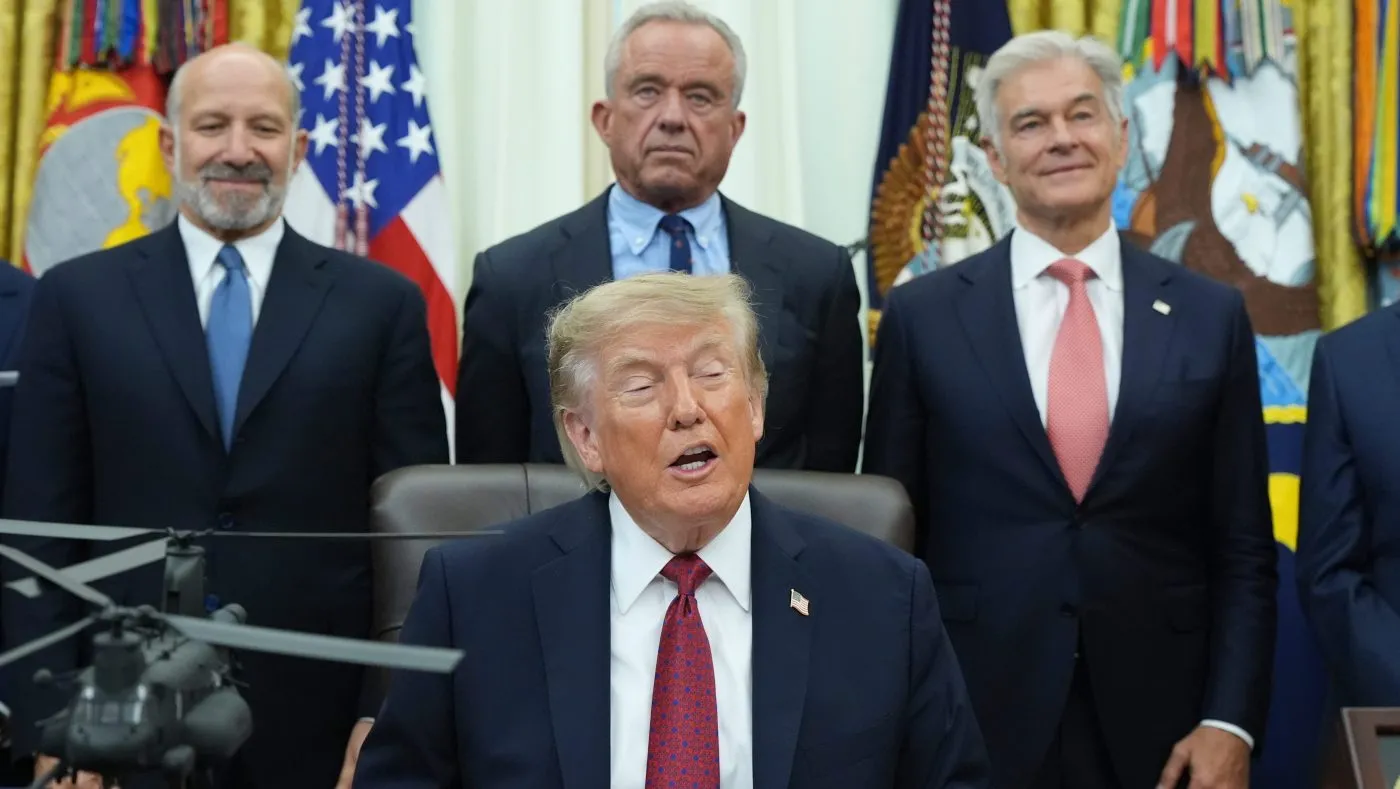
The Trump administration on Monday announced new Medicaid drug pricing agreements with nine mid-sized biotechnology and pharmaceutical companies.
Every drug “will be at the lowest prices available anywhere in the world,” President Trump said in the Oval Office, surrounded by company executives.
Under the agreements, the companies will charge state Medicaid programs the same prices for certain outpatient drugs as they charge foreign countries.
In exchange, the companies will be exempt from similar “ most favored nation ” pricing programs in Medicare. The companies will also get protection from pharmaceutical tariffs.
The manufacturers include Alcon, Astellas Pharma, BeOne Medicines, BridgeBio, CSL, Kyowa Kirin, Sun Pharma, Teva Pharmaceuticals and UCB, the White House said in a fact sheet.
According to the White House, the companies committed to invest at least $19.6 billion collectively in U.S. manufacturing. The White House said the agreements include drugs treating hemophilia, Parkinson’s disease, macular degeneration, glaucoma, liver disease, skin conditions, and various forms of cancer.
There are now 26 drug companies that have agreed to provide most favored nation pricing in Medicaid and to offer their medications on the TrumpRx website in exchange for tariff protection, including pharma giants like Pfizer, Merck and Eli Lilly.
Trump said the companies cover about 90 percent of the branded drug market.
“The other 10 percent are coming in — they have no choice,” Trump said.
Smaller and mid-sized drugmakers had been slower to volunteer for the administration’s drug pricing deals.
The White House has been eager to highlight its pricing agreements with drug company executives as part of a focus on affordability ahead of November’s midterm elections.
The administration says its drug pricing deals could save $64.3 billion in federal and state spending over the next decade, but that number is speculative. Additionally, the deals do not address costs for the more than 160 million people in the U.S. with employer-sponsored insurance.
Trump has long complained that the U.S. pays much more than other developed countries for the same medications, and he argued his most favored nation pricing will level the playing field and save Americans money.
“We were ripped off by the pharmaceutical companies, and we were ripped off more than anything by other countries throughout the world,” Trump said Monday.
But the actual impacts of the agreements reached so far are not known, as the details have largely been kept confidential. Most favored nation pricing could have a negligible impact on Medicaid patients because the program already guarantees the lowest price offered to any commercial payer.
Critics, including congressional Democrats, say the secretive agreements are all flash with no substance. The White House has been pushing Congress to codify the policy but hasn’t disclosed key details to lawmakers, so they can’t verify whether the deals save money for taxpayers.
No drugs to date have been launched in the U.S. under the most favored nation agreements.
Topics in this story
Gathered from external sources. Rights to this text belong to whoever originally published it.