Iran reignites Strait of Hormuz fight as US tightens squeeze
Iran appears ready to fight back against growing U.S. leverage in the Strait of Hormuz, and the threat of renewed war is causing oil prices to rise even as more ships are making it through the vital waterway with the help of the U.S. Navy. The Trump administration has worked to open passageways through the…
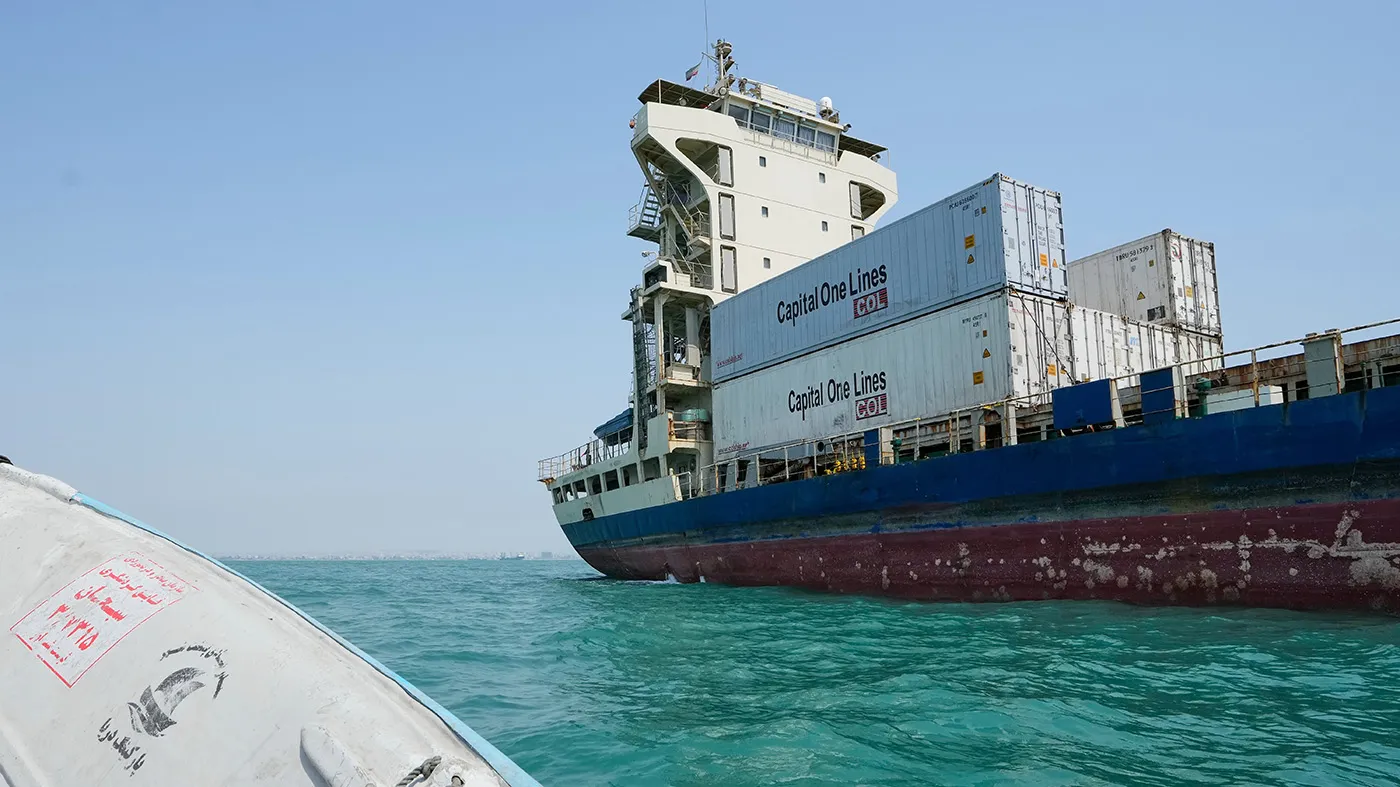
Iran appears ready to fight back against growing U.S. leverage in the Strait of Hormuz, and the threat of renewed war is causing oil prices to rise even as more ships are making it through the vital waterway with the help of the U.S. Navy.
The Trump administration has worked to open passageways through the strait and usher oil out, but the shipping lane remains essentially closed, and the escalating fighting is pushing oil prices higher compared to a more than monthlong lull in fighting.
Oil prices for the first time since July rose above $100 a barrel Wednesday — translating to an average of $4.22 per gallon of gas for Americans. And U.S. assets and allies in the Middle East came under renewed Iranian attack as the U.S. targeted Iranian vessels trying to export oil.
The tit-for-tat fighting between Washington and Tehran is only likely to intensify in the near term, pushing oil prices higher, according to Mona Yacoubian, director and senior adviser of the Middle East Program at the Center for Strategic and International Studies (CSIS) think tank.
“Ironically, the harder the U.S. pushes to get the strait back open, the harder Iran pushes back, leading to heightened escalation, fewer ships passing, and higher oil prices as a result,” Yacoubian told The Hill. “In other words, U.S. efforts to get oil flowing again by military means are having the opposite effect of further constraining supply getting out.”
President Trump brushed off questions Wednesday about American concerns about high oil prices, saying the aim of the U.S. war against Iran is to prevent the country from building a nuclear weapon.
“All you have to do is say, ‘Will you let Iran have a nuclear weapon?’ And the answer is no,” Trump said while speaking to reporters before he boarded Air Force One to head to the GOP’s midterm convention in Dallas.
Trump added that he expected oil prices “are going to be tumbling downward” after the Nov. 3 midterm elections.
He continued, “I think it’s going to take a little bit longer than the midterm.”
Trump and his top officials have appeared to abandon outreach for negotiations and are trying to use an economic pressure campaign, a blockade against Iran’s energy exports, and military strikes to force Tehran to concede.
“Originally I wanted to make a deal, we’re so far down the line, they have very little country left right now, so we’re not looking for it,” Trump said.
He suggested Iran is holding out for a Republican defeat in the November contest to tie the president’s hands.
“Yes, a negotiation could possibly happen, but it’s not something we’re looking at. This war will immediately end after our election,” Trump said.
The president further warned that more attacks against Iran were coming.
“You’re going to see a lot more,” he said.
On Tuesday, U.S. forces carried out attacks on five oil tankers belonging to Iran’s Islamic Revolutionary Guard Corps (IRGC), in retaliation for two ballistic missile attacks against a U.S. Navy warship, U.S. Central Command said in a statement .
U.S. Central Command, the military arm overseeing American forces in the Middle East, said it sank the Iranian oil tankers in the Gulf of Oman and near Kharg Island, with U.S. forces destroying 10 Iranian tankers over the past week.
That same day, the Treasury Department announced sweeping new sanctions against all of Iran’s airlines, claiming ties to the IRGC, and sanctions against nearly a dozen foreign entities for ties to the IRGC.
“The naval blockade now has an aviation counterpart,” Miad Maleki, a senior fellow at the Foundation for Defense of Democracies and a former senior Treasury Department official focused on sanctions, posted on social platform X .
The sanctions serve as a deterrent to any international bank, service provider or fuel supplier doing business with the blacklisted airlines and named companies — or risk sanctions from the U.S. themselves.
“While this isn’t a blockade in the legal sense and no aircraft is being intercepted, it does the same job through the financial system: it makes flying to, from, or for Iran very risky,” he said.
Secretary of State Marco Rubio said Wednesday the U.S. would continue targeting Iranian tankers in response to any attempts to strike American naval vessels.
“Iran continues to try to hit U.S. naval ships, and for every time they do that or try to do that, they’re going to lose tankers,” Rubio told reporters during a visit to Colombia.
While Iran may not have full control over the strait, it absolutely retains the ability to disrupt shipping and will continue to do so for the foreseeable future.
But should the U.S. intensify its targeting of Iranian oil tankers, Tehran could resume targeting Gulf energy infrastructure in retaliation, as it retains its asymmetric missile and drone capabilities “and therefore the ability to continue to wreak havoc,” according to Yacoubian.
Case in point, Iran is responding with its own aggression, claiming Wednesday that it targeted 10 ships near the Strait of Hormuz, including two U.S. vessels and eight oil tankers.
The IRGC said it hit the vessels as they attempted to traverse through an area Iran declared off limits . Tehran also launched ballistic missiles toward a U.S. base in eastern Jordan.
The U.S. military has disputed Iran’s claim it struck the two American warships.
Iran’s Speaker of Parliament, Mohammad Bagher Qalibaf, also warned of more intense Iranian strikes against U.S. oil and gas facilities in the region.
“Strike our assets and you get struck,” he posted on X . “We’ve already proven it. Ask the bases that are no longer viable.”
In addition, Maj. Gen. Mohsen Rezaei, secretary of the Iranian Supreme National Security Council, reportedly said Sunday that Iran is implementing a “restricted zone,” forcing any vessels in that territory to comply with Iranian demands.
Six commodity vessels transited the Strait of Hormuz on Tuesday, Reuters reported , citing data from Kpler. That is down from nine the previous day and below the 10-day average of approximately 12 vessels. Those figures do not include vessels that have turned off their Automatic Identification System transponders to avoid detection.
The strait typically handled 125 large commercial vessels per day, including oil tankers and natural gas carriers, prior to the launch of the U.S. and Israeli war against Iran on Feb. 28.
“All of this spells greater turmoil in the oil market going forward,” Yacoubian said. “President Trump is now saying that oil prices will not come down until after the U.S. midterm elections, an apparent resignation to the prospect of continuing high oil prices.”
Topics in this story
Gathered from external sources. Rights to this text belong to whoever originally published it.