NASA wants to see your pictures of the sky. Here’s why
NASA wants you to point your phone to the sky and take a picture of the clouds. For science.
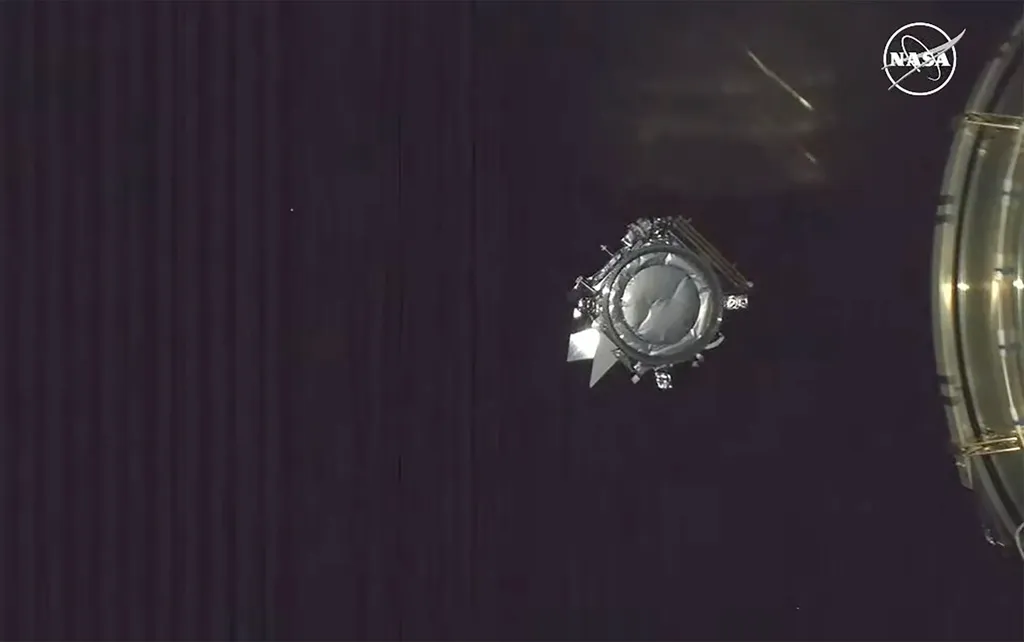
(NEXSTAR) – NASA wants you to point your phone to the sky and take a picture of the clouds. For science.
Starting on Sept. 15, the space agency’s PACE satellite (which stands for the Plankton, Aerosol, Cloud, ocean Ecosystem satellite) will circle the Earth every 98 minutes. While it’s overhead, the satellite will be collecting important environmental data, measuring how clouds and particles in the atmosphere absorb and reflect sunlight.
Here’s where you (and everyone else on land) comes in: Scientists want to compare what they’re seeing in the sky with what you’re seeing on the ground.
The pictures will help researchers to better understand the far-away images they’re capturing from space, said Dr. Andrew Sayer, the PACE atmosphere lead. Because each pixel in the PACE satellite images represent a distance of about 0.75 miles across, ground observations will give more detail and help fill in the gaps.
“We want to be able to identify whether or not each pixel in a satellite image is a cloud or not, because if it’s cloudy we want to determine the properties of that cloud, and if it’s not cloudy we want to determine the properties of the atmosphere and surface underneath the cloud. … So the ground observers will help us to assess that.”
Download the Globe Observer app and set an alert for when the PACE satellite is passing overhead. “Timing is critical!” the researchers say, so make sure you’re ready.
Five minutes before PACE passes overhead your location, head outside and get in position for your cloud observation.
When you’re ready for your observation window, click the “Clouds” tool.
Collect the cloud photos in the six directions as instructed by the app.
The researchers ask you only take and submit cloud photos during daylight hours, not at night. More details about how to participate can be found online here .
The project runs through Oct. 15, so you have a month to participate once the project kicks off.
The PACE satellite launched in 2024 with the goal of observing our atmosphere and oceans in close detail from 420 miles away.
“It’s going to be an unprecedented view of our home planet,” said project scientist Jeremy Werdell when the satellite launched.
Scientists hope these observation help improve weather forecasting, including the timing of hurricanes and toxic algae blooms.
Topics in this story
Gathered from external sources. Rights to this text belong to whoever originally published it.