Khanna asks AI firms for information on efforts by China to access code
The leading Democrat on the House’s select committee to investigate the Chinese Communist Party (CCP) is calling on the U.S.’s leading artificial intelligence labs for information on Beijing’s alleged efforts to steal model weights from their firms. Rep. Ro Khanna (D-Calif.), the ranking member of the House Select Committee on the CCP, requested data Thursday…
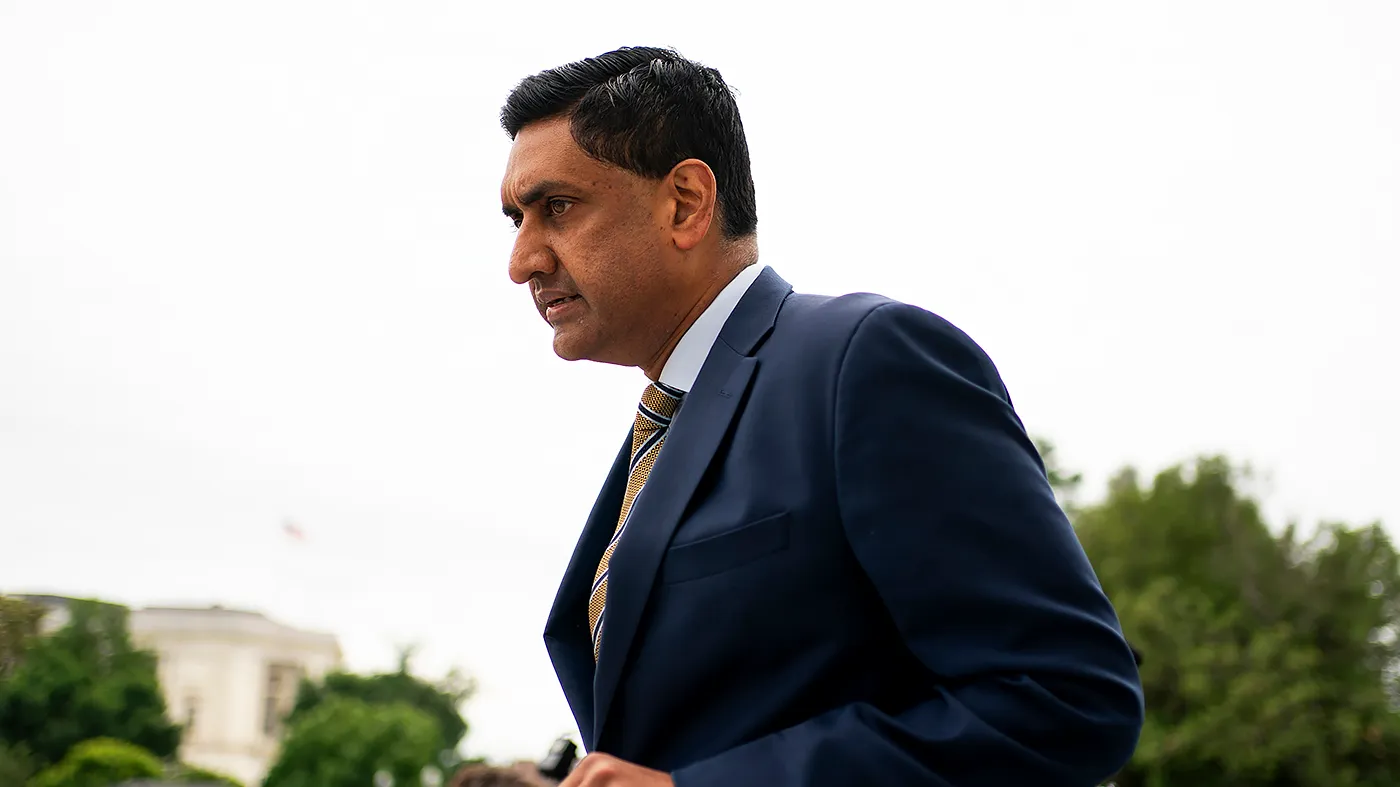
The leading Democrat on the House’s select committee to investigate the Chinese Communist Party (CCP) is calling on the U.S.’s leading artificial intelligence labs for information on Beijing’s alleged efforts to steal model weights from their firms .
Rep. Ro Khanna (D-Calif.), the ranking member of the House Select Committee on the CCP, requested data Thursday from OpenAI, Anthropic, Meta and Google’s parent company Alphabet, expressing concerns the CCP’s theft could “erode America’s AI lead with the stroke of a keyboard.”
Model weights are the numerical parameters inside AI systems that store the learning machine’s knowledge and determine its outputs.
“If the PRC [People’s Republic of China] were to steal a proprietary model weight from a leading U.S. frontier lab through state-sponsored hacking, the CCP would instantly bypass years of expensive research and obtain immediate access to advanced capabilities that U.S. Government policy has long sought to deny the PRC,” Khanna wrote in letters obtained by The Hill.
Michael Kratsios, the director of the White House’s Office of Science and Technology Policy, wrote in a memo earlier this year that the U.S. government has learned Chinese entities are leveraging thousands of proxy accounts and jailbreaking tactics to access proprietary information.
This process is referred to as distillation, during which the outputs of a stronger system are used to train less capable ones. They do not meet the full performance capabilities of the original but allow foreign actors to release products that appear comparable for a cheaper price.
The U.S. has sought to limit the transfer of U.S. technology to China amid the tight AI race. President Trump came under backlash from his own party late last year over his decision to allow Nvidia to sell its H200 chips to China.
Khanna’s letters were first reported by Reuters.
The California Democrat argued that , even if Chinese actors do not steal a full model weight, they could obtain “valuable IP [intellectual property]” from the American companies’ systems and access sensitive research.
He asked the companies to hand over a list of all known instances of China or another hostile actor trying to obtain model weights and IP over the past two years, along with the firms’ efforts to boost cybersecurity.
“Just as your companies have a responsibility to protect against potentially dangerous uses of your models and the impacts of AI on humanity and society, you have a responsibility to ensure a cybersecurity incident at your company does not endanger American national security,” Khanna wrote.
Neither the companies nor the Chinese Embassy in Washington immediately responded to request for comment.
Topics in this story
Gathered from external sources. Rights to this text belong to whoever originally published it.