Trump health nominees face tame Senate hearing: 3 takeaways
Senators heard from three of President Trump’s health nominees on Wednesday, including his third pick to be U.S. surgeon general, with this recent crop seeming to better align with what lawmakers wanted to hear. The Senate Committee on Health, Education, Labor and Pensions (HELP) held a hearing to go over the nominations of Nicole Saphier…
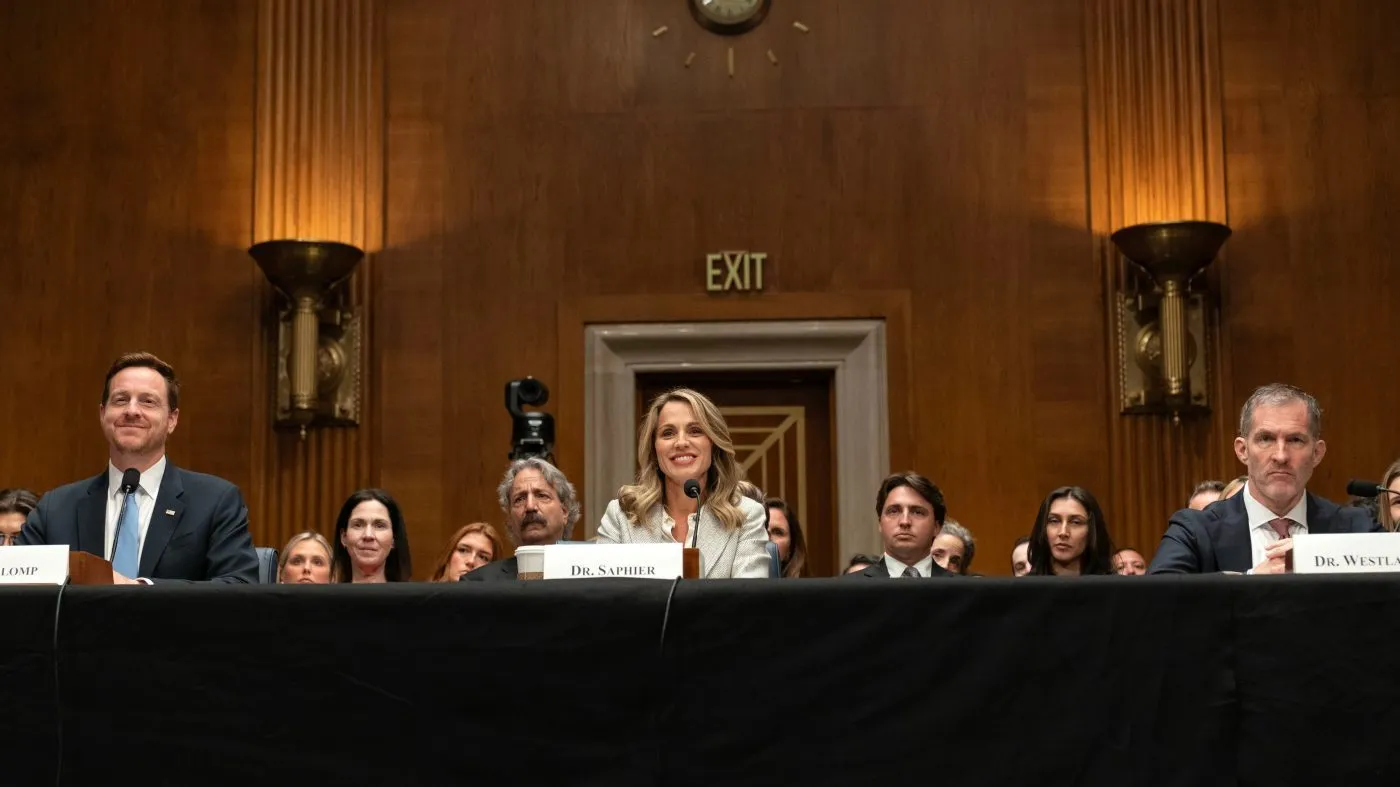
Senators heard from three of President Trump’s health nominees on Wednesday, including his third pick to be U.S. surgeon general, with this recent crop seeming to better align with what lawmakers wanted to hear.
The Senate Committee on Health, Education, Labor and Pensions (HELP) held a hearing to go over the nominations of Nicole Saphier to be surgeon general, Chris Klomp to be deputy secretary of the Department of Health and Human Services (HHS) and Timothy Westlake to be assistant secretary for mental health and substance use.
Saphier, a radiologist and former Fox News contributor, is Trump’s third pick after his previous two failed to gain enough support among Senate Republicans. Klomp is a top ally of HHS Secretary Robert F. Kennedy Jr. who is currently serving as HHS chief counselor and was credited with leading implementation of the Trump administration’s “ most favored nation ” policy.
Westlake, a board-certified emergency physician, currently serves as chief of staff at the Substance Abuse and Mental Health Services Administration (SAMHSA).
In contrast to prior confirmation hearings for Trump’s health nominees, Wednesday’s hearing was notably tame. Lawmakers on both sides of the aisle signaled an openness to the nominees before them.
Here are three takeaways from Wednesday’s hearing:
Klomp and Westlake both have some familiarity with members of the committee through their work for the administration, with Klomp having appeared before the Senate Finance Committee on Tuesday to discuss his nomination.
Both Saphier and Westlake have backgrounds in supporting legislative priorities that align with those of the committee members.
Saphier, director of breast imaging at Memorial Sloan Kettering Cancer Center-Monmouth, helped draft and pass state-level legislation that mandated breast density notification to patients while practicing in Arizona, later supporting similar policies in states like New York and New Jersey.
Dense breast tissue can make it harder for traditional mammograms to detect potential cancers. Past research suggests most women don’t know about their breast density or about the association to higher breast cancer risk.
Sen. Susan Collins (R-Maine) noted during the hearing that she and Sen. Tammy Baldwin (D-Wis.) have introduced legislation to reauthorize the National Breast and Cervical Cancer Early Detection Program, and she told Saphier that she looked forward to working with her on better implementing the program.
Last year, Westlake testified in support of the HALT Fentanyl Act, the legislative framework for which he helped develop first in 2016 in Wisconsin. The bill outright classifies all fentanyl-related substances as Schedule I controlled substances, in lieu of scheduling each fentanyl-related substance separately.
HELP Chair Bill Cassidy (R-La.) praised Westlake’s help in supporting the legislation.
“I’m confident that you will continue to champion and promote pro-patient policies as assistant secretary for mental health and substance use,” said Cassidy.
A less combative Trump health nominee hearing
The energy during Wednesday’s hearing was not as tense as previous hearings have been, perhaps due to the lower profile nature of the positions for which the nominees are up for, as well as their more mainstream backgrounds.
Cassidy offered a warm reception to the nominees during the hearing, saying he “really enjoyed all of your opening statements.”
The senator from Louisiana was further heartened when Saphier said the measles, mumps and rubella (MMR) vaccine was “our greatest tool for combating measles.” She also said the vaccine is not lethal — a departure from Trump’s recent remarks about the shot .
Saphier likely won some more points with Cassidy when she voiced her support for a universal birth dose of the hepatitis B vaccine, a policy that Trump and Kennedy have both opposed and an issue close to Cassidy’s heart.
“I’m open to future discussions about it, but at this point, the data that we have is based on the universal birth dose. And being someone in academic medicine, I believe in evidence-based medicine, and that’s all I have right now is that the universal birth dose has been the most effective policy here in the United States for reducing infection,” Saphier said.
Sen. Tim Kaine (D-Va.) similarly offered a warm welcome to the nominees, congratulating Klomp on his nomination.
More direct responses on Trump, vaccine questions
The nominees on Wednesday were noticeably less evasive than previous Trump picks, giving mostly unequivocal answers to questions posed by lawmakers.
Lawmakers on both sides of the aisle expressed frustration with vague, conditional remarks that previous nominees had given the committee.
When pressing Saphier for more robust support of MMR vaccines, Cassidy said, “I’ve had wiggle room from people sitting there, as Senator Baldwin said, who later used that wiggle room to do things which were quite contrary.”
Sen. John Hickenlooper (D-Colo.) said, “We’ve had previous nominees come before the committee that stated their intention to preserve scientific integrity and independence. Multiple times, we’ve seen this not that commitment not being upheld.”
Sen. Maggie Hassan (D-N.H.) asked both Saphier and Westlake, “If directed by the president to take action that would break the law, would you follow the law or follow the president’s directive?”
Similar questions were posed to previous health nominees like former Centers for Disease Control and Prevention Director Susan Monarez and current National Institutes of Health Director Jay Bhattacharya. In both instances, Bhattacharya and Monarez insisted that Trump would never ask them to break the law.
In contrast, Saphier and Westlake each answered without appealing to Trump.
Saphier told Hassan, “I have no intention of breaking the law, senator,” while Westlake said, “My ultimate responsibility is to the American people. I follow the law.”
Topics in this story
Gathered from external sources. Rights to this text belong to whoever originally published it.