White House faces mifepristone test
The Trump administration is set to face another key test on abortion, with two months to go until the midterm elections. A three-judge panel on the 5th U.S. Circuit Court of Appeals in New Orleans is poised to hear oral arguments next week in a case that could eventually restrict the nationwide distribution of the…
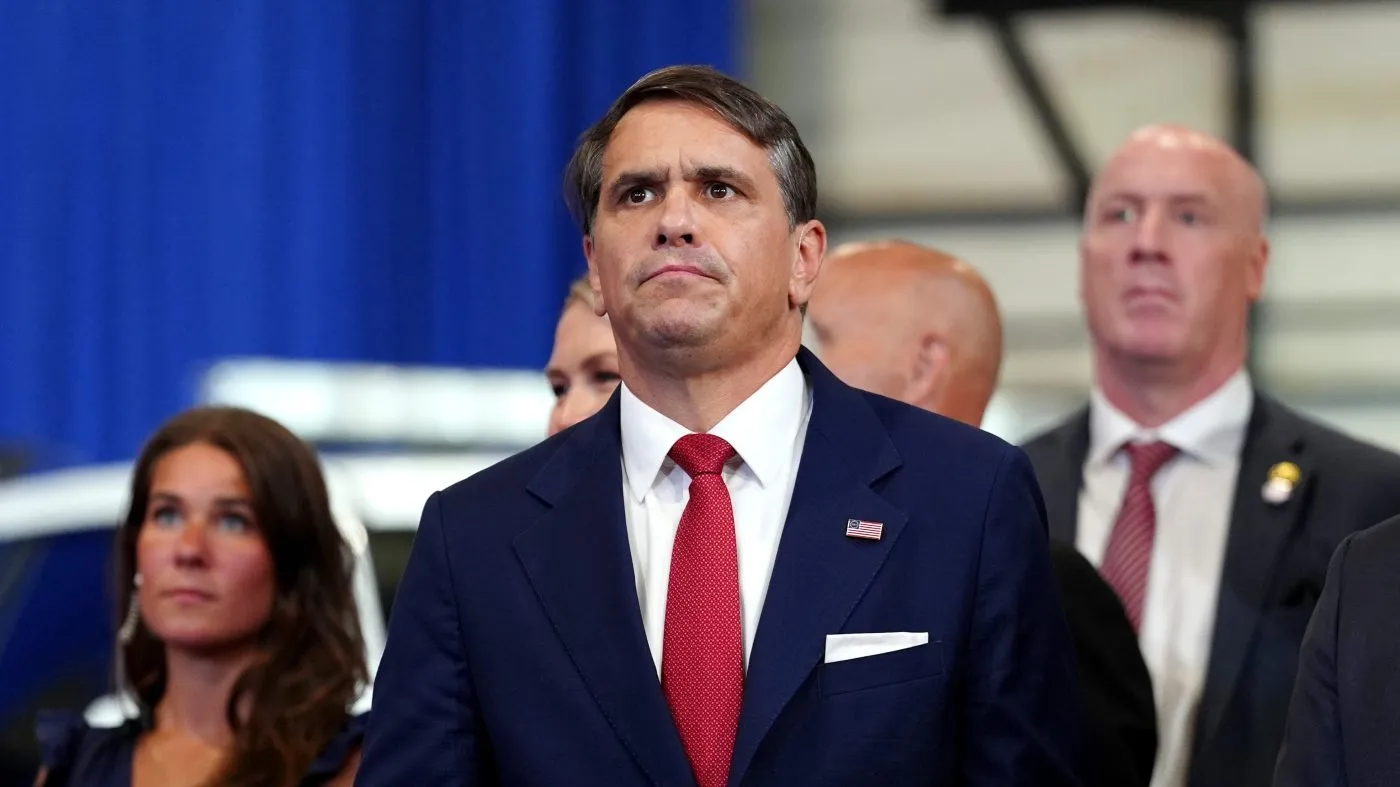
The Trump administration is set to face another key test on abortion, with two months to go until the midterm elections.
A three-judge panel on the 5th U.S. Circuit Court of Appeals in New Orleans is poised to hear oral arguments next week in a case that could eventually restrict the nationwide distribution of the abortion drug mifepristone.
Medication has become the most common method of abortion since Roe v. Wade was overturned in Dobbs v. Jackson Women’s Health Organization, with much of that increase coming from telehealth prescriptions.
The Biden administration loosened telehealth regulations in response to the COVID-19 pandemic, allowing a surge of pills to be prescribed through telehealth, in pharmacies and through the mail.
Louisiana, which has almost completely banned abortion, objected to the policy and sued.
The state argued that the FDA’s permissive rules undercut its near-total abortion ban and were a violation of the state’s sovereignty. Louisiana also asserted the FDA didn’t have enough safety data to roll back the in-person dispensing requirement.
According to the Guttmacher Institute, a think tank that supports abortion access, about 91,000 abortions were provided last year via telehealth prescription of abortion medication sent by mail to states with bans, including more than 9,300 in Louisiana.
“The stakes in this case are enormous,” Kelly Baden, Vice President for U.S. Policy & Communications at Guttmacher said in a statement. “Patients, providers, and communities have endured nonstop attacks on abortion access— the Fifth Circuit must reject this baseless case and affirm the status quo for nationwide access to medication abortion.”
The Louisiana case has put the Trump administration in an awkward political bind: it won’t defend moves made by the Biden administration, but Attorney General Todd Blanche has not yet settled the lawsuit, much to the disappointment of conservatives who have been pressuring him.
“The Trump administration could resolve this issue tomorrow by settling our case. Absolutely,” said Gabriella McIntyre, legal counsel of Alliance Defending Freedom, which is helping to argue the case for Louisiana and one of its residents, a co-plaintiff who says her then-boyfriend coerced her into taking abortion pills.
During his confirmation hearing, Blanche pledged to take action to stop mifepristone from being available through the mail.
“You know, I’ve seen video myself of what appears to be pills coming even from overseas to young women, and doesn’t matter who applies for it, anybody can get it. There’s no instructions; they just come dumped out of a little plastic bag, and it’s wrong,” Blanche said. “And I very much commit our resources to stopping this.”
During a private call with faith leaders, Blanche hinted that restrictions on mail-order abortion drugs are coming.
The administration is “putting practices and policies in place so that other states and other organizations” can’t send abortion pills through the mail to states where they are banned, he said.
But meanwhile, the Justice Department has been urging courts to put mifepristone lawsuits on hold until FDA finishes a safety review.
An administration official said in June the retrospective analysis of data is likely to take six months to complete, but initial results could be released earlier. The district court judge in Louisiana set an Oct. 7 deadline for a status update, meaning some of the FDA’s efforts will be clear just weeks before the election.
Anti-abortion groups hope the review will result in restrictions on mifepristone, but they want the FDA to move faster. The administration says the work takes time, but conservative states aren’t waiting.
The Louisiana case is one of three federal lawsuits that could affect telehealth access to mifepristone nationwide. The others are being considered in Missouri and Texas.
The Texas case was paused by a federal judge on Aug. 31, while the Missouri case is still being briefed.
In Louisiana, a federal district judge said the state had a strong case but decided to pause the lawsuit while FDA’s review was in progress. Louisiana appealed, and the 5th Circuit in May ruled in favor of the state, temporarily blocking telehealth prescriptions of mifepristone nationwide.
The Supreme Court then paused the 5th Circuit’s ruling and sent the case back, after two manufacturers of mifepristone appealed. Notably, the Justice Department declined to weigh in, though other GOP states and members of Congress did.
McIntyre said the Trump administration’s silence on the merits of the case speaks volumes, because it means the administration doesn’t believe the FDA’s actions were defensible.
She expects much of Wednesday’s arguments to focus on whether Louisiana has standing to argue for a nationwide ruling.
“If Louisiana wins, we’re going to see for the first time truly what it looks like for pro-life states to actually be able to enforce their pro-life laws protecting the unborn. That was the promise of Dobbs,” McIntyre said.
Katie Keith, director of the Center for Health Policy and the Law at Georgetown University’s O’Neill Institute, agreed that the administration’s attempt to thread a political needle may backfire.
“They’re not being able to have it both ways on this,” Keith said. “By trying to sort of stay out of it and just say we’re doing our review, that position has actively been used against them in court [and] could be the thing that the courts point to … to actually limit access to the drug.”
The FDA has repeatedly found mifepristone is safe and that a medication abortion regimen that includes mifepristone and a second drug, misoprostol, is a safe and effective alternative to surgical abortions.
Mifepristone has been used by more than 7.5 million people in the U.S. for medication abortion and miscarriage care since the FDA approved it more than two decades ago. A series of agency actions in 2016 and 2023 loosened access to the drug, and abortion opponents have been strategizing attacks ever since.
The first major assault began in 2022, when anti-abortion doctors and medical organizations sued to try to revoke the original approval of mifepristone.
While lower courts agreed, the Supreme Court in 2024 unanimously upheld access to mifepristone on a technicality, ruling that doctors and medical groups opposed to abortion did not have a legal right to sue.
The 5th Circuit is considered to be of the most conservative appeals courts in the country, but Wednesday’s panel includes two judges appointed by Democratic presidents; one from former President Obama, and one from former President Biden.
Greer Donley, an abortion law expert and professor at the University of Pittsburgh School of Law, said no matter what the appeals court eventually rules, the case is almost certainly going to the Supreme Court.
Given the FDA’s ongoing review, the other mifepristone cases around the country, and the likelihood of the high court’s involvement, “it makes me feel like this is just all political theater,” Donley said.
Topics in this story
Gathered from external sources. Rights to this text belong to whoever originally published it.