Archaeologists digging in Alexandria's ancient royal quarter uncovered massive limestone foundations and a hidden tunnel that could belong to a long-lost Ptolemaic royal tomb, but its identity remains unconfirmed
There is a light at the end of the tunnel, or so they say.
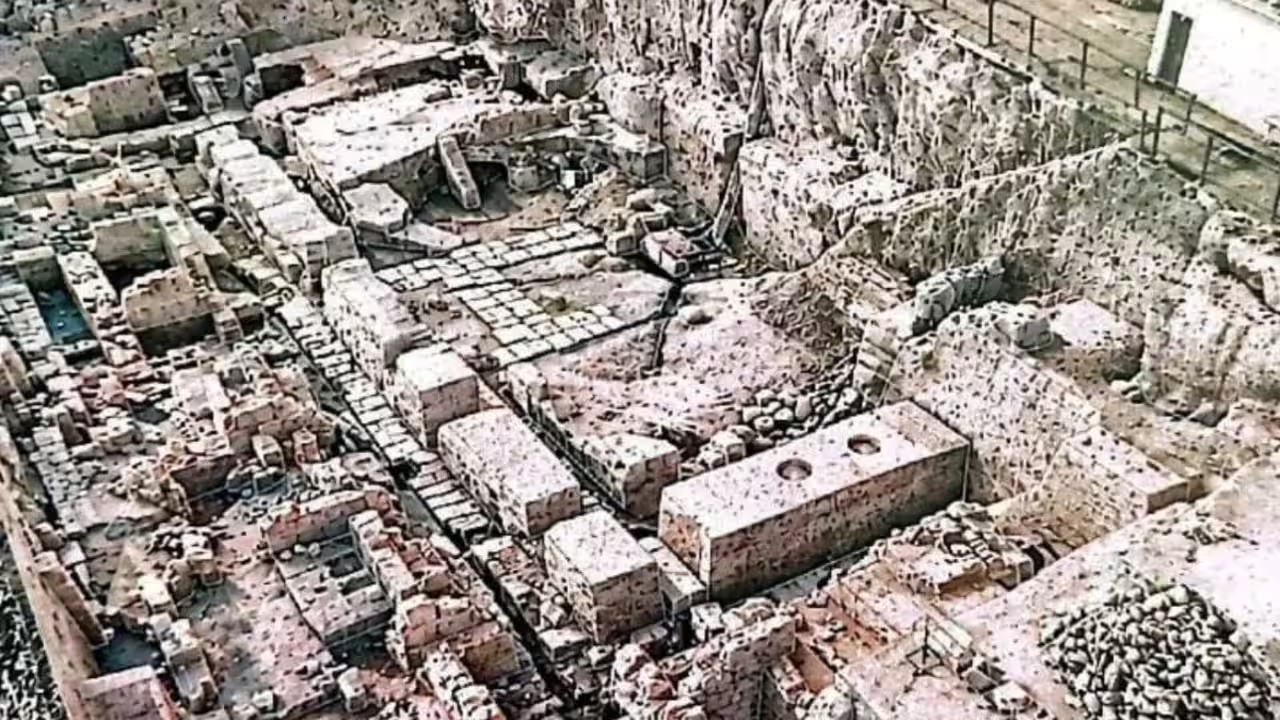
There is a light at the end of the tunnel, or so they say. Light, perhaps, but no one ever tells you that the tunnel itself could be buried deep beneath the ground, leading you not towards an exit, but towards history. In Alexandria, archaeologists have uncovered just such a passage, alongside massive limestone foundations that could hold clues to a long-lost Ptolemaic royal tomb. While there are several theories about the possible purpose of this structure, some researchers believe it may have served a funerary function.According to Ahram Online, a Greek archaeological mission from the Hellenic Institute for the Research of the Alexandrian Civilization (HRIAC), headed by Calliope Limneos-Papakosta, uncovered the remains at the Shallalat Gardens archaeological site in Alexandria's ancient Royal Quarter. Following the submission of the excavation report, Egypt's Ministry of Tourism and Antiquities appointed a specialised scientific committee to examine the discovery.While there are several theories about the possible purpose of the newly uncovered structure, some surmise that it may have served a funerary function and could potentially be connected to the royal tomb associated with Ptolemy IV Philopator.Findings beneath the gardenThe excavation work has been largely successful, revealing a square-shaped foundation made from limestone blocks, with walls surrounding the structure and a tunnel extending northwards beneath the building. Given the scale and dimensions of the foundation, researchers suspect that it may have supported a large, possibly tall structure. What exactly it may have been, though, is yet to be ascertained.Following the discovery, a committee headed by Ayman Ashmawy of Egypt's Supreme Council of Antiquities inspected the remains. The committee included specialists and professors of Greek and Roman history and archaeology from Alexandria and Tanta universities. Its assessment highlighted the architectural features of the structure, particularly its scale and possible funerary character, as reasons to investigate a potential connection with the royal burial complex of the Ptolemaic rulers.However, Ashmawy has emphasised that the proposed identification is a preliminary hypothesis rather than a confirmed conclusion. Further archaeological investigations will be necessary to establish the building's precise identity, function and relationship with the surrounding structures.A possible connection to the Ptolemaic royal tombsThe possibility of a royal tomb brings to mind the name Ptolemy IV Philopator, a ruler belonging to the Ptolemaic dynasty, established after the death of Alexander the Great. The dynasty governed Egypt for nearly three centuries, from 305 to 30 BC, when Cleopatra VII's reign ended following the Roman conquest.Alexandria was the dynasty's political and cultural centre, and its Royal Quarter housed monumental buildings and royal residences. The district was closely associated with palaces, administrative spaces and important institutions that helped establish the city as one of the Mediterranean world's most prominent centres.The ancient Greek geographer Strabo, in Book XVII of his Geography, describes the Sema, an enclosure within the royal palace complex that contained the burial places of the kings and Alexander the Great. Strabo's account has therefore served as an important historical reference for understanding the city's royal funerary landscape. The newly uncovered remains bring renewed attention to these historical accounts and the many mysteries of Alexandria that continue to intrigue archaeologists.Alexandria continues to surprise archaeologistsMuch of ancient Alexandria is difficult to study because its archaeological remains are scattered beneath the modern city, while other portions of its ancient landscape have been submerged. Decades of underwater investigations have revealed structures associated with the former royal district, including remains of palaces, harbours and monuments. On land, archaeological excavations have also helped researchers understand how the city developed through different historical periods.The Bibliotheca Alexandrina's Antiquities Museum, in an announcement about its exhibition, Twenty Years of Excavations at Shallalat Gardens (2006–2026), dated April 24, 2026, highlighted discoveries made during two decades of archaeological research by HRIAC.These included a Hellenistic statue possibly identified as Alexander the Great, remains of a monumental public building, sections of a Roman road and the Hellenistic Royal Road, as well as a large subterranean tunnel. Together, these findings have helped researchers reconstruct the topography of ancient Alexandria and understand the extent of its Royal Quarter.The newly uncovered tunnel has certainly opened another passageway for archaeological investigations into a city that continues to reverberate with tales of myriad historical figures, their lives and the ways in which they shaped its history. One discovery at a time, archaeologists are piecing together fragments of Alexandria's past. Its buildings, bricks, stones and walls are more than remnants of an ancient civilisation; they are echoes of a city whose history is still waiting to be fully uncovered.Fearless legend or grounded realist? Rate yourself on 11 categories in the Great Indian Confidence Survey – find out in 3–6 min
Topics in this story
Gathered from external sources. Rights to this text belong to whoever originally published it.