‘Hans Zimmer in Space’: NASA turns baby star formation into cosmic music
Sound on: Here’s how a star is born! Everybody knows space is supposed to be silent: no air, no sound, just endless quiet.
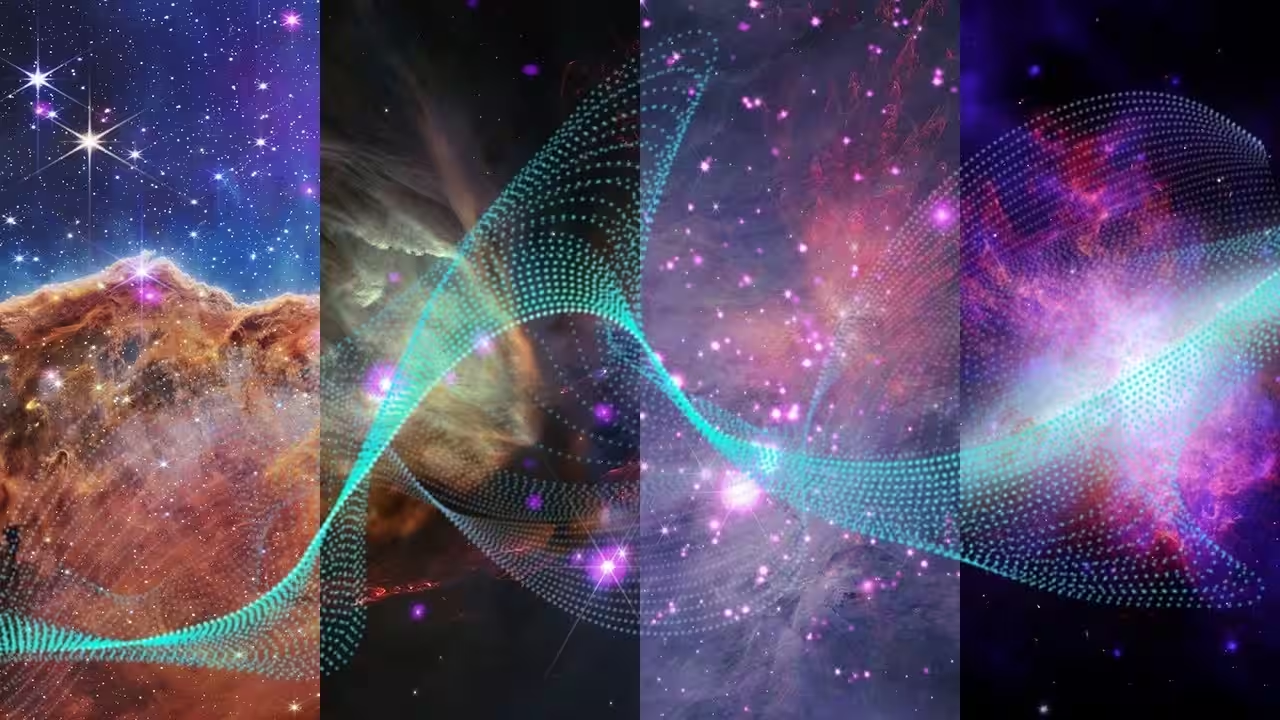
Sound on: Here’s how a star is born!Everybody knows space is supposed to be silent: no air, no sound, just endless quiet. But what if the universe actually had a soundtrack, filled with strange, cinematic music that thrums and shimmers like something out of a science fiction blockbuster?Leave it to NASA to turn this idea into a reality. Their Chandra X-ray Observatory, teaming up with the Hubble and James Webb space telescopes, has taken telescope data and spun it into music, giving us a whole new way to explore the stars.Soundtrack of the universe: What’s happeningReleased this November, NASA’s latest audio collection is a wild blend of science, art, and accessibility. The project translates telescope observations into sound, which is a technique they call sonification. Instead of just looking at gorgeous images of colorful nebulae and newborn stars, you can now hear the data. Imagine sweeping strings, deep digital pulses, and delicate, twinkling notes, all based on what’s actually happening in faraway regions of space.It’s not just for show, either. The idea is to make astronomical phenomena accessible to people who can’t see visuals, in particular, those who are blind or have limited vision. But honestly, anyone can get swept up in the experience. Because the results are surprisingly musical!Listen to these cosmic tracks, and you’ll realize just how alive the universe feels.How does NASA make music out of space?Here’s how it works. Scientists take raw data, like light intensity, brightness, position, and more, from major telescopes like Chandra, Webb, and Hubble. They then assign different musical qualities to the data. Brighter sources become louder. The location and movement of stars turn into shifting notes. Different wavelengths translate into distinct instruments or textures. Instead of interpreting dots and colors, listeners hear plucks, chords, and drones.For the latest release, titled ‘New Album of Baby Star Sounds’, NASA picked four ‘cosmic destinations’, all regions where stars are actively forming. They include the starburst galaxy Messier 82 (M82), the Orion Nebula, the Cosmic Cliffs of the Carina Nebula, and the Rho Ophiuchi cloud complex. Each has its own ‘personality’, shaped by the kind of data and energy unfolding inside.Four cosmic destinations, four different soundtracksTalking about personalities, take Orion’s Nebula, for example. It’s one of the closest and busiest star-forming regions to Earth, and Chandra detects over a thousand baby stars bursting with X-ray energy. Their emissions become glittering, twinkling sounds layered over the low, resonant tones of gas and dust captured by Webb’s infrared eye.Then, there’s the Carina Nebula with Cosmic Cliffs, famous for its towering clouds in images; it translates to quick string strikes from individual stars, sitting atop long, atmospheric notes for the glowing gases. Even the musical silences speak: in Rho Ophiuchi, there’s a gap in the sound that mirrors light-blocking dust clouds.Then comes M82, aka the Cigar Galaxy, a starburst galaxy where stars are forming at a rate tens or even hundreds of times faster than in the Milky Way. The sonification combines X-ray observations from Chandra with optical images from Hubble and infrared data from Webb and the retired Spitzer Space Telescope. The result? It’s a layered composition featuring low drones, plucked sounds, and higher-pitched tones.Finally, Rho Ophiuchi, a cloud complex containing stars of different ages and sizes, brings a combination of glassy high-pitched tones, metallic plucks, and atmospheric sounds. Interestingly, a noticeable silence in the recording represents dark dust clouds that emit very little light.Why is NASA doing this?Sure, the music is beautiful and weirdly catchy, but what’s the point behind this? NASA itself leaned into that, joking on social media that these “baby stars” could top the charts. But there’s more to the project than novelty.Turns out, sonification gives people with visual impairments a way into the universe’s secrets. Kimberly Arcand at Chandra heads the effort, working with astrophysicists and musicians to bring out the hidden ‘voices’ in data. And the reaction? Overwhelming. People of all backgrounds (think: sighted, blind, astronomers, casual listeners) report emotional responses, new understanding, and even bursts of inspiration. It turns out there’s something powerful about letting your ears, not just your eyes, take in the enormousness of space.However, it’s important to note that space itself doesn’t actually make sound. There’s nothing to carry sound waves out there. These tracks are creative, data-driven translations, not “real” recordings. Even so, they open up the cosmos in a totally unexpected way.Social media’s take on cosmic soundtracksOnce NASA put the album out there, it didn’t take long for people online to start drawing comparisons to film scores, from Interstellar’s eerie soundscapes to classic sci-fi blockbusters. NASA’s ‘universe album’ even got some playful hype, and earlier space sonifications, like the black hole at the heart of the Perseus galaxy, sparked similar buzz for their haunting, cinematic vibe.One internet user started off with the much-deserved hype: “Is that Hans Zimmer playing in space?” Another echoed the sentiment: “Are we saying that none of these galaxies have electric guitars or distortion pedals? Are we truly alone?” A third user was rather cheekier: “Can’t believe I heard when Lady Gaga was born!” Another user summed it up perfectly: “So whimsical!”After all, at its core, the project is about reimagining how we connect with the universe. You listen, and you feel like space itself is speaking, each nebula and galaxy with its own strange song. Maybe it isn’t Hans Zimmer, but in a universe this creative, a little music is exactly what we need to dance along!Get the latest movie news, reviews, and celebrity updates. Download the TOI App.
Topics in this story
Gathered from external sources. Rights to this text belong to whoever originally published it.