After 70 years without nesting in Green Bay, piping plovers returned to dredged-material islands in 2016; years later, four pairs are breeding around the bay
In 2016, a pair of piping plovers returned to Green Bay and nested at a place that had been rebuilt from material dredged from the harbour.
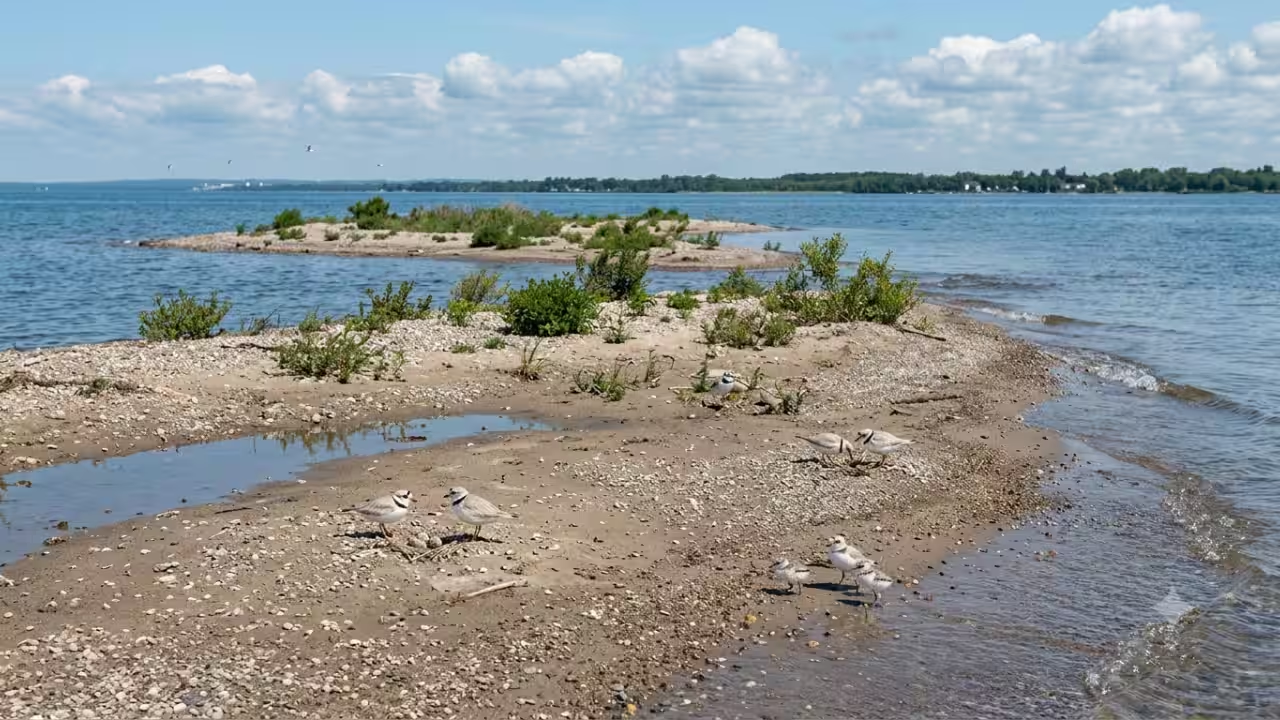
In 2016, a pair of piping plovers returned to Green Bay and nested at a place that had been rebuilt from material dredged from the harbour. The site, known as the Cat Island Restoration Chain, had been created turning material removed from the bay into new habitat in lower Green Bay, Lake Michigan. Their arrival was significant for another reason: piping plovers had not nested in the bay for more than seven decades. Since then, the birds have continued to use the restored site, with 68 wild-hatched chicks fledged there. In 2026, the recovery story expanded beyond Cat Island, with breeding pairs now appearing at nearby Longtail Point.385,000 cubic yards of harbour mud helped create a new home for ploversThe Cat Island Restoration Chain was established as a beneficial use site for dredged material in Green Bay. Instead of treating the sediment removed during harbour maintenance simply as waste, the material was used to rebuild land in the bay.According to 2016 US Army Corps of Engineers, about 385,000 cubic yards of harbour sediment went into the restoration work. The resulting islands and surrounding habitat provided space for shorebirds and other wildlife, while also creating an area where piping plovers could nest.That opportunity was taken up in 2016, when a pair established a nest at the site. As reported by the US Fish & Wildlife Service, it was the first known piping plover nesting event in Green Bay in more than 70 years. The return did not remain a one-off event.New nesting site signals a wider return of piping plovers around Green BayPiping plovers have nested at the Cat Island site every year since 2016. Over that period, 68 wild-hatched chicks have fledged from the restoration area, adding new birds to the small Great Lakes population. As the number of birds using the site increased, some began moving beyond the original restoration area. Suitable habitat elsewhere around Green Bay offered the possibility of the species spreading into additional breeding locations.That pattern became clearer in 2023, when a pair was recorded nesting at Longtail Point, roughly two miles north of the Cat Island Restoration Chain. Longtail Point is a Wisconsin state wildlife area and is used by migrating shorebirds and other waterbirds. For the piping plover, however, the available nesting habitat has been more difficult to maintain.A shrinking nesting area adds new challenges for Longtail Point ploversA pair has returned to Longtail Point during each breeding season since 2023. The first two seasons did not produce a wild-hatched chick, with nests affected by problems including predation and the loss of eggs. The site has relatively little open beach remaining. Vegetation and woody plants have spread into areas that piping plovers favour for nesting, while wind and waves have also contributed to erosion at the point.The difficulties became clear during the pioneering pair's first nesting attempt. In 2023, the nest survived a washout but the entire clutch was later lost to a common grackle. The bird is an omnivorous species that can make use of both woodland edges and coastal habitats.Predators remain a separate concern. In 2026, at least one adult piping plover breeding at Longtail Point was killed by an avian predator, believed to have been a great horned owl. Trees such as cottonwoods can provide perches for aerial predators, adding another problem in an already limited nesting area.New habitat work is reshaping Longtail Point for breeding piping ploversWork at Longtail Point is now being carried out to make the area more suitable for breeding plovers. The US Fish and Wildlife Service's Coastal Program and the Wisconsin Department of Natural Resources secured funding through the Great Lakes Restoration Initiative for habitat improvements planned between 2024 and 2027.Some of the work has already taken place. Vegetation has been treated using both chemical and mechanical methods, with a prescribed burn also being considered for removing dead plant material. The aim is not simply to create more open ground. For piping plovers, the condition of the nesting area can affect whether eggs survive and whether chicks remain on site long enough to reach the fledging stage.Longtail Point recorded its first wild hatch after the breeding pair had failed to produce wild-hatched young in the previous two seasons. None of those chicks ultimately fledged, but the hatch itself marked a change from what had happened there in 2023 and 2024.Green Bay produced 10 fledglings in 2026The wider Green Bay population had a stronger breeding season this year. Four piping plover pairs nested in the area and produced 10 fledglings, giving the bay an average of 2.5 fledglings per pair.The recovery work is therefore no longer confined to the restored Cat Island site. Birds first established at the dredged-material restoration area have begun appearing at other parts of Green Bay, including Longtail Point, where habitat work is now being used to address some of the conditions limiting successful nesting.For a species that had disappeared as a breeding bird from the bay for more than 70 years, the sequence is striking in its simplicity: sediment removed from the harbour helped create new land, piping plovers eventually used that habitat to breed, and birds from the growing population have since begun turning up at nearby sites.
Topics in this story
Gathered from external sources. Rights to this text belong to whoever originally published it.