In Bolivia, a cat mistaken for an ordinary tiger cat for years was recognised as a new species after DNA analysis placed it on a branch split 1.4 million years ago
A groundbreaking genomic analysis reveals Leopardus tilcayo, a new cat species from Bolivia's Yungas forests, marking the first new living cat species description in over a century. Discover its unique features and conservation implications.
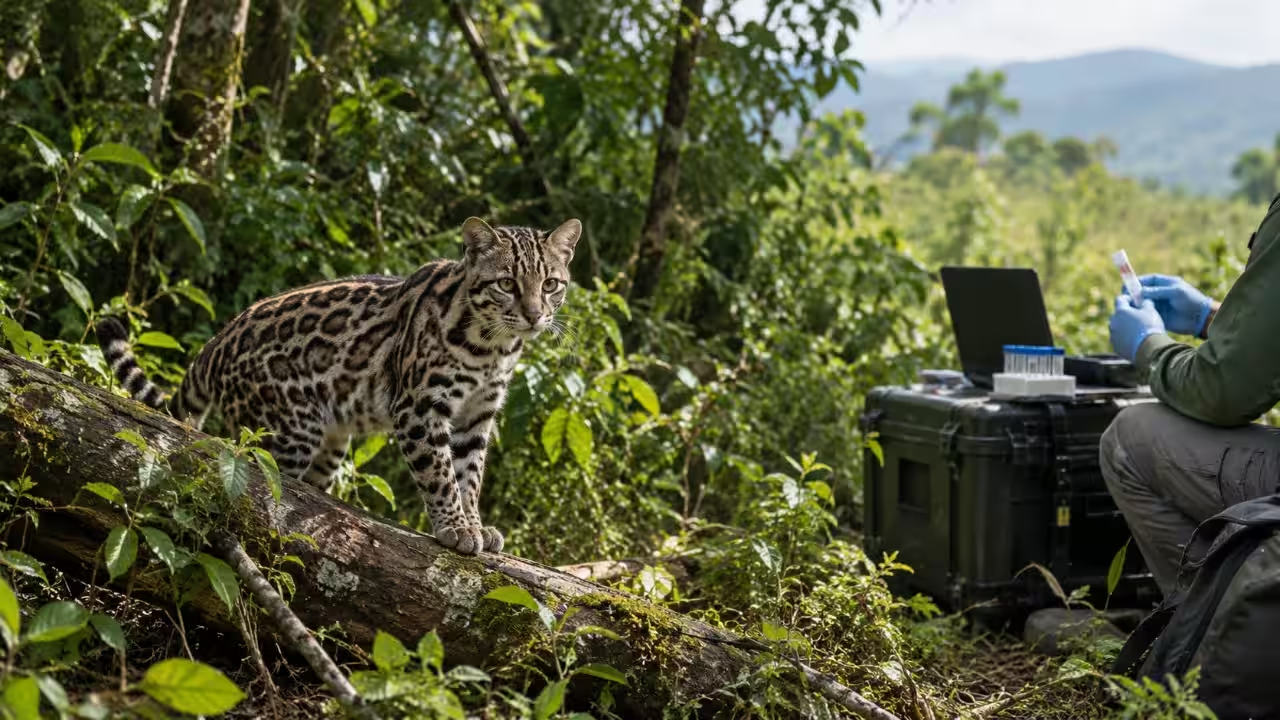
A small wild cat from Bolivia’s Yungas forests has been formally recognised as a distinct species after genomic analysis revealed an evolutionary lineage separate from other tiger cats. Named Leopardus tilcayo, it is the first newly described living cat species in over a century. This comes from a research paper titled “Phylogenomics and museomics reveal five distinct species of tiger cats in South America”, led by Jonas Lescroart, Paola Nogales-Ascarrunz and colleagues. Researchers established the Bolivian animal as a separate species, and they revised the classification of the wider tiger cat group. The paper also places the Bolivian animal within a broader revision of the tiger cat complex, which the authors resolve into five species. Drawing on genomes from museum specimens alongside newly collected samples, they separate the lineage from its closest relatives, and reports describe the cat as about 46 cm long with notably large rosettes.Genome analysis revealed a separate evolutionary lineageThe discovery began with a kitten found on a road near Bolivia’s Yungas forest. As National Geographic reported, the man who found it initially was under the impression that it was a domestic cat and took it home. The animal, which was small even by domestic-cat standards, was later taken to Senda Verde wildlife refuge, where it was nicknamed Tigrino.When Bolivian biologist Paola Nogales-Ascarrunz first examined it, she considered it a tiger cat already known to the scientific world. However, a difference became apparent in 2019, while Nogales-Ascarrunz was preparing a guide to Bolivia’s cats. When comparing her photographs with a reference image of a tiger cat from Brazil, she noticed that Tigrino’s rosettes were much larger and its appearance raised questions, but coat markings alone could not establish whether it belonged to a separate species.The uncertainty was addressed through genomic analysis by Lescroart and colleagues, who analysed complete genomes from 38 individuals in the Neotropical cat genus Leopardus. The dataset included 26 individuals representing different evolutionary units within the disputed tiger cat complex. Eight genomes came from historical museum specimens, which allowed the researchers to obtain genetic evidence from the Guiana Shield, the type locality associated with Leopardus tigrinus.The study combined newly generated genome data with previously published genomes to compare relationships among the cats. Its results placed the Bolivian Yungas lineage apart from its closest tiger cat relatives, with an estimated divergence of approximately 1.4 million years. The name “tilcayo” reflected the local term for the cat, which she told the outlet had been passed down from the residents’ grandfathers.The revised classification raises new conservation questionsAs the Current Biology paper lays out, the research settles how scientists should classify South American tiger cats. Rather than treating the group as one catch-all species, the study identifies five: Leopardus guttulus, L. pardinoides, L. tigrinus, L. emiliae, and the newly described L. tilcayo. They also identified the Peruvian Yungas population as a distinct subspecies, called Leopardus tigrinus antisuyo.The physical differences also help distinguish L. tilcayo from its closest relatives. According to Paola Nogales-Ascarrunz in Guinness World Records, compared with the clouded tiger cat (L. pardinoides), the Bolivian species has shorter fur, a less contrasting coat pattern, more expanded and irregular open rosettes, and a less bushy tail. It also lacks the broad, complete bands found on the other cat’s tail. When compared to L. tigrinus, L. tilcayo has larger, more varied markings and a relatively longer tail, and its genetic differences are even more conclusive.The distinction matters because animals previously grouped under one species name may have different distributions and conservation needs. Taxonomy was necessary because assessments applied to a broad species complex could obscure individual populations’ status and misdirect conservation priorities for management. In terms of its habitat, the Yungas is the only region currently identified as the species’ home, but it doesn’t imply the full extent of its range or how many individuals live there. Since small wild cats can be difficult to identify because they are elusive and closely resemble one another, camera traps were deployed in the forest to help establish where exactly the cat roams outside the sanctuary area.
Topics in this story
Gathered from external sources. Rights to this text belong to whoever originally published it.