In 2025, a West Virginia student found microplastics in fish from seven Appalachian streams; 55 samples held nearly 2,200 pieces, with particle counts linked to agricultural land use
A groundbreaking study from West Virginia University uncovers widespread microplastic pollution in freshwater fish, highlighting agricultural practices and sewage as significant contributors to environmental contamination across seven Appalachian streams.
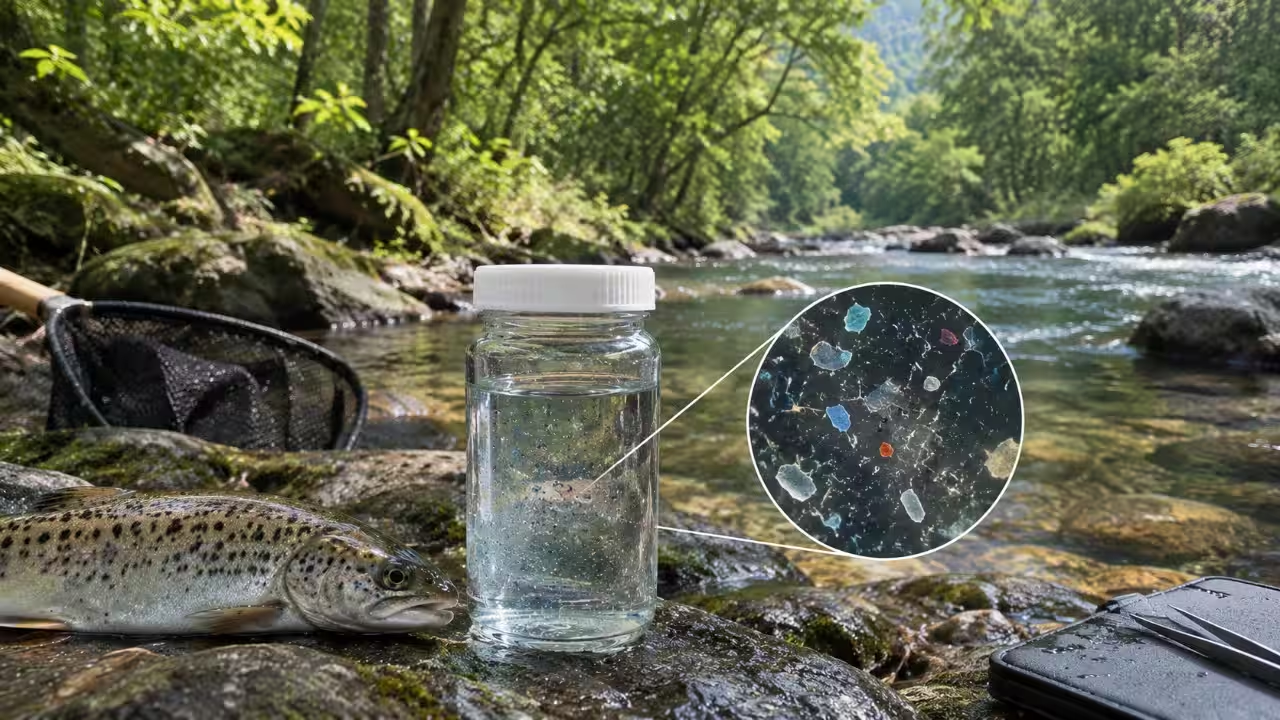
A study led by West Virginia University undergraduate Isabella Tuzzio in 2025 documented 2,185 microplastic particles in 55 juvenile northern hogsucker fish collected from seven streams in North Central Appalachia. According to the research paper published on 26 March 2025, every fish examined contained particles. The findings provide evidence of widespread contamination in the region’s freshwater ecosystems, which are studied less for microplastics than marine environments. The paper, titled “Widespread Microplastic Pollution in Central Appalachian Streams: Implications for Freshwater Ecosystem Sustainability”, examined fish from nine sampling sites across seven streams (some had multiple sites) within the Cheat, Monongahela, and Ohio River watersheds.Agricultural land use emerged as a key associationThe study identified fibres as the dominant particle form, accounting for 96.61% of all microplastics recorded, while sheets made up 2.01%, foams 0.91% and fragments 0.46%. The particles measured between 0.04 millimetres and 4.77 millimetres in length, with a mean of 0.71 millimetres, according to the paper.Contamination varied by location; for instance, fish from the Cheat River watershed contained an average of 62.09 particles each, when compared to 29.77 in the Monongahela watershed and 19.47 in the Ohio River watershed. The downstream sampling site at Big Sandy Creek recorded the highest site-level average, at 116.22 particles per fish. The researchers also reported that a fish from Big Sandy Creek contained 274 particles, the largest individual count in the sample.In statistical modelling, the proportion of agricultural land in a watershed was positively associated with the number of particles found in fish. A second model also included E. coli levels, which were positively associated with particle counts, although that relationship was not statistically significant. The researchers found agricultural land use was significantly associated with particle counts, while sewage input appeared to be a possible contributor, and they noted that atmospheric deposition could not be ruled out. The researchers also found a significant relationship between fish length and particle counts. Larger northern hogsuckers tended to contain more microplastics, although fish size did not significantly predict the average length of individual particles. They cautioned that the limited size range, from 5.6 to 12.8 centimetres, warranted further investigation.The study highlights gaps in freshwater researchAccording to WVU Today’s report, Tuzzio identified synthetic laundry fibres, the study’s dominant form, and face-wash beads as everyday sources of microplastics. The report also raised concerns about particles carrying chemicals, heavy metals, and antibiotics through ecosystems. The research team recommended further work involving other fish species and the possible role of precipitation and atmospheric deposits in moving microplastics through ecosystems. Tuzzio also told WVU Today that public awareness and practical changes could form part of responses, including recycling, environmentally friendlier detergents, washing-machine filters and improvements to waste management and water treatment infrastructure.The northern hogsucker was selected because it is a bottom-dwelling fish native to the region and primarily fed on material found on streambeds. The species was also used as an indicator of stream condition because of its sensitivity to pollution. After the specimens had been preserved for an earlier, separate ecological project, researchers examined the fish’s gastrointestinal tracts.The samples were suspended in a 10% potassium hydroxide solution for 72 hours at 40°C before filtering and inspecting the particles under a dissecting microscope. Moreover, procedural controls were implemented to estimate contamination introduced during laboratory work. Those controls contained 498 particles in total, an average of 9.05 per control. The study’s central finding remained specific: all 55 sampled northern hogsuckers contained microplastics, while the distribution of particles differed between sites and was tied to agricultural land cover.
Topics in this story
Gathered from external sources. Rights to this text belong to whoever originally published it.