Fujifilm’s new square format instant camera adds analog color filters
The new Fujifilm Instax Square 2 arrives with a more rounded design and analog color filters but no digital functionality.
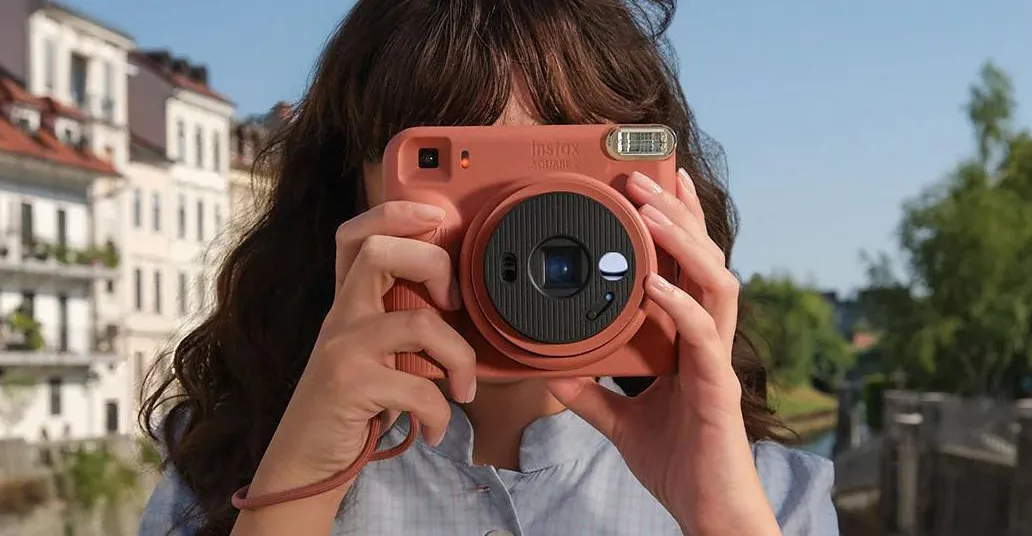
Continuing the analog approach of the Instax Square SQ6 that launched in 2018 and follow-ups like the Square SQ1 and SQ40, the new Fujifilm Instax Square 2 skips digital functionality while still introducing the ability to customize the look and feel of instant photos. A new mood filter switch slides one of two colored filters in front of the lens with the Warm setting creating a “subtle golden tone” and Cool producing “crisp, blue-toned” results. The Instax Square 2 is expected to be available later this month for $119.95 (the same price as 2020’s SQ1) in slate blue, brick red, and misty white color options. Alongside the new camera Fujifilm is also introducing a new variety of instant film it calls Soft Haze producing shots with a reduced color saturation and contrast plus glowing highlights and warm, diffused shadows. Each film pack will sell for $18.99 for 10 exposures. [Image: The Instax Square 2 is available in misty white, slate blue, and brick red color options. The Square 2 has a similar design and layout as the SQ1 but with a “new sculpted body design” that looks like Fujifilm aggressively sanded down its predecessor to round off all its sharp edges. There’s an optical viewfinder on the back and a small mirror on the front for framing selfies. A rotating ring on the lens can be used to switch between three shooting modes including Close-up, Standard, and Landscape with a focus range from as close as 0.3 meters to infinity. The Instax Square 2 also features automatic exposure and automatic adjustments of its xenon flash.
Gathered from external sources. Rights to this text belong to whoever originally published it.