Debunking political fearmongering over data centers
Americans can meet this new challenge as we always have, leveraging our embrace of the free-market, entrepreneurial spirit, and institutional respect for private property and the rule of law — but only if we refuse to let the conversation be hijacked by a political agenda, and examine the challenges honestly and accurately.
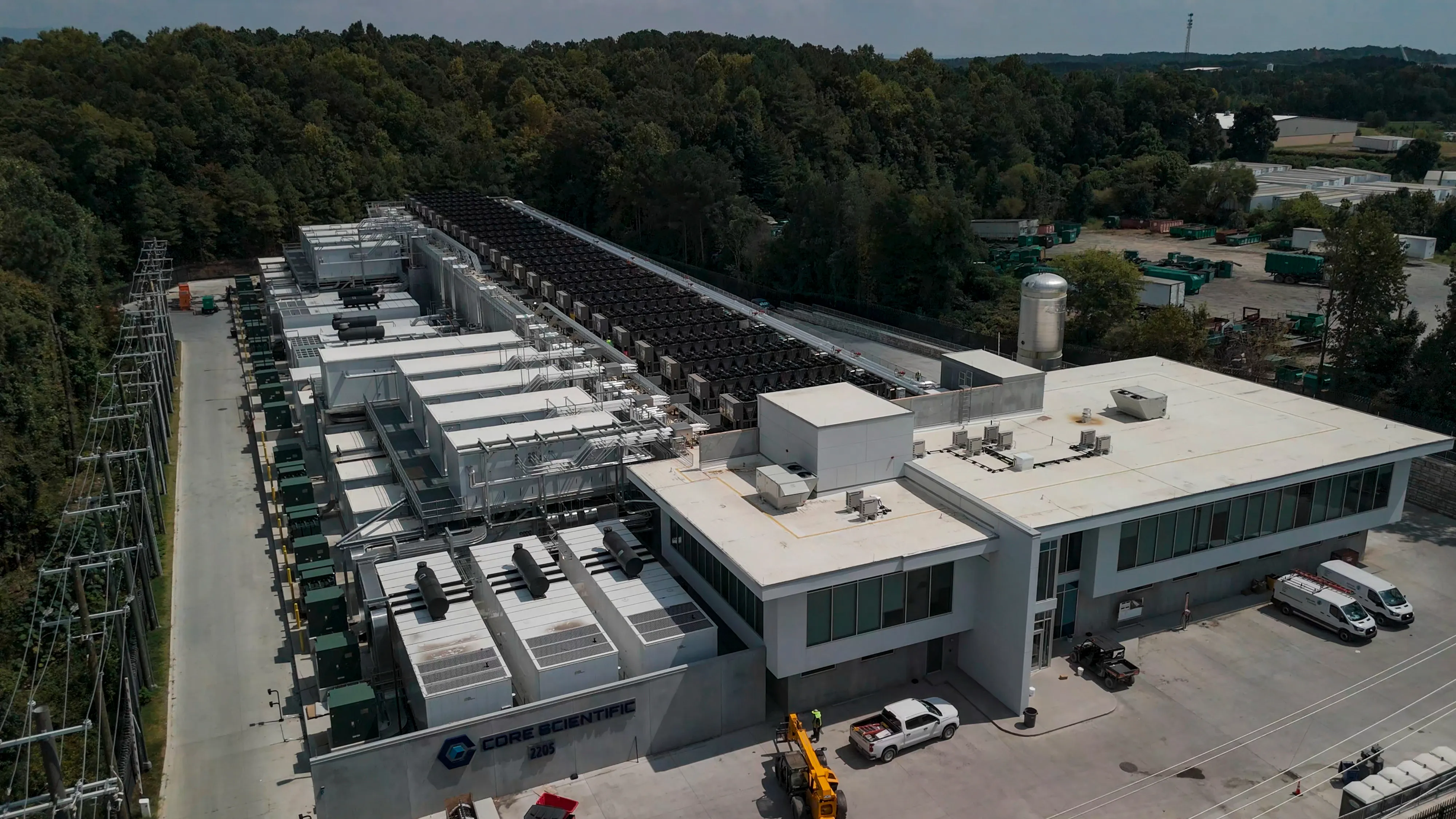
The advent of new technologies brings about new anxieties, which are too often exploited for political reasons. Current contentions over AI and data centers are a perfect example.
There are legitimate questions concerning water usage, energy requirements and land use; America’s farmers, ranchers and other citizens are justified in asking them. But like so much these days, the debate has less to do with honestly discovering answers than with pushing an agenda. The conversation is increasingly being hijacked by an activist political faction that rural America is all too familiar with, whose opposition to data centers masks their general opposition to free markets, private enterprise, and the very idea of American dominance.
In terms of water usage, Lawrence Berkeley National Laboratory’s U.S. Data Center Energy Usage Report informs us that in 2023, American data centers directly consumed approximately 66 billion liters of water — roughly 47.8 million gallons per day. That sounds like a lot of water; but the figures are meaningless without context.
By comparison, the U.S. Geological Survey estimates that agricultural irrigation used 73.2 billion gallons per day in 2015, the last year the federal agency conducted an estimate of national irrigation water consumption. In other words, data center water consumption is equal to about 0.065 percent that of agriculture.
Even those numbers don’t tell the full story; water use by data centers is dependent on several factors, including local climate, available water source, and the type of technology the data center incorporates. Many data centers, for example, incorporate closed loop systems that do not require a continual supply of water.
What about power requirements? Our electrical grid is already becoming overwhelmed amid a combination of increased demand and short-sighted public policies, including so-called “renewable” and electrification mandates that artificially increase demand beyond available capacity, even while taking more abundant sources offline. Can we justify an enormous new electrical draw?
Although data centers do require a tremendous amount of energy, it is misleading to suggest that it must automatically be supplied by the existing grid or ratepayer subsidization. In fact, it is our national policy that any entity creating substantial new electrical demand ought to pay for it.
The Trump administration’s Ratepayer Protection Pledge calls for tech and AI companies to pay for whatever power-delivery infrastructure they require, not pass network-upgrade costs on to households, and to pay for any new generation and contracted electricity, even if they end up using less than they contracted for. And the House of Representatives just passed the Ratepayer Protection Act , sponsored by Rep. Gabe Evans (R-Colo.), which will codify the pledge into law if the Senate follows suit.
Data centers also have access to new technologies beyond existing grid improvements. Modular nuclear reactors and other modular generators, as well as waste heat capture and improved battery technology, can help alleviate pressure on local grids. This type of on-site generation forms the backbone of micro-grids , representing the future of electrical distribution for high-demand industries and communities.
In terms of land footprint, real estate services company JLL estimates that a large data center with a capacity of greater than one gigawatt could require between 500 and 800 acres (that is, between 0.5 and 0.8 gigawatts per acre). A July 2026 study by the Department of Energy informs us that there will be a demand for up to 55 GW of additional data center capacity by 2030 . At 0.8 acres per GW, that means 44,000 acres will be required for data center development. At America’s current 873.95 million acres of farmland, only 0.005 percent of U.S. farmland may be used for data center development.
Ultimately, the potential benefits of data-center-powered artificial intelligence to agriculture, our communities and nation need to be considered.
A new study by the Council for Agricultural Science and Technology reveals just how important AI has become for agriculture and the security of our food supply, pointing out that the technology “has moved beyond a promising research topic to a foundational technology that is reshaping agriculture and the broader food system.” For our farmers and ranchers, AI can be indispensable in providing precision irrigation, fertilizer and pesticide application, crop-stress detection, livestock-health monitoring, pest and disease identification, yield forecasting, weather and market-risk analysis, and a host of other services. For rural America, data centers offer an economic lifeline, creating new jobs and injecting new capital into a community.
As a nation, we need to ask ourselves: do we want to employ America’s inherent strengths to dominate this new field, or cede it to someone else, another country who may not have America’s best interests at heart? Americans can meet this new challenge as we always have, leveraging our embrace of the free-market, entrepreneurial spirit, and institutional respect for private property and the rule of law — but only if we refuse to let the conversation be hijacked by a political agenda, and examine the challenges honestly and accurately.
Congressman Scott Tipton served Colorado’s third congressional district from 2011 to 2021 and was a member of the House Agriculture, Livestock, and Natural Resources Committee.
Topics in this story
Gathered from external sources. Rights to this text belong to whoever originally published it.