IMF says AI investment keeps global growth around 3%, with major Asia benefits
By Andrea Shalal and Rae Wee BANGKOK, Oct 12 (Reuters) - Strong investment in AI infrastructure is keeping global growth at around 3%, yielding major benefit...
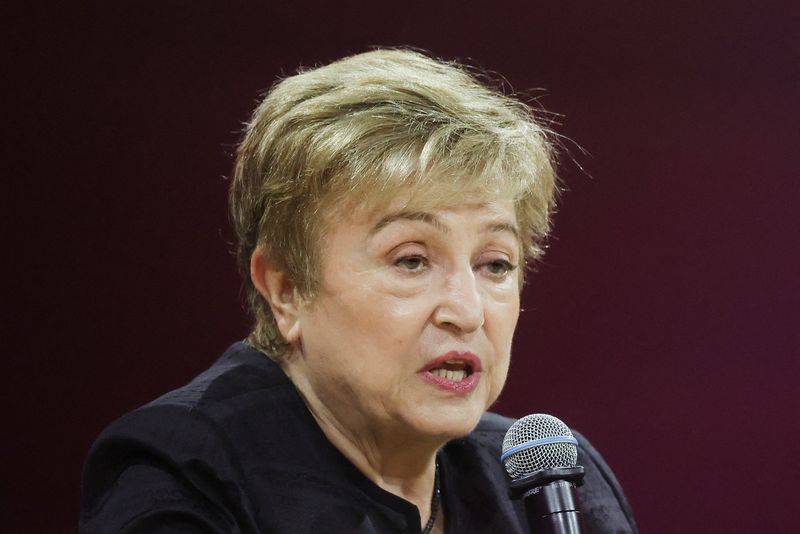
BANGKOK, Oct 12 (Reuters) - Strong investment in AI infrastructure is keeping global growth at around 3%, yielding major benefits for many Asian economies that supply the hardware, such as Thailand, International Monetary Fund Managing Director Kristalina Georgieva said on Monday.
The artificial intelligence investment boom was already delivering a "demand shock, an investment shock" that could boost growth in advanced Asian economies by a half to one full percentage point, and emerging Asian economies by 0.2 to 0.8 percentage point, she said.
"AI, love it, hate it. It's already here," Georgieva said.
"That shift into higher gear is what is keeping the world economy growing at around 3%, despite the fact we are being dragged down by the energy supply shock," she told hundreds of participants on the first day of a weeklong set of meetings of the IMF and World Bank in the Thai capital.
The IMF in July forecast global growth at 3% in 2026. It will release an updated outlook on Tuesday.
Some 18,000 people are expected to attend the meetings this week, including finance officials from the IMF's 191 members. Several ministers will skip the meeting to focus on domestic priorities, including US Treasury Secretary Scott Bessent and Spanish Finance Minister Arcadi España, sources familiar with the matter said.
Georgieva said AI amounted to a "slow-moving tsunami" that would have profound consequences for jobs, growth, education and even how governments generate revenue through taxation, given the expected shift from labor to capital.
The IMF estimates that AI could lead to 40% of jobs being augmented, downgraded or eliminated, over time, she said. An initial study showed that 10% of jobs in the US already required AI skills. While routine, repetitive jobs were shrinking, low-paying jobs were increasing in two lower-paying sectors, construction and data centers.
"It is a transformative technology. It so completely changes how we work, how we live," she said, noting that an AI assistant now gave her a 30-second message about her schedule each day.
The US, China and India are the most important producers in the AI supply chain, but many of the firms building the needed infrastructure are in Asia, Georgieva said, referencing Thailand, host of this year's annual meetings.
World Bank President Ajay Banga, who has made jobs a central focus of his presidency, said the development bank was focused on leveraging "small AI", which is not dependent on large language models, to generate enormous productivity gains for farmers, healthcare systems, educators and others in emerging markets.
Topics in this story
Gathered from external sources. Rights to this text belong to whoever originally published it.