Nvidia Put $2 Billion Into Coherent. Is Optical Bandwidth the Next AI Bottleneck?
Nvidia has placed a large financial bet on the lasers that connect AI systems. On March 2, NVIDIA Corporation (NASDAQ:NVDA) invested $2 billion in Coherent C...
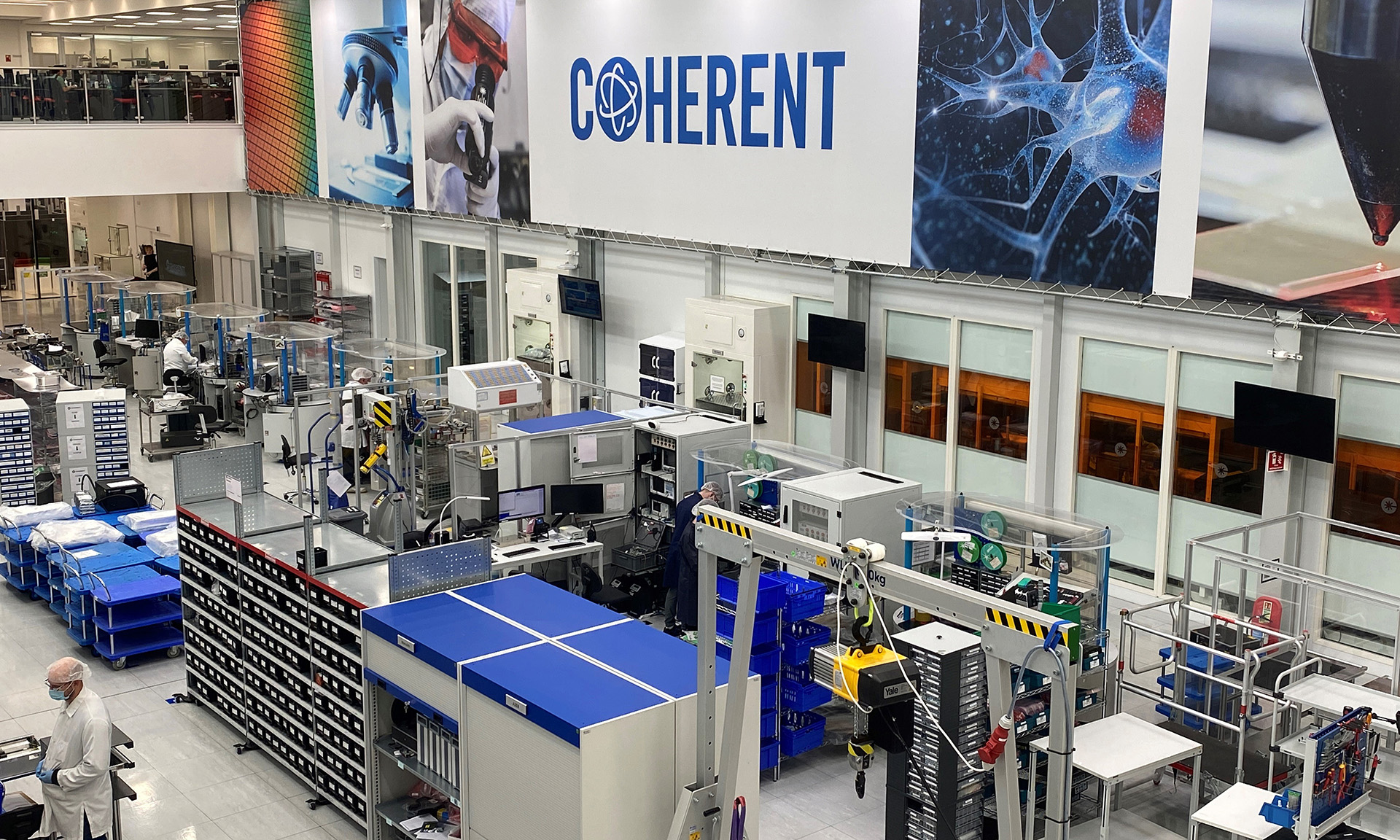
Nvidia has placed a large financial bet on the lasers that connect AI systems. On March 2, NVIDIA Corporation (NASDAQ: NVDA ) invested $2 billion in Coherent Corp. (NYSE: COHR ) common stock and entered a nonexclusive multiyear strategic arrangement covering optics development, purchase commitments, and access to manufacturing capacity. Coherent's August filing keeps attention on the capital required to meet that opportunity. The deal suggests bandwidth, not raw compute alone, may determine how quickly next-generation data centers scale.
NVIDIA Corporation (NASDAQ:NVDA) needs faster and more power-efficient connections as clusters grow to enormous numbers of accelerators. Strategic access to lasers and optical components can reduce supply risk and help Nvidia coordinate networking with its computing roadmap. The bull case is that Nvidia secures a critical input before demand peaks. The bear case is that purchase commitments could become less attractive if technologies shift or capacity expands faster than customers need.
Coherent Corp. (NYSE:COHR) gains capital, demand visibility, and validation from the AI industry's most influential platform company. Its lasers, transceivers, and materials can participate as data movement consumes a larger share of system power and cost. Yet scaling production requires capital expenditures and working capital well before all revenue is recognized. Customer concentration, manufacturing yields, pricing negotiations, and technology transitions can determine whether volume growth becomes attractive free cash flow.
The nonexclusive structure is important here. Nvidia can support capacity without surrendering alternative suppliers, while Coherent can sell beyond Nvidia. That makes the arrangement more resilient than an acquisition, but it also limits exclusivity as a competitive moat. The strongest thesis is not that one partner controls optics. It is that AI architectures need substantially more optical content, allowing both partners to benefit if execution holds.
Hedge-fund holder counts moved in opposite directions. Nvidia ownership rose to 285 funds in the second quarter from 275, while Coherent ownership fell to 105 funds from 114. Fisher Asset Management increased its Nvidia stake 3% to 90.9 million shares, and D. E. Shaw raised its Coherent position 1,361% to 1.64 million shares. As of August 14, 10 million Coherent shares were sold short, equal to 5.15% of the float and 1.1 days of average volume. That 5.15% short-float snapshot shows more reported short positioning than in several other names in this batch, but it does not reveal why those positions exist. Still, Nvidia's investment identifies the bottleneck clearly: as AI clusters expand, the ability to move data efficiently may become as valuable as the ability to compute it.
Gathered from external sources. Rights to this text belong to whoever originally published it.