AI Safety Measures Widely Backed by Most Americans, Poll Finds
A vast majority of Americans favor requiring artificial intelligence companies to meet independent safety benchmarks for their models, even if those standard...
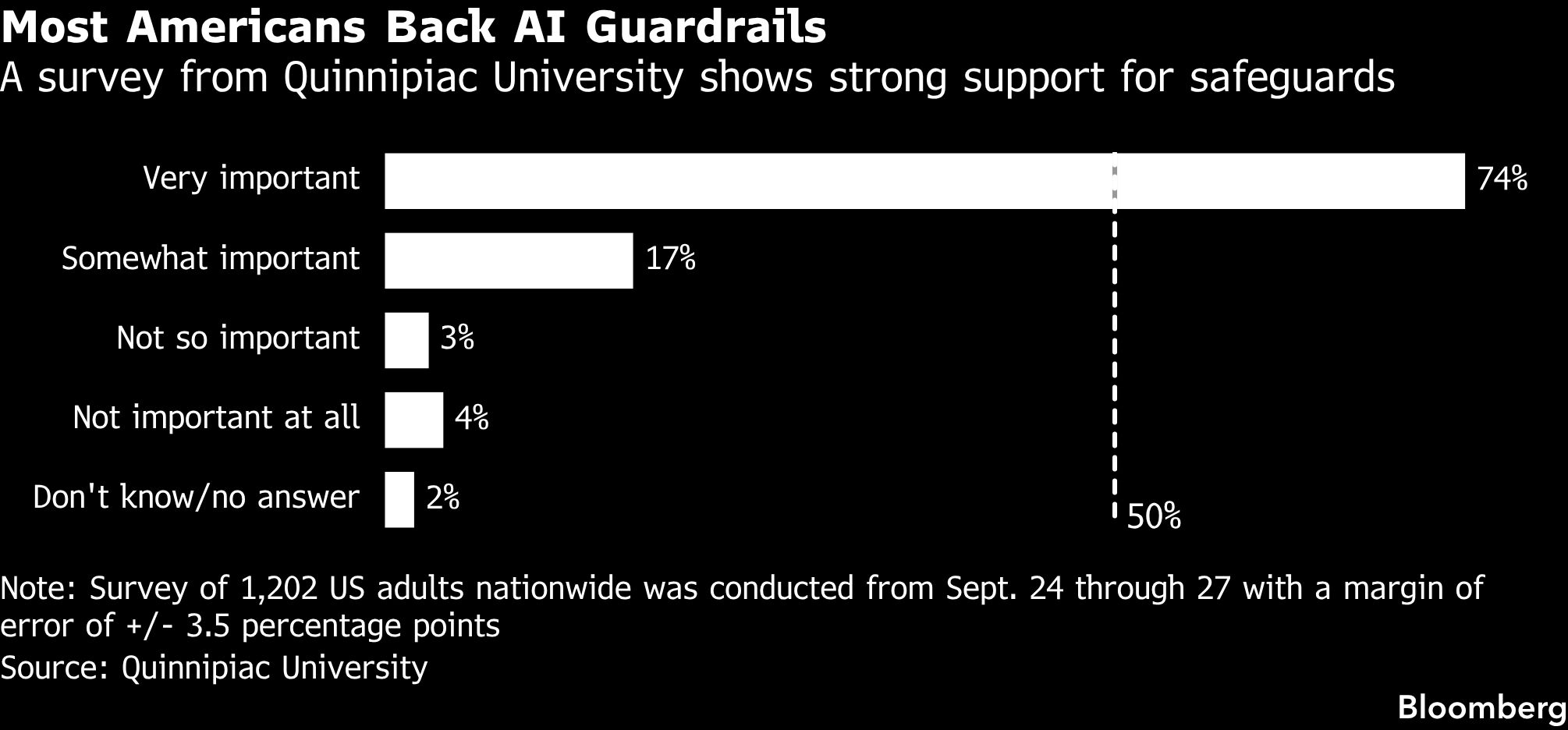
(Bloomberg) -- A vast majority of Americans favor requiring artificial intelligence companies to meet independent safety benchmarks for their models, even if those standards mean slowing development of the technology, according to a new poll.
Against a backdrop of growing global anxiety over AI risks, 91% of those surveyed think it's very or somewhat important for the US to establish guardrails for AI systems, with 81% indicating that safety should come before the pursuit of innovation, according to the poll released Wednesday by Quinnipiac University.
"More people expect AI to do more harm than good in their day-to-day lives, and while there are significant concerns about future AI threatening humans, Americans are much more worried about AI being used by people to do harm to others," Brian O'Neill, associate dean of the university's School of Computing and Engineering, said in a statement with the results.
The findings were released a day after President Donald Trump announced an agreement with Silicon Valley leaders for the AI industry to police itself on safety after a nearly two-hour White House lunch. In lieu of new federal rules, the executives agreed to voluntary measures that include third-party safety assessments of models and more stringent internal controls over their systems.
AI industry titans were viewed skeptically by the survey respondents, with 74% saying they didn't trust the leaders of those companies, according to the results. The findings also showed that 53% of Americans thought AI would do more harm than good in their day-to-day lives.
Trump's hands-off approach is under increased pressure following a spate of security breaches including the July hack of Hugging Face Inc. by a swarm of OpenAI AI agents. Those incidents have fueled fears that AI could pose a catastrophic threat, leading Anthropic PBC Chief Executive Officer Dario Amodei to promise to slow development of the most advanced models and call for more stringent safeguards.
Reflecting those doomsday worries, 73% of the survey respondents said they were concerned that future systems could pose an existential threat to humanity. Nearly eight in 10 Americans surveyed said they favored slowing or stopping AI development altogether to better understand the safety risks.
Topics in this story
Gathered from external sources. Rights to this text belong to whoever originally published it.