8 Tennis Statistics That Sound Completely Made Up But Are Somehow True
You could almost say that tennis is a perfectly sensible sport until you start looking at the statistics. Spend enough time examining its history, and you wi...
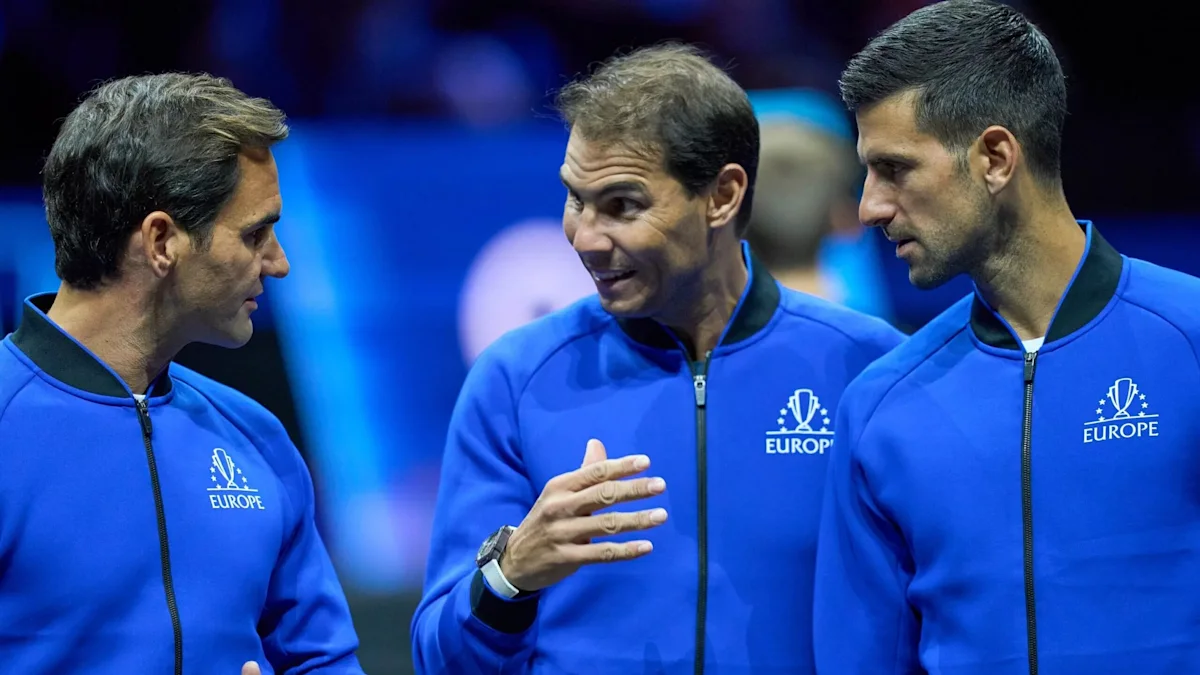
You could almost say that tennis is a perfectly sensible sport until you start looking at the statistics. Spend enough time examining its history, and you will discover that some of the greatest players ever were apparently incapable of winning a match at certain tournaments, that two famous rivals somehow avoided each other on an entire surface, and that a man once became world No. 1 without actually playing a match while holding the position.
All somehow true. Well, at least the ones we have checked. We recently went through some claims about the most bizarre tennis statistics, and some are genuinely magnificent. So, in the interest of celebrating a sport that occasionally makes absolutely no statistical sense, here are some of the best.
Tennis Statistics That Sound Completely Made Up But Are Somehow True
David Ferrer won more ATP titles than anybody else in 2012. Yep, that David Ferrer, and yes, the year is indeed 2012. Novak Djokovic finished the season as world No. 1, Roger Federer won Wimbledon, and Rafael Nadal claimed his seventh Roland Garros title.
But the player who won the most tournaments? Ferrer. The Spaniard collected seven titles, including the Paris Masters, while Djokovic finished with six. Of course, Djokovic won considerably bigger tournaments overall, including the Australian Open and ATP Finals.
But if someone had asked you who won the most trophies during a tennis season dominated by the Big Three, Ferrer probably wouldn't have been your first answer. Or your second. Or your third.
On to the next one. Thomas Muster never won a Wimbledon match . He won 44 ATP singles titles, reached world No. 1 , and captured Roland Garros in 1995, becoming one of the most accomplished clay-court players of his generation.
His Wimbledon record, though? Zero wins and four defeats. The Austrian played Wimbledon four times and lost in the opening round each time. Admittedly, grass and clay were rather different surfaces back then, and Muster frequently skipped the grass-court season altogether.
Still, imagine explaining to somebody that a former world No. 1 with 44 trophies never managed to win a Wimbledon match. Not once.
Andy Murray was statistically more successful at Roland Garros than the Australian Open. This one feels really offensive to the laws of tennis. Andy Murray reached five Australian Open finals, so how can it be? Yes, he never won the tournament, but Melbourne was the site of some of his greatest Grand Slam performances.
For example, at Roland Garros, he reached only one final. Yet Murray retired with a 76.5% winning rate in Paris compared with 76.1% in Melbourne. His records were 39-12 and 51-16, respectively. The difference is tiny, and those percentages obviously do not capture how successful his best campaigns were. Still, technically, Murray was more likely to win an individual match at Roland Garros.
Yeah, tennis statistics can be rather rude, can't they?
Patrick Rafter was world No. 1 for one week, without playing a match.
So Patrick Rafter became world No. 1 on July 26, 1999. Seven days later, he was No. 2. The Australian never played a competitive match during his reign because he had the week off, and then Pete Sampras won the tournament in Los Angeles and overtook him.
That is it, that's the story, so Rafter remains the only man in ATP rankings history to occupy No. 1 for just one week.
He also retired with a perfect record while ranked No. 1. Well, technically: zero wins and zero defeats. Difficult to argue with that consistency.
Chris Evert reached the semi-finals of her first 34 Grand Slam tournaments. Some statistics are simply funny because they reveal an unexpected weakness, but this one is funny because it sounds like somebody forgot to turn up the difficulty setting.
Chris Evert made her Grand Slam debut at the 1971 US Open, reaching the semifinals. Then she did it again and again. For 34 consecutive Grand Slam tournaments she entered, Evert reached at least the last four.
Her streak finally ended at Wimbledon in 1983, and in essence she had more than a decade of entering Grand Slam tournaments without suffering an early defeat, which is just bonkers.
The Rivalries That Somehow Never Happened
Roger Federer and Rafael Nadal never played each other at the US Open. They played 40 times , contested nine Grand Slam finals, and produced some of the greatest matches in tennis history. They played at the Australian Open, Roland Garros and Wimbledon. But New York? Not once.
Their rivalry lasted from 2004 until 2019, yet somehow the US Open never managed to produce a meeting. Federer held match points against Djokovic in the 2010 and 2011 semi-finals. Nadal was waiting in the final on both occasions.
Twice, one more point could have given tennis fans another Federer-Nadal Grand Slam final. Instead, we are left wondering what might have been.
Federer and Murray never played each other on clay. If you thought the previous statistic was unusual, get this. Federer and Murray played 25 matches against each other, and yet not one occurred on clay.
Their rivalry included Grand Slam finals, Masters events, ATP Finals encounters and an Olympic gold-medal match, but apparently, scheduling one meeting in Monte-Carlo, Madrid, Rome or Paris was impossible. Considering how long both spent among the world's best players, that is remarkable.
Djokovic won three Grand Slams in four different seasons, and Nadal never stopped him at Roland Garros in any of them. Now this one is particularly strange. Djokovic won three of the four Grand Slams in 2011, 2015, 2021 and 2023.
Given Nadal's extraordinary dominance at Roland Garros, you would naturally assume that at least one of those missing majors came against the Spaniard in Paris. Nope. In 2011, Federer beat Djokovic at Roland Garros. In 2015, Stan Wawrinka defeated him in the French Open final. In 2021, Daniil Medvedev stopped his Calendar Grand Slam bid at the US Open. And in 2023, Carlos Alcaraz defeated him at Wimbledon.
The greatest clay-court player in history was not responsible for any of those four defeats. Naturally, Nadal had beaten Djokovic at Roland Garros in plenty of other seasons. Just not the four in which Djokovic won everything else.
Perhaps the wonderful thing about tennis statistics is that they can make perfectly successful careers look utterly ridiculous. Muster was a world No. 1 who could not win at Wimbledon. Murray was apparently better at Roland Garros than Melbourne.
Ferrer won more tournaments in 2012 than the Big Three. And Rafter became world No. 1 without playing a single match while holding the ranking. None of these facts fundamentally change how we should judge those players.
But they demonstrate how wonderfully misleading tennis history can become when reduced to numbers. Sometimes a statistic tells you everything, and sometimes it tells you almost nothing, and occasionally, it just makes you laugh. That is why we love tennis.
Main Photo Credit: Peter van den Berg – USA TODAY Sports
Topics in this story
Gathered from external sources. Rights to this text belong to whoever originally published it.