The 2026 US Open is Killing the Ace
Through 44 completed men's singles matches at this year's US Open, covering 10,051 points, servers have produced 874 aces. That works out to an ace rate of 8...
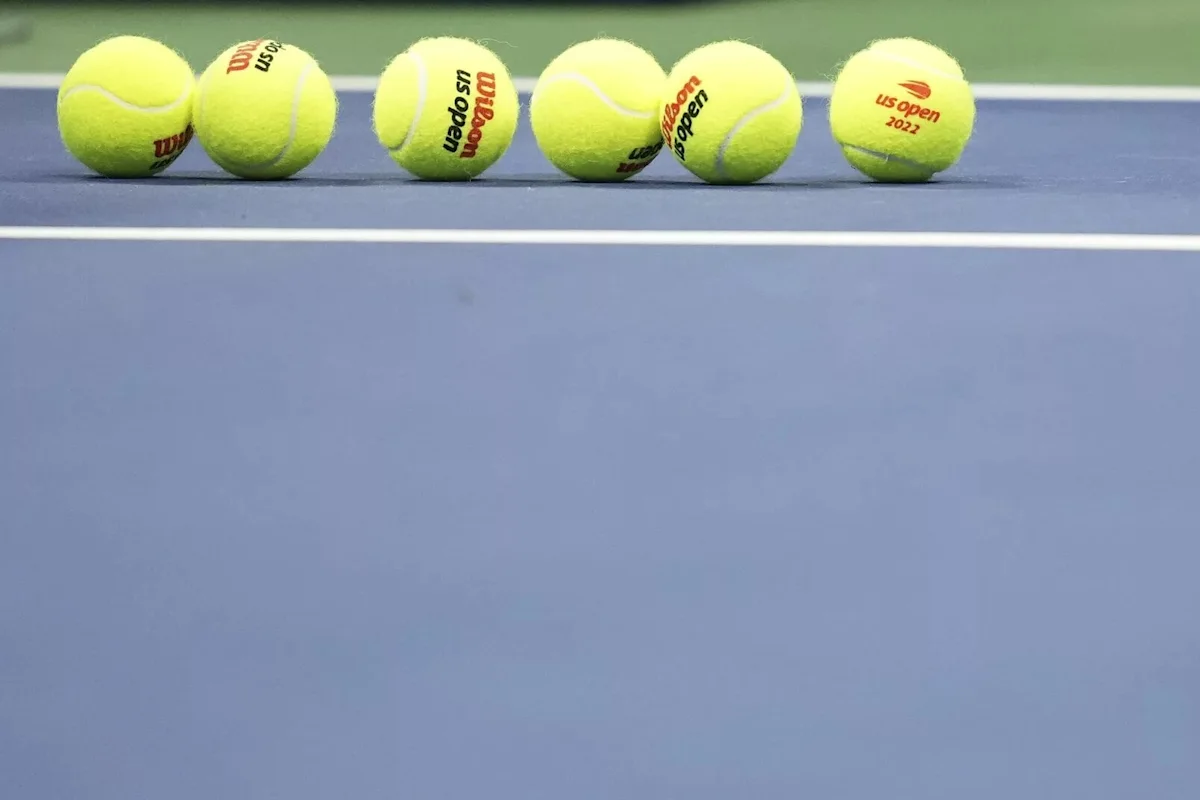
Through 44 completed men's singles matches at this year's US Open , covering 10,051 points, servers have produced 874 aces. That works out to an ace rate of 8.7%, and if that number holds across the remaining matches, it would represent the lowest ace rate at any hard-court Grand Slam since the 2012 Australian Open, where the equivalent figure was 8.1%. For a tournament that has historically sat comfortably above 10%, and for a surface that is supposed to reward the big server more than any other, that number is worth examining.
The conditions at Flushing Meadows this year are doing something genuinely unusual to the serve, and several factors are pulling in different directions at once.
The Wilson Extra Duty ball used at the US Open is already a different animal from what players encounter at the other majors. It is slightly heavier than the ball used in the women's draw, fractionally different from the Dunlop ball used at Wimbledon, and built with a tighter felt weave than a standard Slazenger or Babolat. What makes it unpredictable is how it responds to the specific environmental conditions of the US Open.
New York in late summer is humid, oppressively humid. That humidity interacts with the ball, and it's felt in a way that matters enormously for servers. The humidity makes the ball's surface fluff up and expand faster, causing it to get dragged down during play. A coach at St. John's University, whose team trains in Flushing, explained it well: the ball gets heavier, so it doesn't move as fast. It gets fluffier. Wear and tear comes faster in humid heat than in dry heat.
The physics behind this are worth understanding, because they run counter to what most people assume about humidity and ball speed. Moist air is actually less dense than dry air, so in theory the ball meets less resistance in flight. But that is almost irrelevant next to what happens to the ball's felt. High humidity increases the felt's moisture content, adding mass. A heavier ball lands shorter and sits up. The air density effect, in other words, is a rounding error. The ball effect is the one players feel through their racket, and it is the one that suppresses aces.
The Day-to-Night Shift Makes It Stranger
What complicates the picture further is that conditions at the US Open aren't consistent across the tournament's sessions. Daytime matches and night sessions on Arthur Ashe Stadium play out in what amount to two different physical environments, and the effect on serving is not what casual intuition would suggest.
During the day, the heat is the dominant variable. Every 10°C rise costs about 1.1 percentage points off the first-serve-in rate and adds about 0.4 to the double-fault rate. Hotter conditions make the toss harder to control, make the grip sweatier, and increase the physical cost of generating racket head speed consistently over long matches. A serve that lands in the box cleanly in the first set becomes incrementally harder to repeat in the fourth.
At night, the dynamic shifts. Arthur Ashe Stadium seals itself rather than cools when the roof closes, running HVAC systems that provide cooling, air movement, and humidity control. The humidity trapped inside the bowl gets into the ball's felt and adds mass, which as already established favours the returner. Tennis Abstract's rolling surface speed ratings put the US Open at 0.99, just below tour average, with a 10.7% opponent-adjusted ace rate, against 1.11 and 11.9% at the Australian Open and 1.12 and 12.1% at Wimbledon.
That last figure is what provides context for the 8.7% currently being recorded. The US Open is already a below-average Slam for aces under normal conditions. When conditions are not normal, when humidity is elevated, and the felt is picking up moisture faster than usual, the number can drop significantly below even the historical baseline for this tournament.
The Court and Ball Combination This Year
Reports from Flushing Meadows this fortnight describe a surface that is notably faster than Cincinnati's courts were a week ago. Cincinnati registered a Court Pace Index of just 38.1 this year, significantly slower than its 2025 reading of 43, placing it roughly on par with Miami and below Indian Wells. By comparison, the Laykold surface at Flushing plays at a meaningfully higher pace, which would ordinarily translate to more aces, not fewer.
The paradox is in the ball. When the surface is fast, but the ball is heavy from humidity, you don't get a clean serving environment. You get a court that generates a low, skidding bounce that is genuinely difficult to return when the ball is traveling cleanly, combined with a ball that is resisting the server's attempt to generate pace. It sits awkwardly between two conditions, fast enough to reward aggressive play in rallies but heavy enough to reduce the explosive, flat, pure-pace serve that produces the category of ace most reliably.
The balls play lighter and more responsive at the start of a fresh can. Still, under New York humidity they deteriorate faster than at the Australian Open or Wimbledon, where conditions are either drier or more temperate.
What the number actually means is simple. The 8.7% figure, if it holds, would sit nearly two full percentage points below the US Open's recent historical average and more than two points below what Wimbledon and the Australian Open typically produce. That is a meaningful departure.
For the men still in the draw, the implications are real. Players who rely heavily on the free point from the serve, who have built their game around serving opponents off the court rather than engaging in extended baseline exchanges, will find the conditions less forgiving than the surface speed alone would suggest. The serve is less of a weapon when the ball misbehaves, which tilts the balance incrementally towards returners and players who are comfortable in longer rallies, in general towards the physical attrition style of tennis that the US Open in humid conditions tends to produce late in matches.
The 2012 Australian Open, the last hard-court Slam to record a lower ace rate than this one is currently tracking, was played in Melbourne's heat under its own distinctive conditions. That the 2026 US Open might match or challenge that benchmark, at a tournament built on big serving and fast hard courts, is one of the more extraordinary statistical stories of this fortnight.
Nobody is tracking it on the main scoreboards at the US Open. But it is happening, match by match, point by point, across a draw that is producing significantly fewer free points from serve than anyone walking into the tournament this year had reason to expect.
Main Photo Credit: Danielle Parhizkaran – USA TODAY Sports
Topics in this story
Gathered from external sources. Rights to this text belong to whoever originally published it.