Gael Monfils Might Be Old, But he is Never Dull
On September 1st 2026, Gael Monfils turned 40 years old. He also walked onto Louis Armstrong Stadium, won three consecutive sets after losing the first, hit...
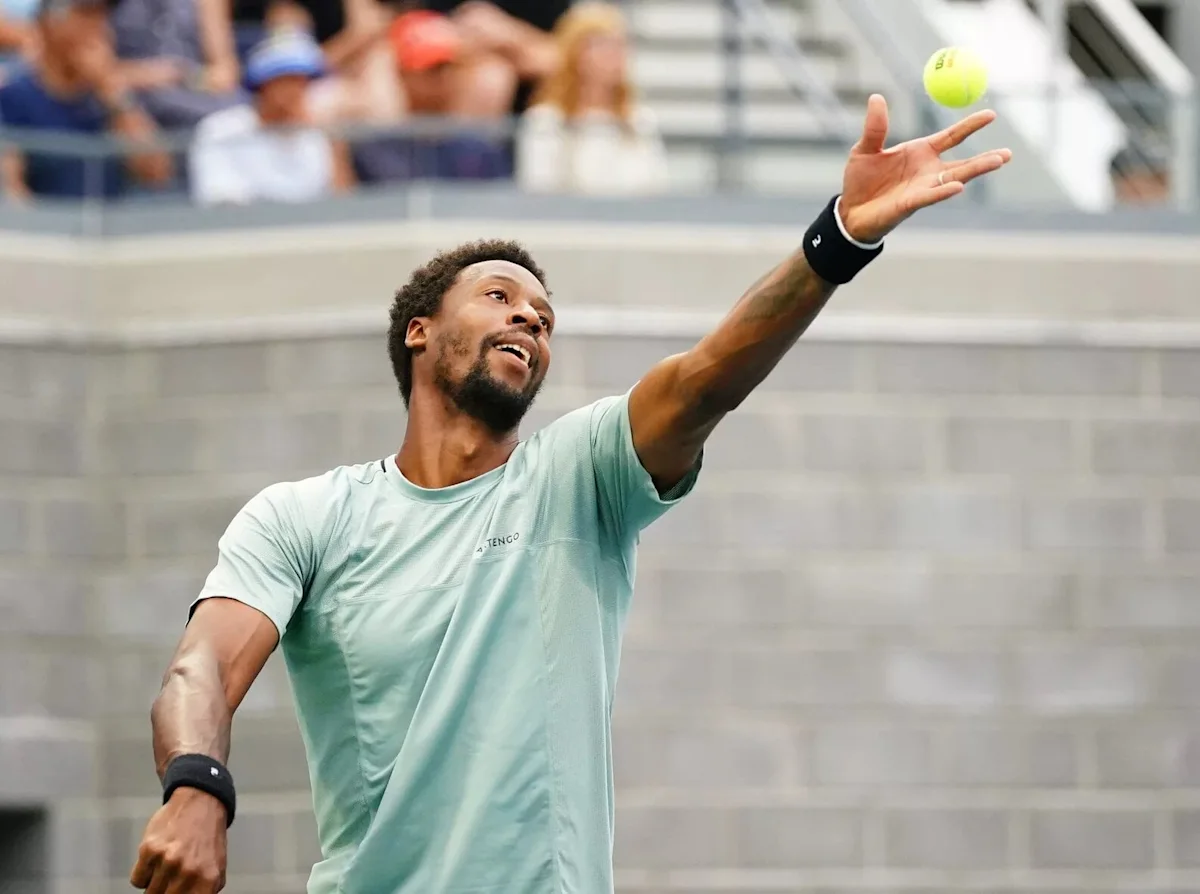
On September 1st 2026, Gael Monfils turned 40 years old. He also walked onto Louis Armstrong Stadium, won three consecutive sets after losing the first, hit a leaping forehand winner at 1-0 in the fourth set, cupped his hand to his ear, and had the entire building giving him a standing ovation. There is no other player on the ATP Tour, active or retired, who could have manufactured that moment. There is no other player in the history of the sport who would have even tried.
This is what Monfils has always been, and what the sport will lose when he walks away at the end of this season. Not the greatest player of his generation, not a Grand Slam champion, not the player French tennis always hoped he might become. Something more complicated than any of that, and in its own way more irreplaceable. He is the greatest entertainer the game has ever produced. And on Tuesday night at Flushing Meadows, in his 18th and final appearance at a tournament he has loved for two decades, he reminded everyone why that title means something.
Gael Monfils def. Adolfo Daniel Vallejo 2-6 6-1 6-2 6-0
Adolfo Daniel Vallejo is 22 years old, ranked inside the world's Top 70, and arrived in New York as the No. 1 player from Paraguay having won five Challenger titles and reached the second round at Roland Garros earlier this year. He is not a name that sends fear through a draw, but he is a genuine professional who earned his spot in the main draw on merit. The match began in a manner that suggested Monfils was about to be politely ushered towards retirement. Vallejo took the first set 6-2 with relative ease.
Then Monfils did what Monfils has always done. He found the crowd, fed off it, and started playing tennis that had nothing to do with being 40. The second set went 6-1 to Monfils. The third went 6-2. When he broke to lead 1-0 in the fourth and then launched himself into the air to smash a forehand winner at a trajectory that had no business going in, spinning around to cup his hand to his ear afterwards, the match was not yet over but the occasion already was. He closed it out 6-0, firing 37 winners across the match and becoming the oldest player to win a main-draw singles match at Flushing Meadows since Jimmy Connors did exactly the same thing, on his own 40th birthday, in 1992.
It was his 34th career victory at the US Open, the most of any Frenchman in the tournament's history.
What He Was, and What He Could Have Been
The honest accounting of Monfils' career requires holding two things simultaneously. He was genuinely one of the most talented players of his generation, and he was also something less than that talent should have produced. He won his first junior Grand Slam at 17, eventually claiming three of the four Major boys' titles in a single year in 2004. He was voted ATP Newcomer of the Year in 2005. He reached the French Open semifinals in 2008, losing to Roger Federer, and the US Open semifinals in 2016, losing to Novak Djokovic. He finished 2016 ranked world No. 6, the highest of his career, and reached Masters 1000 finals in Paris twice and in Monte Carlo. He won 13 ATP titles across 20 seasons.
The career, viewed in the harsh light of statistics, was very good and fell short of great. Rafael Nadal, Federer and Djokovic consumed the Major titles throughout his prime years, which is a fact of life for virtually every player of his generation. But there was also a version of the conversation that suggested Monfils sometimes preferred the highlight to the victory and that the entertainent impulse which made him so magnetic could also dilute the competitive ruthlessness that separates good careers from transcendent ones. He missed 13 Grand Slam events across his career through injury.
What the statistics cannot capture, and what Elina Svitolina said well about her husband's legacy at Roland Garros earlier this year, is that statistics will never capture his whole unique greatness.
What New York Gave Him, and What He Gave Back
There is something magical about the relationship between Monfils and Flushing Meadows that goes beyond the results. New York has always been the right backdrop for him. The noise, the electricity, the crowds that stay late and respond to every point, the culture of the place that rewards audacity over restraint. He has shown up here eighteen times across twenty-one years, from 2005 to 2026, and the city has received him every single time like someone they were genuinely pleased to see. The 2016 semifinal run where he pushed Djokovic to four sets remains the peak result. But the highlight reel from across eighteen visits contains shots from every round of every year that players with three times the trophies could not produce.
This week he also partnered with Svitolina in the revamped mixed doubles event, the two of them reaching the semifinals together in the first time they had competed as a team. At some point during the fortnight his daughter Skai will see her father play professional tennis in the place he loves most, at the age of 40, still leaping off the ground to hit forehands at players half his age.
Monfils announced at the end of last year that this would be his final season. He will retire when the year ends, closing a career that stretched over more than two full decades and produced memories that sit outside the categories tennis uses to evaluate its players. He faces Learner Tien in the second round, an American wildly popular with the home crowd, and the outcome of that match is genuinely unpredictable, because outcomes involving Monfils have always been genuinely unpredictable.
But whether he wins or loses against Tien, Tuesday night at Louis Armstrong Stadium already happened. A 40-year-old man on his birthday, down a set against a player half his age came back to win 2-6 6-1 6-2 6-0 and had the crowd sung him happy birthday. Nobody planned it. Nobody scripted it. He just played tennis the only way he has ever known how to play it, and the building responded the way buildings have always responded to Monfils.
When he does eventually walk off a professional court for the last time, what the sport will be missing is not his ranking or his titles. It will be the simple, irreplaceable fact that watching him play tennis was always worth showing up for. At forty years old, in New York, on his birthday, he proved that one more time.
Main Photo Credit: Jerry Lai-USA TODAY Sports
Topics in this story
Gathered from external sources. Rights to this text belong to whoever originally published it.