Football calendar: Elite schedule 'not sustainable' amid 55-game seasons
The Premier League may have just returned from a three-week break, but for many of its stars there was no rest at all.
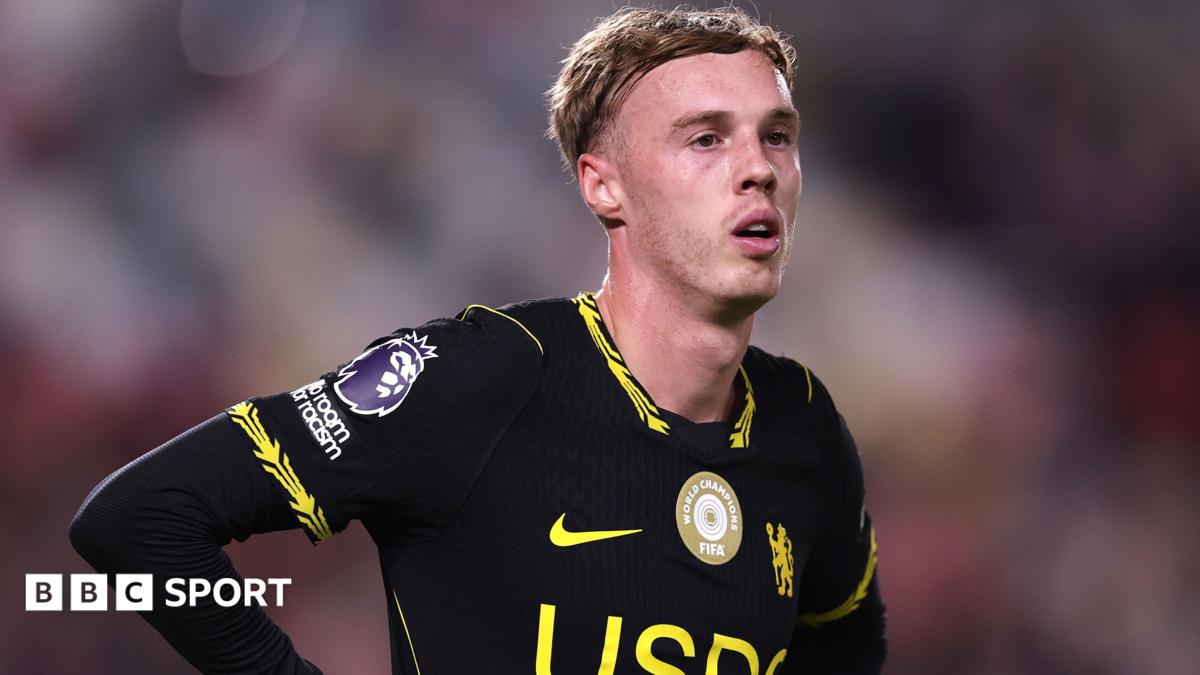
The Premier League may have just returned from a three-week break, but for many of its stars there was no rest at all.
Of all the Premier League players called up by their countries, 25 played 360 minutes - the full length of four games - during the extended international break.
These included 13 players who featured for their clubs at the World Cup, such as Liverpool captain Virgil van Dijk, who also played 55 games for his club last season.
Van Dijk is one of several players, including England's Declan Rice, Morgan Rogers and Harry Kane, who played more than 4,000 minutes in all competitions in 2025-26 and have started on a similar trajectory this season.
According to expert sports scientists and psychologists, this cannot be maintained.
"It is not sustainable," Dr Dave Richardson, head of psychology, sports science and wellbeing at the University of Lincoln, told BBC Sport.
"We will start to see more clamour when we are not happy with the quality of performances; the public pay to see high quality."
The impact of the hectic schedule is already being seen in players picking their battles.
Five players - Cole Palmer, Marcus Rashford, Rice, Kobbie Mainoo and Tino Livramento - pulled out of the England squad before the latest international window.
Germany's Kai Havertz and France captain Kylian Mbappe also withdrew from the recent international break.
'Like going back in time' with mental health attitudes
Maheta Molango, CEO of the Professional Footballers' Association (PFA), said the withdrawals were emblematic of a "sick" system.
"When England see five players who need to withdraw when the single most proud moment a player has is to be called up for the national team, you just ask yourself, what's wrong about the industry?" Molango said.
"They love to play for England. They love to play for their national team. But, unfortunately, your body puts a limit to it. You cannot cheat biology."
Molango wants a mandatory three-week summer break and a three-week "retraining" period every summer.
But Dr Richardson, who has worked with Liverpool on player care and psychology, says that will be impossible in the current fractured system of sporting bodies.
"The problem is that there is no one body covering the playing schedule, and they all want predominance," he said. "They are all vying for the spotlight and championing their product as the best.
"Without that overarching independent body, it may not be sustainable."
Dr Chris James, an expert in the impact of sleep on sports performance and psychology lecturer at Cardiff University, says men's football is failing in its duty of care towards players.
"Particularly in the men's game, there is a culture where you need to look like they are coping," he told BBC Sport. "It is like going back in time, with attitudes to mental health.
"There is a lot of work you must break down that stigma, that mental health is an equal partner to physical health. I have more of these conversations in men's football than with women."
Former England defender Matt Upson, speaking on BBC Radio 5 Live during the Nations League home game versus the Czech Republic, said the extended early international break would have positives and negatives.
"It is nice to have that intense period together - you can benefit a lot with breaking down the barriers around the dressing room; the manager gets to work on the training field a lot," he said.
"But four games in this period is a lot at this stage of the season, after a summer of competing as well."
Upson's former England team-mate Paul Robinson says proper provisions and preparations are needed between games, but any attempt to reduce a player's minutes would be futile.
"When you get to mid-season, it is about two days' preparation for a game, and then two days recovery," he told BBC Sport.
"With so many games, the timespan that they have is much shorter. Managers say they don't have much time on the training ground and that is understandable because the demands on a player are so much, and recovery days are just as important as the preparation days.
"But I think from a footballer's point of view, the game schedules are not overly taxing if you can manage yourself in between the games.
"And say, if Norway and England get to the final of the Nations League next summer, and their respective managers turn around to Erling Haaland and Harry Kane and say 'it's been a long season, you have three weeks off - then do you think those two players are going to sit back and accept that?
"No chance. They are going to say 'we want to play'. Players want to play in these games."
But Dr James says the high of playing tens of games per season is only temporary, with the lows risked by increased possibility of injury and constantly having to be switched on to the elite level being far worse.
He says players are turning to coping mechanisms, such as using snus, to stay focused.
"Football still does not really appreciate the recovery needed physically and psychologically," he said.
"Players need to be people. Mental detachment is much trickier when there is increased fixture density. True recovery is about stepping away from our professional responsibility.
"The physical load can lead to more injuries, which can have a greater psychological impact. That will add a lot of stress - who am I if I am not playing? They will then also be worrying about contracts.
"It's about education - feeling good in the moment [by playing a lot of football] does not mean it is good for them. They might feel they are physically capable of playing these matches in a row, but mentally they may feel wrung out.
"This is where clubs can be doing a better job of educating players - the benefit of downtime. You must sell to players why this is worth something."
Dr Richardson says some clubs are better at supporting players, citing Brentford as having a strong sports psychology team.
But with the Club World Cup introduced, the World Cup potentially expanding and no sign of a reduced number of games in the Premier League, domestic cups or Uefa competitions, there looks to be no clear path forwards.
"The players have got little control over the calendar. As we have seen, some of them will decide to step away," said Dr Richardson.
"That lack of empowerment is difficult - that and the fear factor of not participating, of losing the place in the pipeline. But if you play and get injured, you lose your place anyway.
"Damned if you do, damned if you don't."
Topics in this story
Gathered from external sources. Rights to this text belong to whoever originally published it.