OTD (01/11/1904): New Men Get On Board At Sunderland
Roker Report chronicles the formalities that followed some financial recriminations…
At the very start of the twentieth century Sunderland, were a hugely respected part of the elite, building on their 1890s status as 'world champions' by winning the Football League title in 1902 under Alex Mackie.
However, the club's reputation turned quickly when in late 1904, they became embroiled in a major financial scandal that saw several key figures being punished by the authorities, who upon looking into the books had discovered 'irregularities' and felt that justice needed to be handed out swiftly.
Mackie was suspended for a three-month period having been found guilty of making illegal payments to players, whilst chairman Sinclair Todd and five other directors were banned for two and a half years each.
A £250 fine was issued also, the FA having initially been alerted to the possible issues following a dispute between the Sunderland hierarchy and their former player Andy McCombie, who had a second income as a piano tuner and in 1903 had been given £100 to start up a business.
When the board subsequently asked him to pay back this 'loan', McCombie refused, insisting that it had in fact been a gift, and whilst a county court hearing into the matter sided with Sunderland, the situation had already escalated enough to prompt a footballing investigation.
The affair left management and supporters alike feeling rocked, and once an extraordinary general meeting of the shareholders was called for Monday 31 October 1904, everybody connected to the Lads was desperately keen to learn what the Roker response was going to be.
Overseeing the meeting would be F.W Taylor, the only board member not to be suspended by the FA.
He was replacing Todd as chairman of an organisation now in disarray, and the following day readers of the Sunderland Daily Echo and Shipping Gazette were given a detailed breakdown of the action that was agreed to in order to try and put things back on an even keel.
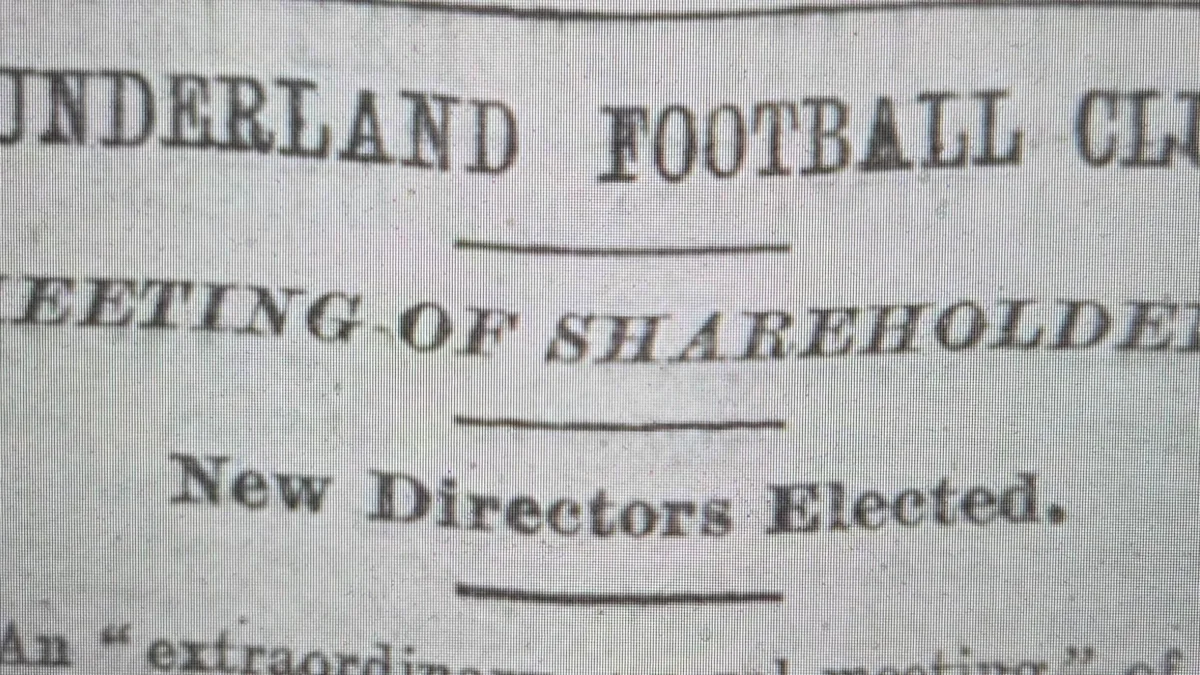
The following is a slightly abridged version of their article, taken from the paper's four o'clock edition on Tuesday the 1 November…
A meeting of the shareholders of the Sunderland Football Club, Limited, was held at the Grand Hotel, Bridge Street, last night.
Mr Fred. W. Taylor, chairman of the directors, presided, and among those present were Sir Theodore Doxford M.P., Messrs Sinclair Todd, Jas. Henderson, G. T. Moran, R. Murray, jun., J. P. Henderson and Couns. Harrison and Jeffrey. [50+ additional were listed also, many of whom were eminent local figures whose presence along with those mentioned above indicated the severity of the situation the club faced] Mr Jas. Storey (solicitor to the company), Mr A. Watson (secretary) and Mr A. Mackie (teams' manager) were also present. In accordance with the notice sent out, the meeting was called "to confirm the election of five directors." The attendance, it must be said, was one of the largest in the history of the club. The Chairman said they would all be fully conversant with the circumstances that had resulting in the suspension by the Football Association of all their directors except himself. No good purpose, he was sure they would agree with him, could now be served by discussing that event. It were better for the interests of the sport generally, and for their club in particular, that they dealt that night only with things as they found them, and did their utmost to maintain a great and honourable position which their club held in football. (Applause).
Mr Fred. W. Taylor, chairman of the directors, presided, and among those present were Sir Theodore Doxford M.P., Messrs Sinclair Todd, Jas. Henderson, G. T. Moran, R. Murray, jun., J. P. Henderson and Couns. Harrison and Jeffrey. [50+ additional were listed also, many of whom were eminent local figures whose presence along with those mentioned above indicated the severity of the situation the club faced] Mr Jas. Storey (solicitor to the company), Mr A. Watson (secretary) and Mr A. Mackie (teams' manager) were also present.
In accordance with the notice sent out, the meeting was called "to confirm the election of five directors." The attendance, it must be said, was one of the largest in the history of the club.
The Chairman said they would all be fully conversant with the circumstances that had resulting in the suspension by the Football Association of all their directors except himself.
No good purpose, he was sure they would agree with him, could now be served by discussing that event. It were better for the interests of the sport generally, and for their club in particular, that they dealt that night only with things as they found them, and did their utmost to maintain a great and honourable position which their club held in football. (Applause).
At the only surviving director (laughter) he felt the onus of finding a new and a strong board fell upon himself. He had sought to obtain the consent to act of gentlemen eminently fitted for the position. The names he should have the honour of submitting to them were those of gentlemen well known to them and to the public generally. They all understood and thoroughly appreciated the game of football, and what was more, they were all well qualified to comply with the bank's requirements, which in an undertaking of that sort was no small thing. He, therefore, had the pleasure of formally proposing that Mr Samuel Storey, Mr Frederick Foster, Mr J.W. Taylor, jun., Mr C.E. Thompson and Mr Samual Wilson be elected directors of the club, and he would ask some gentleman, although it was not necessary to second. (Applause) Mr J.G. Marshall seconded, and said he presumed they were all desirous that the club should continue to hold the honourable position which it had so long held in the football world. (Hear, hear). In order to do that it was necessary that they should, he thought, not only have a first-class playing team — and he thought they would all agree with him they never had a batter — but also a first-class management team. The names of the gentlemen submitted to fill the places of the five gentlemen who had retired from the directorate were well known to them all. They were all good businessmen, men in whom they could confidently leave the management of the affairs of the club. (Hear, hear). He had, therefore, great pleasure in seconding the proposal. (Applause). Mr Eland Dunn: If we get the qualified number of directors is there not room for any more? The Chairman: No, sir. The articles say six. Mr Dunn: You had seven before. The Chairman: I am not aware that there have been seven before. Mr Dunn: I have great pleasure in putting before you Mr Joseph Carney as a fit and proper person to be a director. He would ne a very useful man, I think, for the club. Mr J. Cook seconded his nomination. Mr Storey explained that whilst the number of directors might be increased at the annual general meeting it could not be done at the special meeting. Therefore the question of increasing the number of directors was out of court. They could do it at the next annual meeting, but not till then.
At the only surviving director (laughter) he felt the onus of finding a new and a strong board fell upon himself. He had sought to obtain the consent to act of gentlemen eminently fitted for the position.
The names he should have the honour of submitting to them were those of gentlemen well known to them and to the public generally. They all understood and thoroughly appreciated the game of football, and what was more, they were all well qualified to comply with the bank's requirements, which in an undertaking of that sort was no small thing.
He, therefore, had the pleasure of formally proposing that Mr Samuel Storey, Mr Frederick Foster, Mr J.W. Taylor, jun., Mr C.E. Thompson and Mr Samual Wilson be elected directors of the club, and he would ask some gentleman, although it was not necessary to second. (Applause)
Mr J.G. Marshall seconded, and said he presumed they were all desirous that the club should continue to hold the honourable position which it had so long held in the football world. (Hear, hear). In order to do that it was necessary that they should, he thought, not only have a first-class playing team — and he thought they would all agree with him they never had a batter — but also a first-class management team.
The names of the gentlemen submitted to fill the places of the five gentlemen who had retired from the directorate were well known to them all. They were all good businessmen, men in whom they could confidently leave the management of the affairs of the club. (Hear, hear). He had, therefore, great pleasure in seconding the proposal. (Applause).
Mr Eland Dunn: If we get the qualified number of directors is there not room for any more?
The Chairman: No, sir. The articles say six.
The Chairman: I am not aware that there have been seven before.
Mr Dunn: I have great pleasure in putting before you Mr Joseph Carney as a fit and proper person to be a director. He would ne a very useful man, I think, for the club.
Mr Storey explained that whilst the number of directors might be increased at the annual general meeting it could not be done at the special meeting. Therefore the question of increasing the number of directors was out of court. They could do it at the next annual meeting, but not till then.
Another shareholder suggested that Mr Carney be added to the list. The Chairman: It is perfectly in order for Mr Carney to come up for election, but we are not in order in electing six directors. It is perfectly in order for Mr Carney or anyone else to be nominated. Mr R. Knox the proposed that Mr J. J. Wilson be added to the directorate. Mr M. Reed seconded. Mr Bird said that if they were going to add to the directorate he should like to move that Mr J. R. Auld be added. This was not seconded. Mr Storey pointed out that this was an extraordinary meeting called to elect five directors, and they could not have any more than give elected. The gentlemen that had been proposed would be in competition for the position of directors with those submitted by the chairman. The meeting could not increase the number of directors. The articles of the association were quite distinct. They set forth that the company might from time to time, in general meeting, increase of reduce the number of directors. Therefore, unless Messers Carney and Wilson entered into competition with the other five, they were not eligible to be put forward at the meeting. Mr Dunn: It is not my meaning to put them in competition, but I thought there was one man short. Mr Storey: No, sir. The Chairman said they would let the matter go to the vote by ballot. There were seven in the field to fill the five vacancies. Mr Cook said he did not think there was any need for a ballot. He was quite willing to withdraw. Mr J. J. Wilson: If Mr Carney withdraws I will do the same. Sir Theodore Doxford said he thought it would be a greater compliment to the five gentlemen proposed from the chair it they were elected without competition. (Applause). It meant only to wait till July next, when, if it were the wish of all parties, the others proposed might also be elected. It was a great compliment to the others to be suggested there, but he rather thought it would be a greater compliment to the five to be elected without competition. He did not think anybody would say a single one of the five was not fully competent from every point of view for the office. (Applause). Mr Carney: I am quite willing to withdraw. I would not like to oppose those gentlemen. I was elected once here as a director, but somehow did not act. I have knocked about with the team for about twenty years, and I thought it was about time I had a look in, but it will come another day, I suppose. The Chairman remarked he did not want them to think they had endeavoured to rush the five gentlemen into office. He could assure them that that had not been the case. He suggested they should take a show of hands as to whether the election should go on or whether they would take a ballot. A show of hands was taken, and the display was unanimously in favour of the election of the five gentlemen recommended. The Chairman said he could only congratulate the shareholders upon the acquisition to their Board and the club upon securing such excellent directors, and the directors themselves upon their unopposed election. (Applause) Mr Sinclair Todd proposed a vote of thanks to the Chairman for conducting the meeting so very harmoniously and getting over the difficulty so quickly. They were also pleased to see Sir Theodore Doxford present, and thanked him for the kind words he had said on behalf of the incoming directors. The vote of thanks was unanimously accorded, and the Chairman replied.
Another shareholder suggested that Mr Carney be added to the list.
The Chairman: It is perfectly in order for Mr Carney to come up for election, but we are not in order in electing six directors. It is perfectly in order for Mr Carney or anyone else to be nominated.
Mr R. Knox the proposed that Mr J. J. Wilson be added to the directorate. Mr M. Reed seconded.
Mr Bird said that if they were going to add to the directorate he should like to move that Mr J. R. Auld be added. This was not seconded.
Mr Storey pointed out that this was an extraordinary meeting called to elect five directors, and they could not have any more than give elected. The gentlemen that had been proposed would be in competition for the position of directors with those submitted by the chairman. The meeting could not increase the number of directors. The articles of the association were quite distinct. They set forth that the company might from time to time, in general meeting, increase of reduce the number of directors. Therefore, unless Messers Carney and Wilson entered into competition with the other five, they were not eligible to be put forward at the meeting.
Mr Dunn: It is not my meaning to put them in competition, but I thought there was one man short.
The Chairman said they would let the matter go to the vote by ballot. There were seven in the field to fill the five vacancies. Mr Cook said he did not think there was any need for a ballot. He was quite willing to withdraw.
Mr J. J. Wilson: If Mr Carney withdraws I will do the same.
Sir Theodore Doxford said he thought it would be a greater compliment to the five gentlemen proposed from the chair it they were elected without competition. (Applause). It meant only to wait till July next, when, if it were the wish of all parties, the others proposed might also be elected. It was a great compliment to the others to be suggested there, but he rather thought it would be a greater compliment to the five to be elected without competition. He did not think anybody would say a single one of the five was not fully competent from every point of view for the office. (Applause).
Mr Carney: I am quite willing to withdraw. I would not like to oppose those gentlemen. I was elected once here as a director, but somehow did not act. I have knocked about with the team for about twenty years, and I thought it was about time I had a look in, but it will come another day, I suppose.
The Chairman remarked he did not want them to think they had endeavoured to rush the five gentlemen into office. He could assure them that that had not been the case. He suggested they should take a show of hands as to whether the election should go on or whether they would take a ballot. A show of hands was taken, and the display was unanimously in favour of the election of the five gentlemen recommended.
The Chairman said he could only congratulate the shareholders upon the acquisition to their Board and the club upon securing such excellent directors, and the directors themselves upon their unopposed election. (Applause)
Mr Sinclair Todd proposed a vote of thanks to the Chairman for conducting the meeting so very harmoniously and getting over the difficulty so quickly. They were also pleased to see Sir Theodore Doxford present, and thanked him for the kind words he had said on behalf of the incoming directors. The vote of thanks was unanimously accorded, and the Chairman replied.
Mr J. W. Taylor jun., thanked the meeting for having unanimously elected the other directors and himself. He said he was very sorry that it was necessary the old men should have to vacate the positions, but as his brother did not wish it discussed there he would say no more but again thanked them for election and hoped they would fill the position with the same advantage as the old directors. (Applause). Mr C. E. Thompson also returned thanks. He had had some experience of the club and it would be his pleasure to help the Chairman and do all he could to lead the team to continual victory. Mr S. Wilson also thanked the company for having elected him. He had been a member and a director for many years. He thought the style of play seemed to reach its zenith with the splendid performances of Preston North End, when they played the short passing game. Then came the long passing and rushing game which seemed more effective. They had now come to a combination of the two – wing rushes and short passes – and if they could get their players to use their heads and brains more – (a laugh) – and not pass to an opponent as they often did the club would go on to further successes. He should like to see them pass to the opposite corner where there was no great defence on the part of the opposition team. With those things looked into and good management which he expected and hoped they had now got he though the club would reach to that height of science that it had not in the past done. (Hear, hear). Their thanks were, he thought, due to the retiring directors for the zeal and the time they had spent over the club. They had not spared themselves, they had stuck in well, and he did not think they were very much to blame. (Applause). The health of the Chairman proposed by Mr J. J. Wilson was then honoured, and the companying sang "For he's a jolly good fellow." The Chairman on behalf of his co-directors and himself thanked the meeting very heartily for the toast, but he rather thought they should have drunk "Success to the team." They were forging ahead, and he believed every man on the team was the real tryer. (Applause). They were going to do their best to bring the League Cup back to Sunderland, and he hoped their success would not stop short at that. He hoped to see them forging ahead in the English Cup because say what they liked it was the success in the English Cup competition that brought the funds to the clubs, and they could do with funds very well. There was another way of getting funds, and that was if every shareholder of the club would endeavour to go to the matches oftener. If their faces could be seen weekly or every fortnight at Roker Park what a difference it would make in the club, what a difference it would make in the play of the players because those poor fellows wanted heartening up very often and there was nothing could do it like support from their shareholders. When the shareholders were there the players knew very well they were pleasing them, and he hoped for the future they might see their faces oftener. He asked the company to drink with him to the success of the team. (Applause). Councillor Jeffrey thought they ought to express their sympathy with the late directors, coupled with the name of their worthy friend Mr Sinclair Todd. He was sure it was not only the shareholders who sympathised with them, but the whole football world. They deplored it very much that they were in that position, but they could not help it and the less they said the better; but he thought it would be very wrong if they parted without expressing their sympathy, for they all had interest in the club both financially and as sportsmen. The toast was heartily honoured. Mr Sinclair Todd thanked the meeting for the way it had received the toast, and the remarks of Mr Jeffrey; but really what he had done for the club he had done for pleasure as much as anything. It was about the only sport he took an interest in, that and cricket, and if they were satisfied with the little he had done he was satisfied. (Applause) . So far as they serious business had been concerned, that suspension, it was not exactly like being hung (laughter) and really he did not take it perhaps as seriously as he ought. He thought he should always be able to go and enjoy himself on Saturday afternoons seeing the football match, and he did not think that when he was watching the match that he should think of the suspension. (Laughter and applause). He was sure he was speaking on behalf of the vice-chairman and the rest of the suspended directors when he said that. (Applause). Mr G. T. Moran thanked the company, and said as a director he had tried to do his duty, and his feeling was that all the directors he had been associated with had done their duty in the same sense. They had always done their best of the club, and had tried to do it honestly, fairly, and squarely in accordance with the conditions they were tied down by. (Hear, hear). Some of the directors, perhaps, knew more than others on certain circumstances, but that was attributable to the others short connection with the club, and to their want of knowledge of certain points of football. He hoped the new directors would have a very successful career, and that they would maintain the high position of the club so far as in them lay as directors, and that they would hand on from generation to generation the high position that the club had occupied, not only in Sunderland or in England, but in the whole world. He again thanked them, and hoped the chairman would have a successful career in office. It was fortunate that one remnant of the old board was left, and a very worthy remnant, and he hoped the directors would be thankful the fortune of war had left them in that position. It would be for the benefit of Sunderland and of the club, and to the credit of the club that he had the fortune to be left and he (the speaker) was sure that his fellow directors would work with him with the greatest cordiality. Mr Taylor had been able to get together a splendid board, and he hoped that the club would be very successful. (Applause). The chairman thanked those present for their attendance and courtesy, and the meeting was concluded…
Mr J. W. Taylor jun., thanked the meeting for having unanimously elected the other directors and himself. He said he was very sorry that it was necessary the old men should have to vacate the positions, but as his brother did not wish it discussed there he would say no more but again thanked them for election and hoped they would fill the position with the same advantage as the old directors. (Applause).
Mr C. E. Thompson also returned thanks. He had had some experience of the club and it would be his pleasure to help the Chairman and do all he could to lead the team to continual victory.
Mr S. Wilson also thanked the company for having elected him.
He had been a member and a director for many years. He thought the style of play seemed to reach its zenith with the splendid performances of Preston North End, when they played the short passing game. Then came the long passing and rushing game which seemed more effective. They had now come to a combination of the two – wing rushes and short passes – and if they could get their players to use their heads and brains more – (a laugh) – and not pass to an opponent as they often did the club would go on to further successes.
He should like to see them pass to the opposite corner where there was no great defence on the part of the opposition team. With those things looked into and good management which he expected and hoped they had now got he though the club would reach to that height of science that it had not in the past done. (Hear, hear). Their thanks were, he thought, due to the retiring directors for the zeal and the time they had spent over the club. They had not spared themselves, they had stuck in well, and he did not think they were very much to blame. (Applause).
The health of the Chairman proposed by Mr J. J. Wilson was then honoured, and the companying sang "For he's a jolly good fellow." The Chairman on behalf of his co-directors and himself thanked the meeting very heartily for the toast, but he rather thought they should have drunk "Success to the team." They were forging ahead, and he believed every man on the team was the real tryer. (Applause).
They were going to do their best to bring the League Cup back to Sunderland, and he hoped their success would not stop short at that. He hoped to see them forging ahead in the English Cup because say what they liked it was the success in the English Cup competition that brought the funds to the clubs, and they could do with funds very well.
There was another way of getting funds, and that was if every shareholder of the club would endeavour to go to the matches oftener. If their faces could be seen weekly or every fortnight at Roker Park what a difference it would make in the club, what a difference it would make in the play of the players because those poor fellows wanted heartening up very often and there was nothing could do it like support from their shareholders.
When the shareholders were there the players knew very well they were pleasing them, and he hoped for the future they might see their faces oftener. He asked the company to drink with him to the success of the team. (Applause).
Councillor Jeffrey thought they ought to express their sympathy with the late directors, coupled with the name of their worthy friend Mr Sinclair Todd. He was sure it was not only the shareholders who sympathised with them, but the whole football world.
They deplored it very much that they were in that position, but they could not help it and the less they said the better; but he thought it would be very wrong if they parted without expressing their sympathy, for they all had interest in the club both financially and as sportsmen. The toast was heartily honoured.
Mr Sinclair Todd thanked the meeting for the way it had received the toast, and the remarks of Mr Jeffrey; but really what he had done for the club he had done for pleasure as much as anything. It was about the only sport he took an interest in, that and cricket, and if they were satisfied with the little he had done he was satisfied. (Applause) .
So far as they serious business had been concerned, that suspension, it was not exactly like being hung (laughter) and really he did not take it perhaps as seriously as he ought. He thought he should always be able to go and enjoy himself on Saturday afternoons seeing the football match, and he did not think that when he was watching the match that he should think of the suspension. (Laughter and applause). He was sure he was speaking on behalf of the vice-chairman and the rest of the suspended directors when he said that. (Applause).
Mr G. T. Moran thanked the company, and said as a director he had tried to do his duty, and his feeling was that all the directors he had been associated with had done their duty in the same sense.
They had always done their best of the club, and had tried to do it honestly, fairly, and squarely in accordance with the conditions they were tied down by. (Hear, hear). Some of the directors, perhaps, knew more than others on certain circumstances, but that was attributable to the others short connection with the club, and to their want of knowledge of certain points of football.
He hoped the new directors would have a very successful career, and that they would maintain the high position of the club so far as in them lay as directors, and that they would hand on from generation to generation the high position that the club had occupied, not only in Sunderland or in England, but in the whole world. He again thanked them, and hoped the chairman would have a successful career in office.
It was fortunate that one remnant of the old board was left, and a very worthy remnant, and he hoped the directors would be thankful the fortune of war had left them in that position. It would be for the benefit of Sunderland and of the club, and to the credit of the club that he had the fortune to be left and he (the speaker) was sure that his fellow directors would work with him with the greatest cordiality. Mr Taylor had been able to get together a splendid board, and he hoped that the club would be very successful. (Applause).
The chairman thanked those present for their attendance and courtesy, and the meeting was concluded…
Topics in this story
Gathered from external sources. Rights to this text belong to whoever originally published it.