Williams heart warning after career ended at 22
At just 22, Keelan Williams faced the hardest decision of his life as stage one heart failure made him call an end to his football career.
At just 22 years old, Keelan Williams faced the hardest decision of his life. Stage one heart failure caused him to call an end to his football career.
After two open-heart surgeries and two pacemaker implants, the former Liverpool and Burnley academy prospect had exhausted his medical options.
Williams was diagnosed with a bicuspid aortic valve - a congenital condition in which the valve has two flaps instead of three - at the age of 15.
But seven years later, further complications forced him to quit the sport both he and his older brother, Wales international Neco Williams, had dreamed of playing professionally since childhood.
"It's sad and disappointing that I've had to make the decision to retire and step away from playing because of a cardiac condition," Williams told BBC Sport.
Williams' football journey started at local side Cefn United, before he joined a Liverpool satellite academy at six and signed terms with the Reds at eight.
He remained in Liverpool's academy until 16, when he joined Burnley, all while representing Welsh youth teams up to under-19s level.
Spells at then Cymru Premier side Bala Town and Cymru North club Denbigh Town followed before medical advice prompted an early retirement.
Although stepping away has left Williams wondering what might have been, the support he has received and his brother's continued success have helped him adjust to life away from football.
"It's always a privilege to chase something you've always dreamed of alongside your brother, who has made it now," Williams added.
"Neco is doing so well. I think he is the best full-back in the Premier League. That's what keeps me going, really."
Williams also highlights the "crazy" love and backing he has received from family and friends, along with the level of support he has had through social media.
"It's something that I don't take for granted. I really treasure the support. It would be much more difficult if I didn't have that.
"Football is all about setbacks and how you respond. I've had to stop playing completely, which is more extreme, but you have to look at the positives."
It was during a Wales Under-16s camp that his heart condition was first discovered. Before a trip abroad, every squad member had to undergo a routine check-up.
"Wales thought that they had found a murmur in my heart, so they stopped me from travelling until further check-ups were made," Williams recalled.
"They referred me to Broadgreen Hospital [in Liverpool], where they found that I had an aortic bicuspid valve and I had a slight leak in the valve.
"They noticed this without me getting any symptoms. I had no symptoms whatsoever.
"I was lucky in many senses that I played for Liverpool and Wales because if I didn't, I may have never known that I had a leak in my valve."
Initially, the discovery did not impact Williams' burgeoning career. As long as he did not experience symptoms, he could continue to play as normal.
After departing Burnley's academy, the then 20-year-old joined Bala in January 2024 as he sought to continue his career closer to home.
By the end of the year, his life had changed.
Following a routine check-up, Williams was told the leak in his heart valve had worsened, and that surgery was now required.
In January 2025, Williams underwent valve-sparing aortic root replacement surgery, followed by a dual-chamber pacemaker implantation.
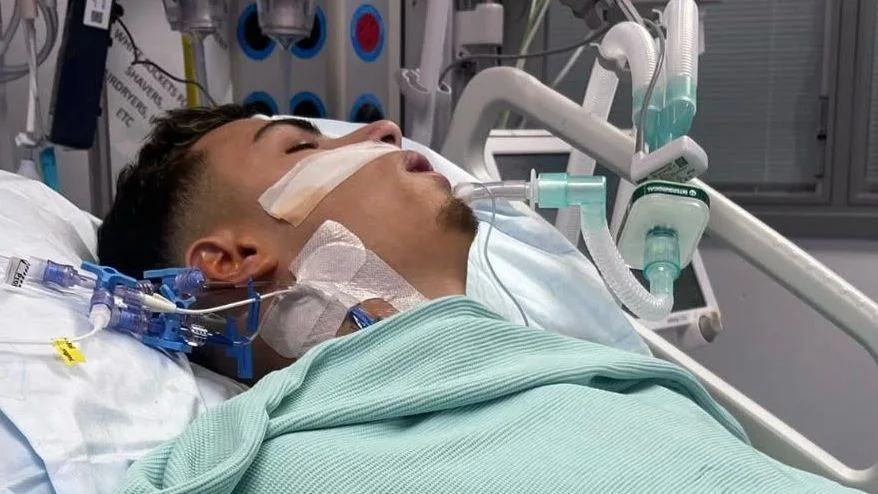
But complications meant he was admitted to an intensive care unit (ICU) and treated for sepsis, a collapsed lung and respiratory failure.
After 11 days in ICU, Williams recovered and underwent a second, successful operation in September 2025, which he hoped would allow him to continue playing.
"When I got back, I couldn't perform at 100%. I would sprint up the pitch, and I'd feel gassed, out of breath, and my legs were heavy," he said.
"Initially, I thought it was my fitness after returning from a second heart surgery.
"But I had heart failure. My ejection fracture percentage was only 37%, meaning my heart was not pumping as well as it should be."
Most fit and healthy adults will have a left ventricular ejection fraction (LVEF) that ranges between 50% and 70%.
Williams was given medication to combat his LVEF - he now takes five tablets every day - and was fitted with an upgraded pacemaker.
"I still didn't feel 100%. Again, I thought it was my fitness, but I was still feeling the same two months later when I should have been back to normal."
A recent echocardiogram showed practically no sign of improvement. Williams' LVEF had only increased to 38%.
"That's when I decided that I will have to stop playing because I couldn't carry on physically with how I felt," he said.
Williams is living with many of the complications linked to stage-one heart failure and regularly attends heart failure, cardiology and pacemaker clinics.
The entire family has been tested for the same condition, with no signs of a heart condition found in any other member.
And the Williams family sleep a little easier knowing that Keelan's condition was spotted at the earliest stage.
Now he would like to see footballers across all levels of the pyramid seeking out their own check-ups, even if their clubs do not currently offer them.
"Football clubs at the highest level will, these days, offer everyone routine heart checks, but those with fewer resources might not," he said.
"To anyone out there, I would 100% get your heart checked to be on the safe side. You want to find it as soon as possible, as I did."
Topics in this story
Gathered from external sources. Rights to this text belong to whoever originally published it.