SEC school leaders exploring extreme steps over LSU's plan to sign former pro athletes, including potential expulsion, competition boycott and federal lawsuit
The legal feud between the SEC and LSU could soon escalate to historic levels — "The risk is enormous for LSU."
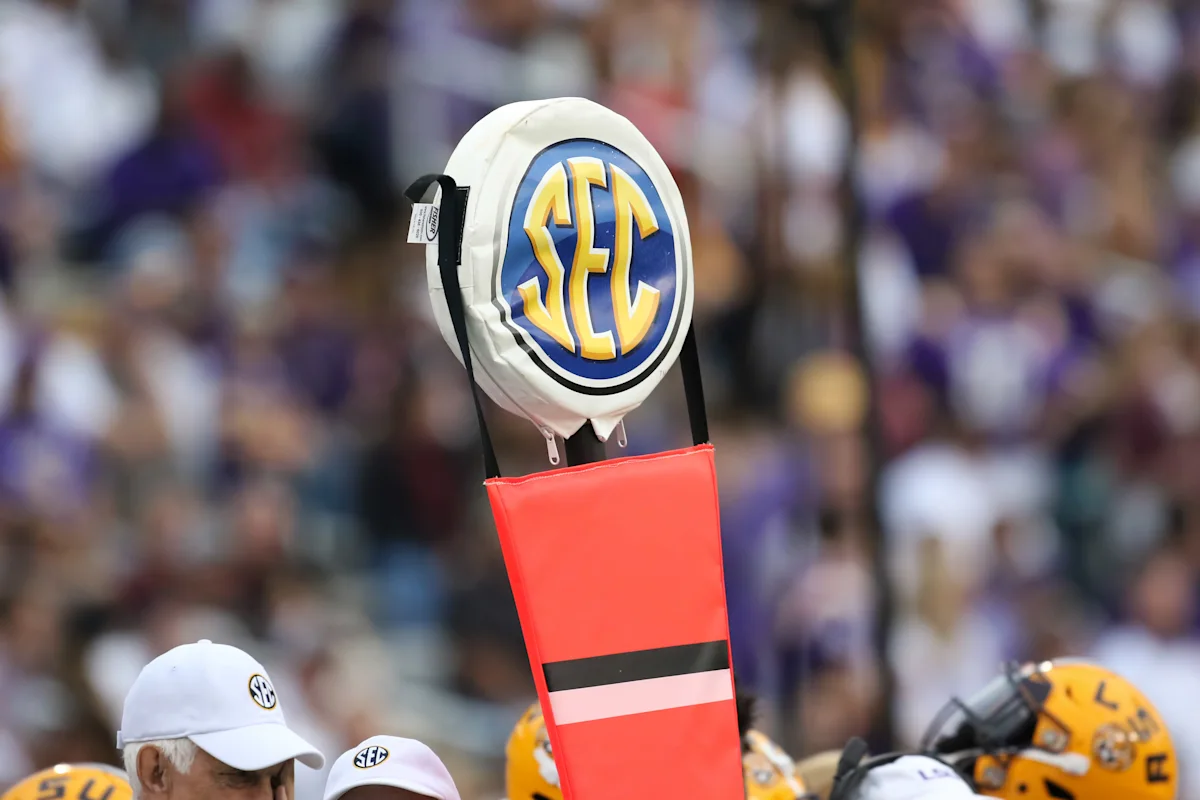
The legal feud between the SEC and LSU may soon escalate to historic levels.
High-ranking SEC university executives are exploring legal and internal avenues intended to address the school's plans to add former professional athletes to its rosters, including extreme measures such as boycotting competition against the Tigers, sanctioning the school with probation or even expulsion, and/or filing a federal legal challenge.
Multiple sources with knowledge of the conversations spoke to Yahoo Sports under condition of anonymity. An SEC spokesperson declined comment. An LSU spokesperson also declined comment.
The conversations, primarily among SEC school general counsels and university presidents, are considered in the early stages. The talks are described as "not league driven, but membership led." While these discussions are serious in nature, it is unclear as to what avenues the conference or its members will ultimately pursue.
It is unlikely that the league or its member schools make a formal decision on a path forward before a Thursday hearing in Baton Rouge, where a judge is expected to hear arguments in the Louisiana eligibility case that opened the door for these professional athletes to return to college.
One thing is clear, though: Multiple SEC university officials believe that action is required to maintain a fair and balanced competitive field within the conference, and they are prepared to take serious steps against an LSU program that, they claim, stands to violate the membership constitution and bylaws.
Over the last 36-48 hours, increasing conversations among 15 school executives — sans LSU — signal a certain aggressive approach.
"Tensions are high," said one university executive.
For some, the answer is the conference's ultimate and unprecedented penalty: expulsion or a membership probation.
"It is fair to say we are discussing multiple options, including that," said one league stakeholder. "Enough is enough. This is ridiculous."
"These conversations are serious," added another school official.
Another high-ranking SEC school leader took it a step further: "There are plenty of other schools that would take [LSU's] place."
Other options under consideration include individual schools refusing to play a program that "rosters an ineligible player based on SEC rules," described one person with knowledge of the talks. "We can't make anyone play them."
At the center of the debate among the 15 presidents is the status of their "sovereign immunity," a right under the Eleventh Amendment that provides public universities with legal protections. Of the 15 schools, only Vanderbilt, as a private institution, doesn't hold such immunity.
The membership's aggressive approach is seen as the first test of a potential self-governance framework, a long-discussed concept where the conference creates and enforces its own rules separate from the NCAA umbrella.
The concept, in theory, may limit legal challenges. Permitting a school to break a league-wide rule — such as the pro-player ban — without repercussions shatters any hope in such a model in the future.
A legal challenge in federal court against LSU is possible but complicated.
In June, commissioner Brett Yormark and the Big 12 filed a federal lawsuit against Texas Tech for the school's plan to play quarterback Brendan Sorsby, who acknowledged he placed wagers on his own team. In that lawsuit, the Big 12 asked a federal judge to grant an injunction to allow it to exercise its "First Amendment" rights to invoke its authority under its bylaws and for the right to penalize a member school for violating the dormant Commerce Clause, which prevents state governments from enacting laws that impact competition or commence across a variety of states.
However, the impetus for that legal challenge was a threatening letter sent from the Texas attorney general to the conference, paving the way for the league to pursue a federal route that ultimately was successful (Tech separated from Sorsby).
Expulsion of one of the league's most recognizable brands is, perhaps, even more complex.
In a 1-year-old version of the league's 48-page bylaws, expulsion is not mentioned. But university presidents and chancellors — the conference's "chief executive officers" — hold the authority to place a member on probation, prohibit them from competing for the conference championship or league competition, and "impose any other penalty which they consider appropriate," according to Section 4.1.2 of the bylaws.
"I'm not sure [the SEC presidents] know what they can do, but they are exploring possibilities," said one school staff member with knowledge of the discussions.
"The risk is enormous for LSU," said another.
At the center of the latest drama is a Louisiana state court ruling granting more than 40 athletes a fifth year of eligibility, including several who signed professional contracts and competed in practice or/and preseason NFL games. A Baton Rouge judge prohibited the NCAA from enforcing its restrictions on eligibility, the transfer portal and professional players returning to college.
On Friday, the same judge accepted an amended complaint to also prevent the SEC from enforcing similar rules. In a message sent Saturday to the attorneys of the suing athletes, the league communicated that it and commissioner Greg Sankey will comply with the court order — a move that paves a path for the plaintiff athletes to sign with the program.
At least three players who signed professional contracts this summer have committed to LSU, including two former Ole Miss players, tight end Dae'Quan Wright and defensive tackle Zxavian Harris, that violate two league rules: the pro-player ban and a prohibition on intraconference moves outside of the portal window.
However, the conference and its other members are not done fighting — as expected.
Conversations between university presidents, their general counsels and Sankey and his legal staff have elevated to the point that many believe a more firm strategy is expected in the coming days. The conference has retained New Orleans-based Stone Pigman Walther Wittmann L.L.C. in its fight in the Louisiana case.
All of this is legal theater of the highest degree as the 2026 football season begins.
A preliminary injunction hearing in the Louisiana case — where the judge determines if the restraining order will be more permanent until a trial — is scheduled for Thursday in Baton Rouge. Two days later, LSU hosts Clemson in a top-25 game in Tiger Stadium in Tigers coach Lane Kiffin's debut.
Time is of the essence. According to an SEC bylaw passed in April, a program cannot add players to its roster after the first contest of the season.
During his regularly scheduled news conference on Monday, Kiffin told reporters that he met with player team leaders to ask about signing NFL players and they were "emphatic" in supporting the idea, telling the coach, "if they can help us win, bring them."
"That made me feel better in the struggle and being torn back and forth," Kiffin said.
Kiffin also said that LSU officials are awaiting more guidance from the SEC on the situation and that he would follow SEC orders.
The SEC released a statement on Sunday related to its compliance with the court order and its plans to fight the ruling in court Thursday
"The SEC and Commissioner Sankey are prepared to contest the allegations in the plaintiffs' petition at Thursday morning's hearing and defend the SEC's rights as a voluntary association to fulfill its mission to its member institutions," the statement said.
The Tigers aren't necessarily alone in intentionally leaving open roster spots for pro players and/or those transferring within the league outside of the portal window. Texas has a player, Cole Hutson, who participated in minicamp with two NFL teams, received a state injunction and is practicing with the Longhorns. Kentucky was expected to sign former Missouri player Mark Mitchell, who played games in the NBA summer league.
However, Mitchell re-enrolled at Missouri on Monday, according to multiple reports — possibly the result of the SEC's new policies.
Either way, LSU has been the most aggressive, with their brash coach and even the Louisiana governor leading the way.
In a news conference on Aug. 24, Kiffin said the players suing the NCAA were "wronged" because of the association's timing of the new eligibility policy, suggested that other programs are also recruiting the same athletes and said he's only trying to improve his roster through a "relentless pursuit of excellence."
The state's governor, Jeff Landry, released a statement to Front Office Sports on the issue, blaming the system and not his state school: "Don't hate the player; hate the game."
More players are available outside of the Louisiana suit. A Dallas judge on Thursday granted additional eligibility to more than three dozen athletes playing multiple sports.
The latest wave of eligibility cases stems from the NCAA's new eligibility policy enacted this summer. The new rule grants athletes five seasons of eligibility, up from four under the previous bylaw. The association chose not to make an exception for players graduating this spring who exhausted their eligibility under the former policy.
That decision, made by the member schools themselves, sparked the current landscape: more than 300 athletes filing 60-plus lawsuits for an additional year, including those who this spring signed pro contracts without knowledge of the NCAA's rule change. Athletes have won a wide portion of those rulings, but inconsistent judicial decisions — the NCAA has, for now, won cases in Ohio, New York, Nevada and a federal suit in Colorado — have created an uneven competitive playing field.
The act of schools accepting professional players is emerging as a seminal moment in the industry, as college executives rally to halt the action. Within a matter of 48 hours, leaders of the Big Ten, SEC, Big 12 and ACC adopted their own pro-player bans in an effort to evade legal challenges by governing a smaller group of schools than the hundreds under the NCAA umbrella. But despite unanimous votes from school presidents to pass such rules, universities are leaving open roster spots and are, privately, supporting players in legal battles — most notably LSU, which played a role in the Louisiana filing.
The situation has sprung to life the industry and its legion of fans — many of whom do not publicly support the return of pro athletes.
College Football Playoff leaders may soon follow the power leagues. They plan next week to seriously discuss and possibly adopt a participation policy that disqualifies several categories of athletes, including those who have previously signed pro contracts, sources with knowledge of the talks told Yahoo Sports.
Gathered from external sources. Rights to this text belong to whoever originally published it.