College athletics is eating itself, and LSU is at the head of the table
LSU's battle with the SEC is a microcosm of the unraveling of college athletics.
You ever read a college sports headline in the year 2026, step back for a second, and think, How did we get here?
How did we get to the point that players on actual NFL rosters are rejoining the college ranks?
How did we get to the point that serious discussions are being had about a 24-team football playoff that absolutely nobody wants?
How did we get to the point that Congress — freaking Congress! — is trying to step in and regulate college athletics?
How did we get to the point that federal, state and district courts, not coaches, schools, conferences or the NCAA, are deciding who can and can't play college football?
How did we get to the point that coaches are shamelessly abandoning their teams in the middle of a playoff run, and schools are shamelessly rehiring coaches who were justifiably kicked to the curb?
How did we get to the point that schools and conferences are playing ruinously expensive, traumatic games of chicken with one another, to the point that conferences are now actively talking about booting out stubborn former national champions ?
How did we get to the point that so many rivalry games have been vaporized that it's big news when one like USC-Notre Dame is coming back, instead of that being a foundational, load-bearing game in the sport?
How did we get to the point that southwest legends Texas and Oklahoma are in the SEC, West Coast-based Stanford and Cal in the ACC, and extremely non-Midwestern schools from California, Washington and Oregon are in the Big Ten?
How did we get to the point that players are getting paid for their services, when we spent decades prosecuting them for the crimes of accepting free burgers? (This is not a complaint, actually; I'm more impressed that college sports finally figured out how to fairly compensate the guys who make this multibillion-dollar enterprise run.)
How did we get to the point where players can hop from school to school, heedless of either tradition or common sense, turning entire rosters into hordes of roaming freelancers and destroying any lasting connection with their university?
Seriously, how did we get to the point that the greatest sport in America — we will hear no counter-arguments — has devolved from joyful celebration of everything that makes sports great into vindictive, litigation-filled chaos? How many times can this sport keep fumbling the ball in the open field?
You could say this is all old-man-yells-at-cloud carping, but this has all happened within the past four years — and in some cases, the past four days . A 12-year-old could yell at the clouds over this.
In the same way that you can pinpoint the exact moment when a tight football game reaches its apex — inside two minutes, fourth down, trailing team deep in the leading team's territory — you can sense that we're at the hinge point for all of the courtroom- and congressionally incited madness of the past few years. And it all centers, of course, on a provocative little school down in Baton Rouge, Louisiana.
Fascinating, maddening and never dull, LSU possesses the exact combination of institutional wealth, alumni devotion and mercenary shamelessness, at a precise moment of enticing regulatory and judicial loopholes, to allow this kind of only-in-2026 madness to flourish.
Briefly — or as briefly as we can make a saga that, honestly, is its own curriculum at this point — dozens of Class of 2022 players who were not grandfathered in by the NCAA's new "five in five" eligibility regulations have sued for their right to one more year of eligibility. The issue is that some of these players had already moved on to their post-college employer — the NFL — and now want back in on some lucrative NIL dollars.
The major conferences, and most member schools, have basically told the players to get on with their lives. Sometimes you miss out just by being born too early. (How much NIL money do you think, say, Cam Newton or Deion Sanders would have earned had they been able to, legally?)
But because any hour that's unbilled is a wasted hour, at least in the minds of certain attorneys, many of those players have tried to sue their way back into college. And because there's always a local judge who can find legal precedent to help good ol' State U., those players managed to win the right to rejoin college rosters. And because there are always opportunistic coaches who will look for any legal or quasi-legal edge to succeed, these players are going to be welcomed back onto rosters. Well, welcomed by the coaches, at least.
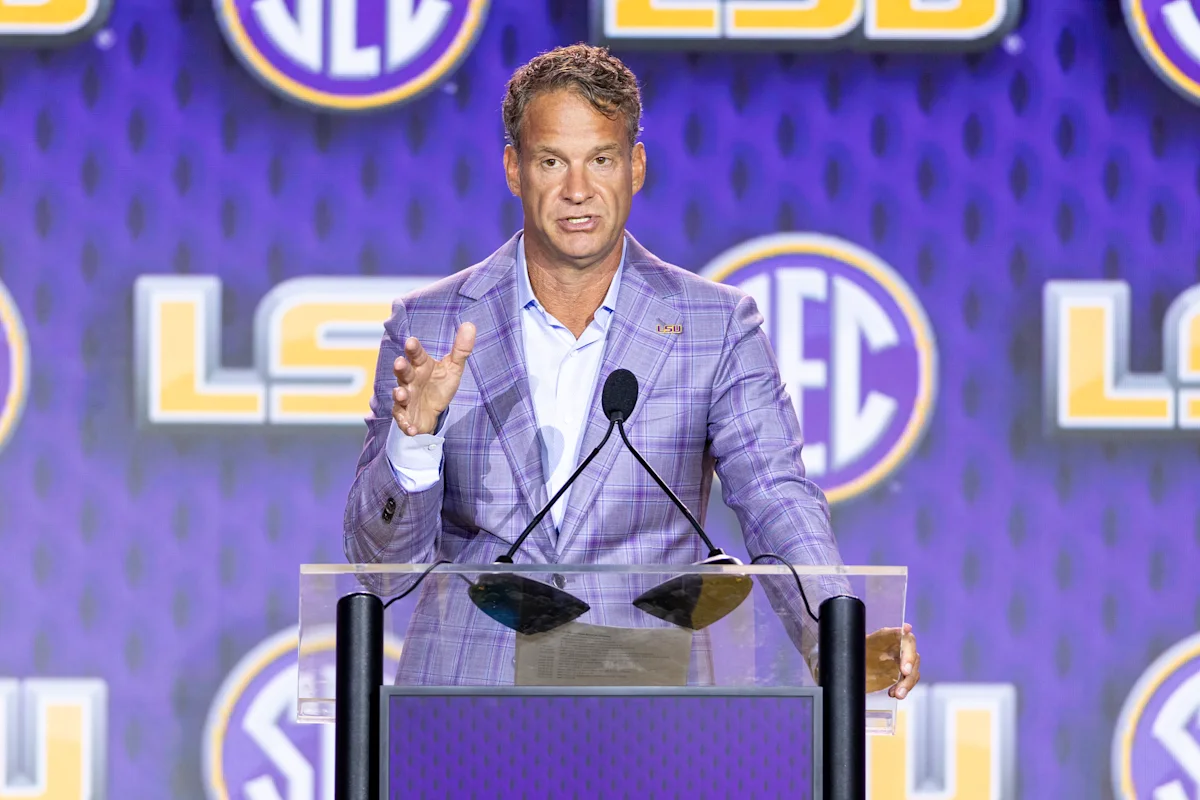
Right now, Lane Kiffin and LSU are doing this dance, apparently allowing a couple players to join the Tigers roster with a kind of mock-shrug — Hey, we didn't try to do this, but we're just following the court's orders . And the rest of the SEC is rightfully furious; Yahoo Sports' Ross Dellenger notes that 15 schools are opposed to the idea . (Keep in mind: the SEC has 16 member institutions.)
The issue here isn't really whether these particular players are added to this particular roster. (The players they might displace have a definite beef, but that's very much a locker room issue.) The point here is 1) a court is telling a league who is and isn't eligible and 2) THIS DEFIES COMMON SENSE!
As we saw with NIL, when outside institutions start taking a hard look at the way colleges do business, the entire superstructure is in real danger of collapse. The games would continue, the band would keep playing, but the idea that college football could devolve and dissolve into a collection of disconnected leagues, much like minor-league baseball, isn't as far-fetched as you might think.
You can trace all of the "How-did-we-get-to-the-point-wheres" to the tsunami of revenue rolling into the sport, money that effectively obliterates decades of tradition. Every time Money and Tradition collide, Money wins in a five-touchdown rout. And in the stands, plenty of fans, broadcasters and university officials who were once wearing Tradition jerseys have happily changed into Money ones now that they've seen how the game is going.
But nobody roots for Money. Nobody roots for new broadcast agreements, or for escalating coaching salaries, or congressional acts "protecting" college sports. People root for their teams on the field, the competition and tradition and aura that surrounds a college football Saturday. Every single grubby money-grab, every tacky justification, every courtroom filing only tarnishes the game a little more.
There will come a point when every college football fan will decide if they've had enough — if the sport has drifted too far from its golden days to enjoy any longer. That day came for boxing and horse racing. College football may now be too big to fail, but it's definitely not too big to avoid losing its soul.
Topics in this story
Gathered from external sources. Rights to this text belong to whoever originally published it.