Pere Romeu interview: ‘La Masia is always there to save Barcelona’
With a crushing 4-0 victory over OL Lyonnes back in May, Barcelona sealed their fourth Women’s Champions League success in six years. On the domestic front t...
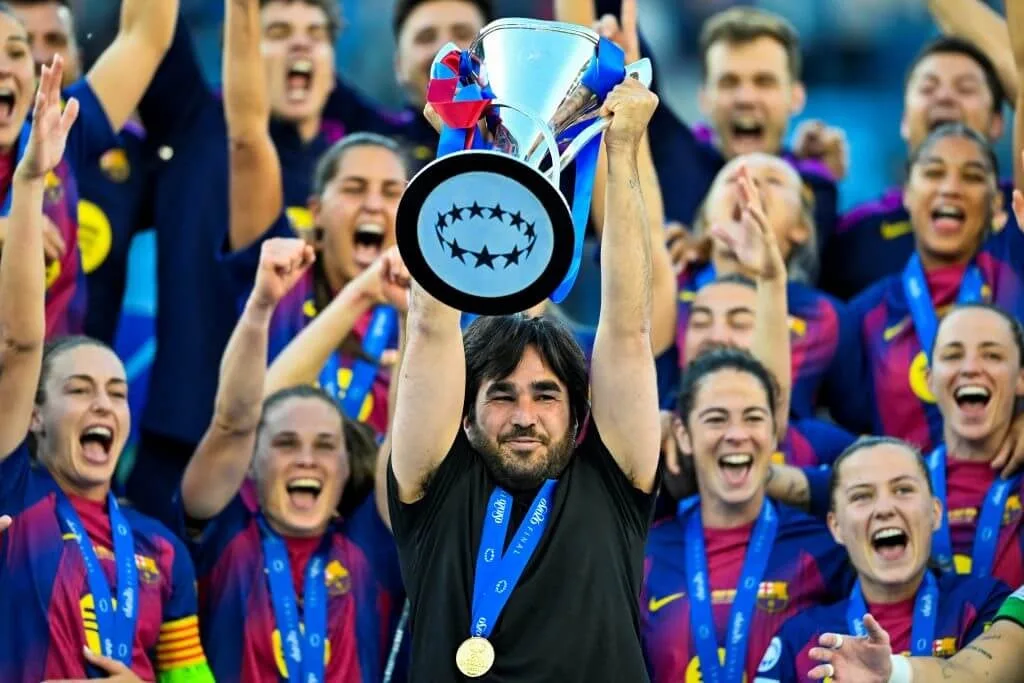
With a crushing 4-0 victory over OL Lyonnes back in May, Barcelona sealed their fourth Women's Champions League success in six years.
On the domestic front they have won seven Spanish league titles in a row, and six of the past seven Copa de la Reina trophies.
The key to it all? Pere Romeu, their manager since 2024, points to continuity — and the special local quality behind it.
Romeu, 32, grew up with an architect for a father and a landscape designer for a mother. He chose a career in football, starting at smaller local clubs before first arriving at Barca as a youth coach in the men's section in 2017, where among the players he managed was Gavi.
He joined the women's senior team as part of then-manager Jonatan Giraldez's staff in 2021, following a short spell as an assistant coach to fellow Spaniard Ruben de la Barrera at Viitorul Constanta in Romania.
Now he has put his own mark on a side that won a European treble last season — before having to move on from the departure of Alexia Putellas to London City Lionesses this summer.
"Barcelona have done what others have not," says Romeu. "First, there has been a consolidated project and the club has anticipated things. It has put good resources into youth football, trusting the academy. And we have trusted young players to make the step up to the first team."
In terms of the coaching staff, too, Barcelona have shown trust — by consistently promoting from within and building on the work of previous leaders. Romeu's appointment continued a succession that began with Fran Sanchez in 2017. Lluis Cortes replaced Sanchez in 2019, Giraldez took over from Cortes in 2021, and Romeu followed Giraldez three years later.
When it comes to the investment Romeu highlights, the turning point came after a 4-1 defeat by OL Lyonnes in the 2019 Champions League final.
On the journey home, Cortes spoke with the team's captains about what needed to change. The club subsequently doubled training sessions and provided the resources needed to compete with Europe's best. Barca won their first Champions League in 2021 before Cortes handed over to Giraldez, who added two more.
Romeu continued the cycle in the 2026 final, a year after losing to Arsenal. He remembers the difference between the structure he joined in 2021 and the one that exists today.
"When I arrived there were two fitness coaches, now there are four," he says. "There were not two goalkeeping coaches, as there are now.
"What Barcelona have done very well is build a sporting project based on a lot of talented players from the club, good signings from outside and giving people who are prepared the confidence to manage, as our staff has been given. If we look at who leads each department, there is a very high level."
People who have worked with Romeu often highlight his deep knowledge of football and his appetite for discussing the game. His challenge is to make that knowledge accessible to his players.
"It is not about knowing a lot," he says. "It is about simplifying.
"You have to select very carefully what you want to communicate at a tactical and emotional level and convey it to your team.
"We try to specialise people within each area. Now we have a coach for set pieces, a coach for individual development and a coach for post-match analysis. That makes the volume of work high, but very specific, because everyone's responsibilities are divided up very clearly."
Romeu watches football throughout the week, sometimes turning to matches involving teams unrelated to Barcelona simply to switch off. But one team changed the course of his career: Pep Guardiola's Barca (2008-2012).
"What I saw amazed me, excited me. It gave me two feelings: the feeling of a football fan thinking, 'What a wonderful thing I'm watching', and the tactical feeling of a coach. What I saw was a real turning point in my life.
"Those years made me think a lot about how I wanted my team to develop when having such a high percentage of possession. That period helped me absorb a lot of the philosophy, culture and Barca DNA that people have always talked about."
That influence shaped Romeu's ideas about possession and attacking football. But his first Champions League final as Barcelona head coach, against Arsenal in 2025, left him questioning whether his team had stayed true to those principles.
"What hurt me most was that, at no point in the final were we the recognisable team we had always been," he says. "Not doing the collective things we had been doing was something I found difficult to digest."
A year later in Oslo, Barcelona reclaimed the trophy. For Romeu, the result was a reminder that the club's ambition cannot be separated from the way it plays.
"This year I want us to be even more dominant through our high pressing, because we have a slightly different profile of players. Every season, we have to adapt to the small differences in the squad we have.
"We have brought in a defender like Renee van Asten, who has the ability to step forward and press from behind, and that can allow us to do many things. That is where my excitement as a coach lies."
With Putellas leaving the club, Romeu saw Patri Guijarro as the natural leader to connect the experienced players with the younger generation.
"Once Alexia made the decision to leave, I was very clear that continuity had to come through Patri, because she was already a central figure between the veterans, the young players and the very young players," he says.
"I break football down into two things: the emotional and the tactical. Patri does both, perfectly. Every match. That a player who has won everything gives 100 per cent in training every single day is contagious to the whole squad."
Barca's next generation is already making its presence felt. Romeu describes the transition taking place within the squad as a positive one, with experienced figures alongside younger players who bring fresh energy. The performance of 18-year-old midfielder Clara Serrajordi in the Champions League final particularly impressed him.
"I knew she would start and that she would play a fantastic match," he says. "I was absolutely clear about it because her qualities fitted the kind of final I imagined. Mentally, you have to be a beast. You have to be prepared, and I never questioned whether she was ready."
For Romeu, La Masia remains Barcelona's defining advantage.
"It is our differentiating factor," he says. "There is an enormous amount of talent here. That is what always saves you in situations when you think, 'Perhaps this season we won't manage it', and suddenly a couple of young girls appear and surprise you.
"It is part of our identity, our DNA. Anything that takes us away from that takes us away from what we are as a club. I don't know a winning Barca, either men's or women's, that doesn't draw on a sense of belonging among players who come from La Masia or have been there."
However, Romeu still recognises that other models can work, including Michele Kang's multi-club approach (she owns Washington Spirit, OL Lyonnes and London City Lionesses).
He says those models "are very different, but equally legitimate".
"There is no one way that is better than another," he adds. "Both are valid.
"But here, given the type of club we are, we have to lean more towards the way we are doing things, and we will continue to be competitive in this way. The ambition is to fight for everything."
Editor's note: This interview took place a week before Barcelona requested an extension from FIFA in order to compete in the upcoming Women's Champions Cup because they do not comply with the world governing body's new regulations over female members of staff.
Barcelona, La Liga, Women's Soccer, Women's Champions League
Topics in this story
Gathered from external sources. Rights to this text belong to whoever originally published it.