Football Extra newsletter: Is there a looming problem for the Premier League?
How have Premier League spending rules influenced teams' behaviour this summer – and what do they mean for future competitive balance?
A curse of modern fandom is being required to understand the latest acronym that will dictate which way the wind blows your team for the foreseeable.
If you're outside the UK and would like to receive the Football Extra newsletter, head this way to sign up .
An awareness of these various mechanisms, like Uefa's Football Earnings guidelines, or the Premier League's Squad Cost Ratio (which replaced the Profit and Sustainability Rules this season), is of greater importance to some fanbases than others. Those who follow one of the 'big six' probably have to think about them a whole let less than supporters of a side like Aston Villa , Newcastle , Brighton or any of the other challenger teams seeking to gatecrash the elite.
The aim of this piece is not to describe what the rules now are – for a clear explanation on that, you can go here – but to analyse the impact of such regulations; how have they influenced teams' behaviour this summer – and what do they mean for the future competitive balance of the Premier League?
Villa Park provides the best case study in that at present. Unai Emery's side have performed miracles during the Spaniard's reign, qualifying for the Champions League twice, winning a European trophy and securing a top-seven league finish in each of his four full seasons.
"It's very hard to say they haven't done pretty much everything right from an execution perspective on the football side," Stefan Borson, football finance expert and head of sport at law firm McCarthy Denning, told BBC Sport. "I mean, somehow last season they even managed to qualify for the Champions League in two different routes. That's just unbelievable."
Yet for the past two summers the Villans have been operating under penalty from Uefa, having fallen foul of the European governing body's financial regulations during the 2024-25 season in which they returned to the Champions League.
As part of a settlement for breaching these cost controls, Villa agreed to reduce their spending fairly aggressively over a period of three years, to fall in line with Uefa's mandatory 70% squad cost limit. This means clubs in continental competition must not exceed spending that percentage of revenue on wages, transfers, and agent fees – much stricter than the 85% now permitted under the new Premier League rules.
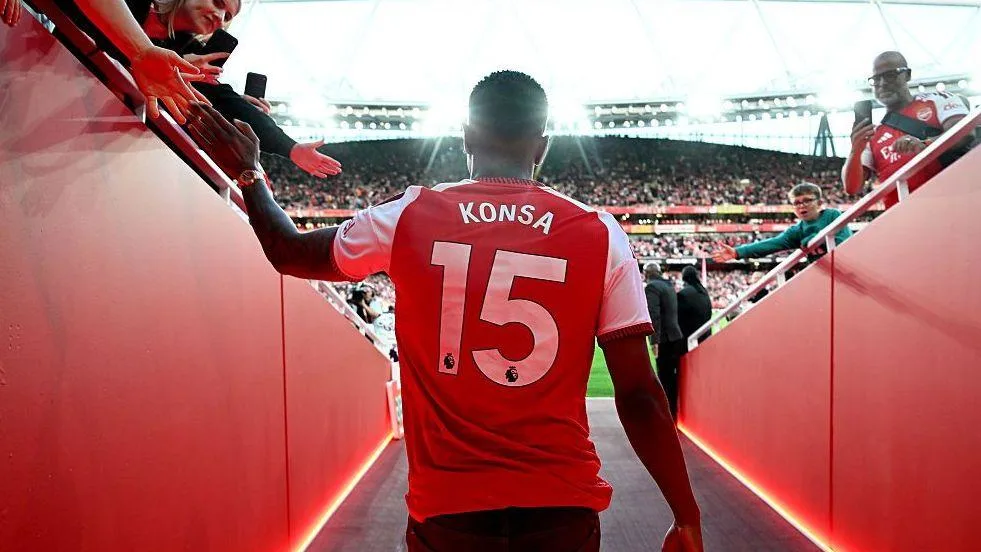
Villa's business during this summer's window reflects how sharply that settlement continues to impact with several first-team players, including Ezri Konsa (to Arsenal ) and Morgan Rogers (to Chelsea ), departing for big fees. Meanwhile, Newcastle, Nottingham Forest and Chelsea have all received varying degrees of the same punishment for similar recent breaches.
But with the big six making more money than ever, supporters of aspiring clubs have questioned whether the convergence of European and domestic spending rules threatens to widen the chasm between the top earners and the chasing pack.
"It will compound that gap over time, largely because of the Champions League," Borson explained.
"Qualifying for that now is worth, let's say, £70million to £100m on average. If you can get that every year, that's such a massive advantage in terms of revenue and profit compared to the other teams, even after all the costs you incur from it.
"Villa have done it twice out of three years, which is an amazing achievement given their wage bill, but they did it by having to take the view that they would just breach Uefa's football earnings and SCR test. And because they've now breached that, then they have to restrict their spending. And so, to some extent, they're back to square one."
But if the only way to close the gap is to consistently qualify for the Champions League what choice is there but to spend, when the consequences of not qualifying for continental competition are so severe?
"Missing out on European football – particularly the Champions League now – is almost like a mini relegation," Borson added.
But there is another side of this debate. For every team in the restless middle class of the English top flight frustrated by the current regulatory landscape, there are others for whom this well-intended push for sustainability has come too late.
Teams like Bury, Macclesfield, Sheffield Wednesday – even Everton , who at one point seemed dangerously close to becoming the first top-flight team to enter administration since Portsmouth – have shown the clear need for some level of regulation, to protect clubs from themselves more than anything.
It is a "balancing act", said Dr Christina Philippou, an expert in sport finance at the University of Portsmouth, trying to facilitate ambition while "mitigating against your club disappearing forever".
"That [the club's existence being threatened] is a distinct possibility if it goes terribly," she continued. "The problem is ultimately ambition trumps everything until the unthinkable happens and then it's terrible. That's why the rules were introduced in the first place.
"But there have been so many tweaks over the years because every rule has side effect. It's like medicine. You take something for one thing, but it has a side effect. And for an illness that is really serious, people might take one set of medication to treat their disease and then another set to treat the side effects of their main medication. Tweaking the financial rules is very much like that.
"I don't think we've got to the perfect place yet. And I'm sure we will see more changes to the rules in the years to come."
In the meantime, those who want to bridge the gap are faced with the increasingly sobering reality that it just might not be possible.
"A team like Newcastle will generate a revenue of around £350m in the current season – £300m-£400m less revenue than the top Premier League teams in the Champions League," said Borson, "that means with the Premier League's 85% SCR limit, they may have a squad cost budget of £250m-£300m less than rivals.
"There is no one system that can cater for all clubs' particular preferences."
That cold, hard reality is one that supporters outside the big six are already coming to terms with – and one that, at least for now, means trends of the past few summers are likely to continue.
Carlos Baleba 's move from Brighton to Manchester United yesterday took spending from the big six on non-big six players to around £680m this summer, already eclipsing last year's figure. In total over the past two years, 25 players have left their clubs to join one of the elite half dozen compared to 37 in the eight seasons prior, marking a clear acceleration of this trend.
Within that context, it seems unlikely that challenger teams will ever be able to bridge the gap to their established rivals. To do so would mean sustaining their on-pitch success in defiance of teams with bigger resources, while selling their best players on to those same teams on almost annual basis.
Change may not be forthcoming though, as Philippou explained, it may be in the game's best interests to begin considering it.
"Competitive balance is really important to the health of the league long term," she said. "At some point people will wake up to that from a regulatory perspective and try to fix that side of things rather than just going 'well, it doesn't really matter'. Because it does matter for all clubs long term to have a healthy competition."
That points to an uncomfortable truth that underpins the whole debate: the rules exist to stop clubs destroying themselves, not to stop the strong getting stronger. Villa's punishment and Newcastle's revenue ceiling are proof the system works as designed – just perhaps not in the direction anyone outside the big six was hoping for.
Whether that's a problem regulators are willing to address may end up being the defining issue of the modern Premier League era.
Topics in this story
Gathered from external sources. Rights to this text belong to whoever originally published it.