Why did Dak Prescott question the Cowboys’ goal-line approach? QB delivers a pointed message after 34-31 loss
Dak Prescott had a simple answer after the Dallas Cowboys let a win slip away against the Baltimore Ravens in Week 3.
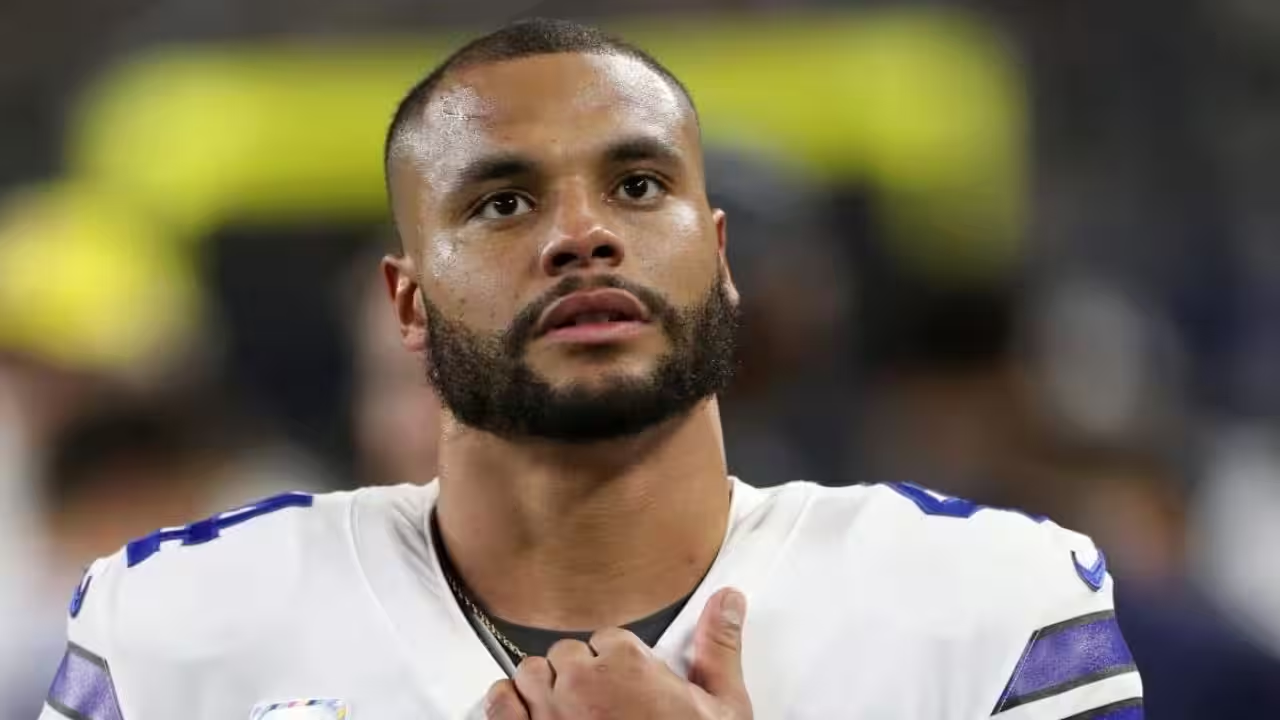
Dak Prescott had a simple answer after the Dallas Cowboys let a win slip away against the Baltimore Ravens in Week 3. With Dallas inside the 2-yard line late in the game, the offense could not finish the drive with a touchdown. Prescott later made his view clear: the Cowboys needed to run the ball when they got that close.The decision became a major talking point after Dallas lost 34-31 in Rio de Janeiro. Brian Schottenheimer also accepted responsibility for one of the key calls, admitting he “over-coached” Prescott on the final drive.Dak Prescott wanted Dallas to finish the drive on the groundThe Cowboys had another chance to take control after a pass interference penalty moved the ball to the Ravens’ 2-yard line with 23 seconds left. Dallas still had a timeout and needed only a touchdown to take the lead.Instead, Prescott threw incomplete to George Pickens on first down. A false start by Luke Schoonmaker then pushed Dallas back to the 7-yard line. Prescott gained two yards on a scramble, and the Cowboys called timeout with 14 seconds remaining.That sequence prompted The Athletic’s Jon Machota to ask Prescott why Dallas had not run the ball near the goal line on the opening drive and again during the final possession.“Run the ball when we get down there,” Prescott said in the postgame exchange.Machota then asked if Prescott agreed with the game plan. The Cowboys quarterback replied, “Yeah, I do. We need to run the ball. Yeah. Good question.”His comments carried extra weight because Dallas had found success on the ground. The Cowboys finished with 148 rushing yards, while Javonte Williams ran for 98 yards on 19 carries.Still, Prescott did not place the entire final-drive failure on Schottenheimer. On third-and-goal from the 5, Pickens broke open near the pylon, but Prescott threw the ball away. After the game, Prescott acknowledged that he should have waited longer.“I probably should’ve just sat on it a little bit longer,” Prescott said after the Ravens game. “Sank on my back foot and just put it on that front pylon.” Brian Schottenheimer admitted he overcoached Dak PrescottSchottenheimer gave his own explanation after the loss. Speaking to reporters after the game, the Cowboys coach said the plan called for a quick out to Pickens. If Pickens was not open, Prescott had instructions to throw the ball away.“I probably over-coached Dak on that one,” Schottenheimer said after the game. “That’s on me. I over-coached him.”Schottenheimer also acknowledged that Dallas needed better play-calling around the goal line.“We’ve got to find a way to punch it in,” he said after the Ravens loss. “I’ve got to call some better plays to get it in.”The Cowboys eventually settled for Brandon Aubrey’s 23-yard field goal with seven seconds left. That tied the game at 31, but it gave Baltimore another chance.The Ravens used those seven seconds perfectly. Lamar Jackson connected with Zay Flowers for 27 yards, and Baltimore called timeout with one second remaining. Tyler Loop then hit a 56-yard field goal as time expired to seal the 34-31 victory.Prescott finished 25-of-40 for 276 yards and one touchdown without an interception. But the quarterback’s postgame message focused on the same problem: Dallas reached the goal line and failed to finish.The Cowboys fell to 1-2, and their next test comes against the Houston Texans in Week 4. After the Ravens loss, Prescott and Schottenheimer left the same issue hanging over the offense: when Dallas gets that close again, the Cowboys need to find a way to turn the opportunity into seven points.Stay updated with the latest Asian Games 2026 news, check the Asian Games medal tally and complete Asian Games schedule.Get the latest Sports News and Live updates. Download the TOI app.
Topics in this story
Gathered from external sources. Rights to this text belong to whoever originally published it.