Travis Kelce and Jason Kelce's $200 million Garage Beer has one bizarre secret behind its marketing success
Garage Beer is taking an unconventional route to win over beer drinkers, and Jason Kelce is right at the centre of its strategy.
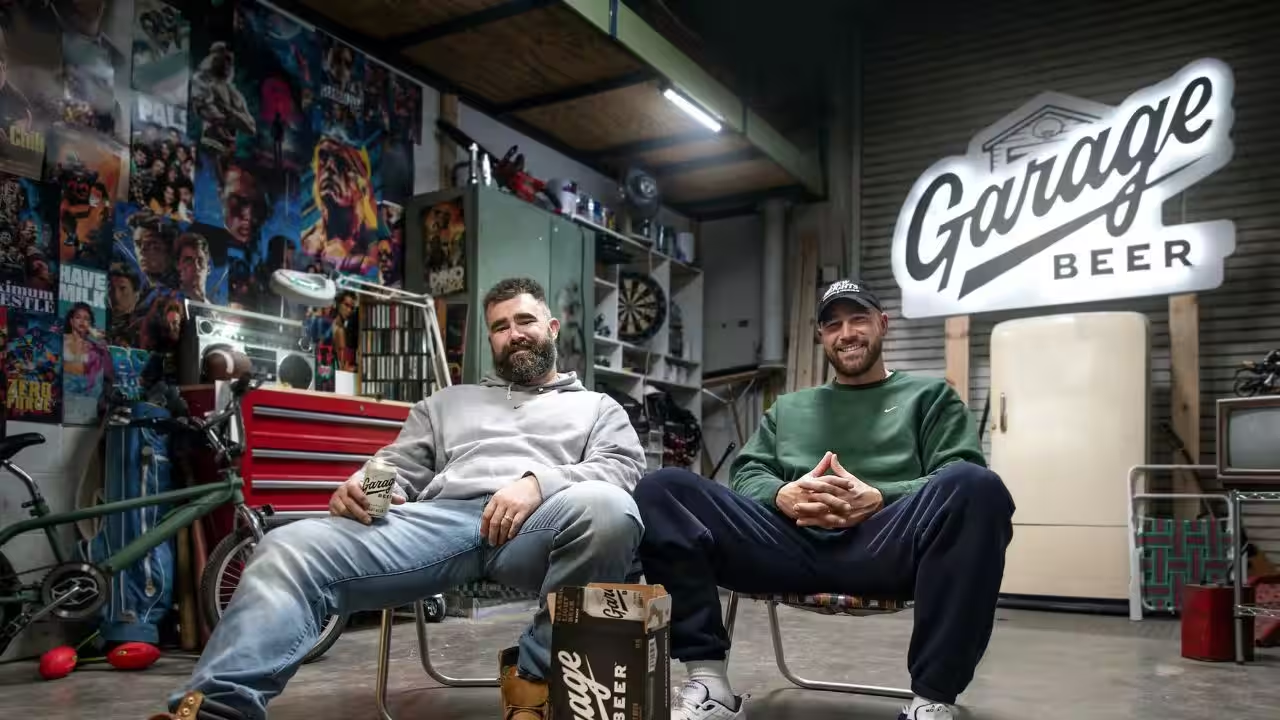
Garage Beer is taking an unconventional route to win over beer drinkers, and Jason Kelce is right at the centre of its strategy. Rather than compete with major brewing companies through expensive advertising, the independent brand is turning ridiculous jokes, unexpected stunts and genuine fan connections into its biggest marketing assets. In March 2026, the company is showing how a distinctive personality can help a smaller business capture attention. Its approach is simple: entertain people first, build a community around the experience and let the brand become part of the conversation.Garage Beer uses Jason Kelce and absurd humour to challenge bigger brandsGarage Beer's latest marketing push arrived ahead of March Madness, with college basketball commentator and lawyer Jay Bilas taking on the fictional role of its 'Attorney at Lager'. The campaign pokes fun at local law firm advertisements, complete with a video commercial and a hotline where fans can leave messages. The brand also introduced a sweepstakes offering a $5,000 TickPick gift card.However, the campaign reflects a much bigger creative strategy. Garage Beer has built its identity around humour that established competitors might hesitate to embrace. Its regional Super Bowl advertisement offered a memorable example, with co-owner Jason Kelce putting horse manure on his face while parodying Budweiser's famous Clydesdale commercials.Chief Creative Officer Corey Smale believes this unconventional approach gives the company an advantage.“Dumb is hard to replicate,” said Garage Beer Chief Creative Officer Corey Smale. “The authenticity that the brand has put out there over the last few years is uniquely ours. We have to stay committed to that.”The company has also introduced a weekly Instagram series called 'Thank Garage It's Friday'. Featuring fictional laboratory experiments, bizarre inventions and mock press conferences, the videos aim to give audiences something entertaining amid the endless stream of social media content.Garage Beer's response to its Super Bowl advertisement also revealed how quickly it can adapt. Although the team expected its toilet humour to attract attention, viewers became more interested in the miniature horse featured in the commercial. The brand responded with merchandise, stickers and a farm experience sweepstakes centred on the animal.Garage Beer builds customer loyalty through community and creativityBeyond social media, Garage Beer is investing in physical merchandise and experiences that bring its online community closer to the brand. Its products are now available across all 50 states, giving the company a wider platform for future launches.Smale also revealed that the brand relies on a small in-house creative team rather than traditional advertising agencies. It has created a private Instagram group for around 5,000 dedicated followers, allowing the company to test ideas and gather reactions before wider releases.One unusual example involved a loyal customer who repeatedly posted about the brand and jokingly asked Garage Beer to buy him a house. Smale sent him $500 through Venmo, and the follower later shared photographs of his new home.The gesture captures the unusual relationship Garage Beer wants with its customers. Instead of treating fans as just another audience, the company wants them to become active supporters who help shape its identity.As the March 2026 campaign demonstrates, Garage Beer is betting that personality, humour and genuine community connections can compete with advertising budgets that smaller brands simply cannot match.Get the latest Sports News and Live updates. Download the TOI app.
Topics in this story
Gathered from external sources. Rights to this text belong to whoever originally published it.