Saquon Barkley’s Polymarket stake hits an NFL rulebook wall as Eagles star faces an unexpected business setback
Saquon Barkley has built a quiet investment portfolio away from football, and one piece of it had to go.
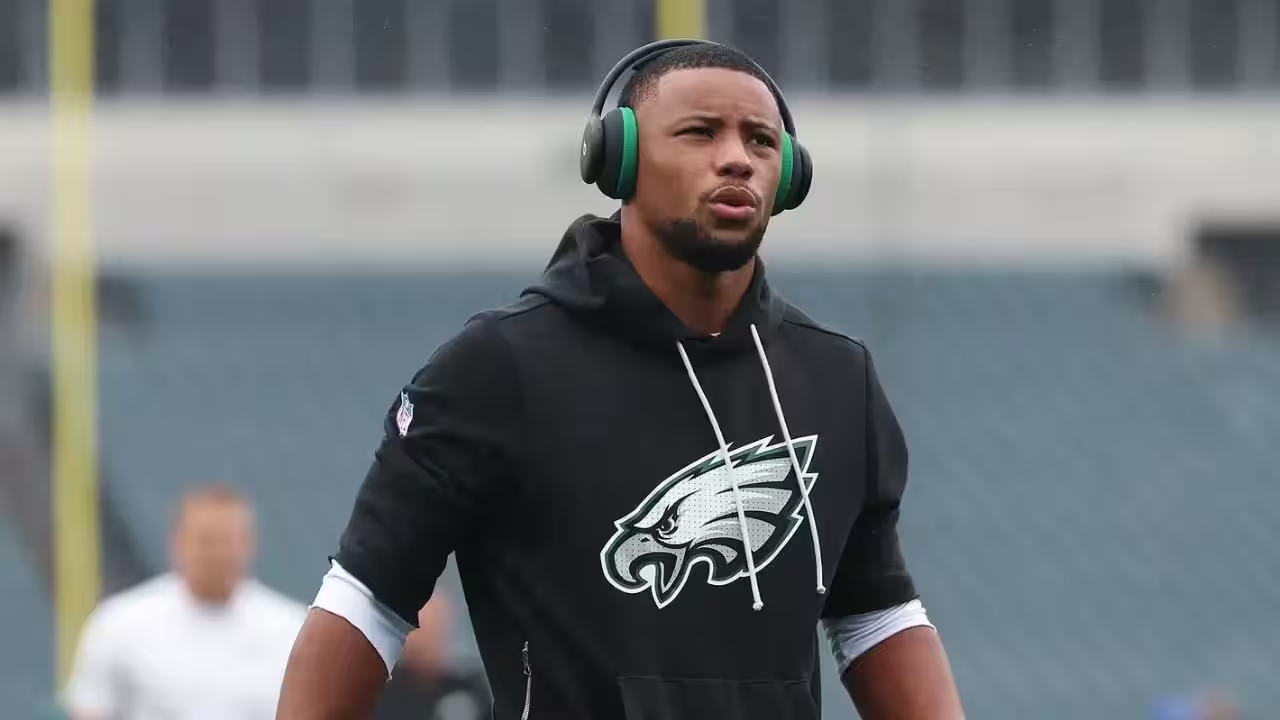
Saquon Barkley has built a quiet investment portfolio away from football, and one piece of it had to go. The Philadelphia Eagles running back held a stake in Polymarket, the prediction-market company, until NFL rules forced him out. Front Office Sports reported that players cannot own shares in these companies. Barkley confirmed it himself. The league treats prediction markets much like sports betting, even though Polymarket and Kalshi work differently from a regular sportsbook. This was not a bad bet gone wrong. The league simply said no.Saquon Barkley had to give up his Polymarket stakeBarkley told Front Office Sports that the NFL goes over changes to endorsements, investments and other business matters with players before each season. That is where the prediction-market rule came up.“I am not in that right now,” Barkley told Front Office Sports. “I am not allowed to be in that.”He had already put money in by then. Once the league’s position was clear, Barkley said, “So I kinda had to get out of that.”The league has told players, coaches and staff that trading on sports prediction markets breaks its gambling policy. NFL spokesman Brian McCarthy also told NBC Sports earlier this year that players can’t hold a stake in the companies either. How much Barkley put in, or what the stake was worth when he sold, hasn’t been made public. So the size of the hit is unknown.The NFL and NBA are on different pagesGiannis Antetokounmpo became an investor in Kalshi earlier this year. Barkley couldn’t do the same. McCarthy was blunt when NBC Sports asked about it in February.“NFL players may not own a stake,” McCarthy said.The NBA went the other way. It recently named Polymarket and Kalshi preferred prediction-market partners. The NFL has kept both at arm’s length and has questioned how the markets are regulated, including whether users get the same protections that come with legal sportsbooks.For athletes, that gap is now a real business issue. Two stars in two leagues can look at the same company and get opposite answers. A player who wants equity deals has to check his own league’s rules first, and those rules can change from one season to the next.A portfolio that stretches well past footballPolymarket was far from his only play. Before Super Bowl LIX, Barkley invested in financial technology company Ramp and appeared in its commercial. He asked to come in as an investor rather than just a paid face. TechCrunch reported at the time that it was his largest private technology investment to that point, and he had already backed fintech startup Sequin and beverage company X2 Performance.The list has grown. Barkley has also put money into Anthropic, Anduril, Neuralink, Cognition and Strike, along with funds and real estate. He has said he wants equity, not only an endorsement check.That approach makes sense for a running back. Careers at his position can change fast, and ownership pays out long after the last carry. Other NFL names are moving the same way. Drake Maye and Dak Prescott recently became athlete-owners in Athletic Brewing Company.Losing Polymarket won’t change how Barkley does business. It does show how narrow the lane is for NFL players who want a piece of the companies around them.Get the latest Sports News and Live updates. Download the TOI app.
Topics in this story
Gathered from external sources. Rights to this text belong to whoever originally published it.