Commanders Share New Photo Renderings of Stadium Scheduled to Open for 2030 NFL Season
The Washington Commanders are giving fans a new look at what seating will look like in the team's proposed new stadium.
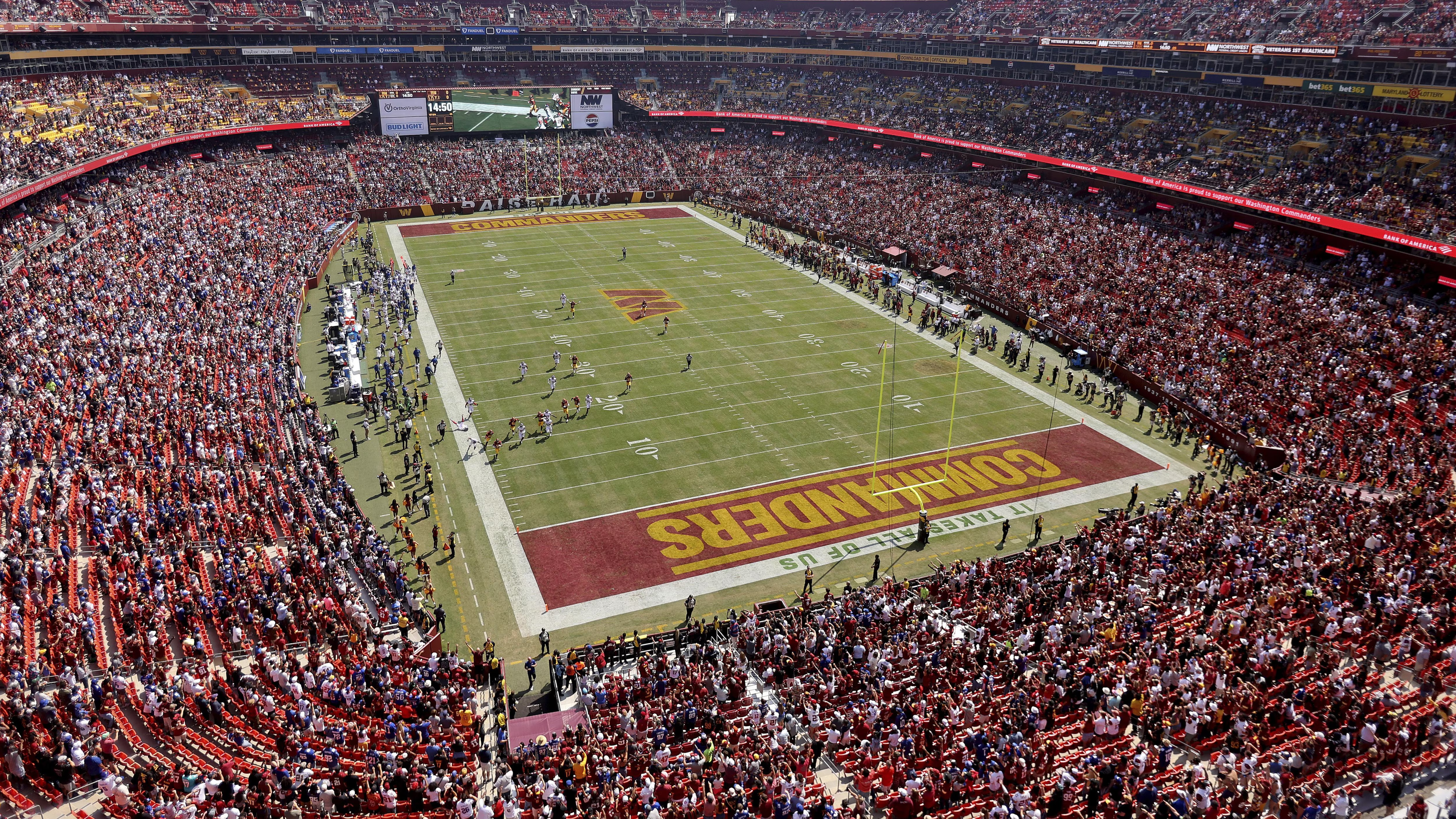
The Washington Commanders are giving fans a new look at what seating will look like in the team's proposed new stadium.
The Commanders and architecture first HKS released new renderings Wednesday of the seated bowl of the new stadium.
The Commanders previously announced their intention to build a new venue on the site of the now-demolished RFK Stadium, where the team played from 1961 to 1996.
The team has played since 1997 at what is now known as Northwest Stadium, which features some seats from which views of the field are obstructed.
The Commanders said in Wednesday's release the new seating bowl will be designed "in one continuous sweep from field level to the upper deck" in an effort to cut down on seats with restricted views.
"There are no stacked premium levels and minimal overhangs blocking sightlines or absorbing crowd noise," the Commanders said.
The new seating bowl also features a section of "affordable" seating in what the Commanders are describing as their Wall of Fans.
The Commanders claimed the new venue will become "one of the loudest stadiums in the NFL" because of acoustics from the angle of the bowl seats combined with the design of the roof.
Previous stadium renderings released by the Commanders and HKS showed a glass roof curved in the shape of a saddle over the field.
The Athletic's Nicki Jhabvala reported the Commanders will be covering the roof with a cable net rather than rafters in order to create a more transparent view.
The Commanders are set to contribute $2.7 billion to the stadium project, which is also being funded with $1.1 billion in taxpayer money.
The campus on which the proposed stadium will be built is part of a mixed-use 180-acre area that D.C. officials have said will also include commercial space, parks and at least 5,000 housing units.
Topics in this story
Gathered from external sources. Rights to this text belong to whoever originally published it.