Top owner Mike Repole sounds off on issues with horse racing leadership
As one of horse racing's most prominent and successful owners, Mike Repole isn't shy about sharing his opinions and gripes about the sport he loves.
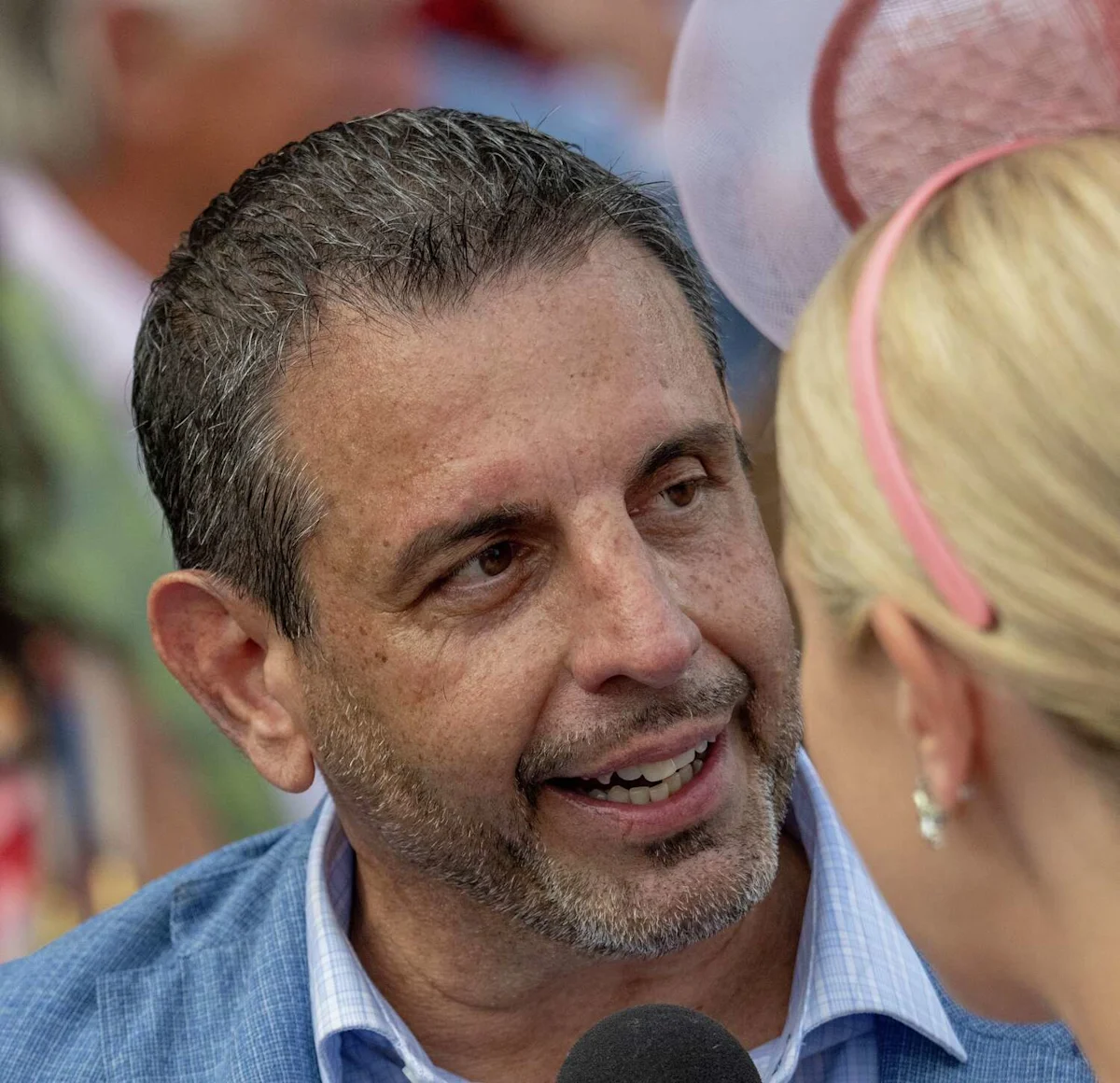
SARATOGA SPRINGS - Mike Repole isn't one to let his soapbox go to waste.
As one of horse racing's most prominent and successful owners, Repole, a 57-year-old Queens native who made his fortune (an estimated $2.5 billion, according to Forbes) in the food and beverage industry, isn't shy about sharing his opinions - especially about the state of the sport he loves.
Because as committed as he is to the sport, Repole - the self-proclaimed "commissioner" of horse racing - has serious concerns about where the thoroughbred game is headed.
He addressed them in an interview with the Times Union at Saratoga Race Course this past Friday, the day before Renegade, whom he co-owns with Robert and Lawana Low, raced to an eighth-place finish in the Travers Stakes .
"If things don't change," Repole said, "I think in 10 years the sport's in serious, serious trouble."
Considering that, when Repole sees an issue he feels needs to be addressed, he's not shy about raising his voice or who his opinions might offend.
"I think that there aren't enough vocal people in this sport," he said, "and I think that there's things that, for some reason, people are afraid to say about the sport."
What Repole, who also serves as a co-owner and director of business operations for the United Football League, wants is for the varying track operators, racing regulators and national organizations to come together in some centralized form, with a figurehead in place to oversee it.
"This is a sport that it's probably the only big sport that doesn't have a commissioner - other than myself, by the way," he said. "I think that if there was more infrastructure and a little bit more of the of the big entities that that affect the sport working together - whether it was NYRA and Churchill (Downs), whether it was the breeding farms, whether it was the Jockey Club, whether it was the bigger owners and the bigger trainers - and really look at the sport in its totality, I think it'd be better."
What Repole isn't a fan of is the Horseracing Integrity and Safety Authority. The organization, empowered by an act of Congress, regulates racing in around two dozen states with a focus on racetrack safety and anti-doping and medication rules.
Repole said that he's "not a fan of government or federal involvement." Horse racing is, in his words, "a very hard sport to police," and HISA "really needs an overhaul and change in order for it to work."
"The safety of the sport should have been a priority for the last 120 years," he said. "Knowing what you know, that you couldn't come up with a solution internally to make the sport safer, cleaner, and better for everyone involved, and most importantly, the horse, that's the shame."
In a statement to the Times Union, a HISA spokesperson said: "We agree (the sport is hard to police), which is exactly why a fragmented, state-by-state regulatory system was not sufficient. HISA was created following a bipartisan act of Congress, signed into law by President Trump, to establish national standards and consistent oversight for a sport that previously operated under a patchwork of different rules and enforcement practices.
"HISA is not static, and we will continue to improve and evolve our programs based on data, science and input from those who work in the sport. But returning to the fragmented system that preceded HISA would not make racing safer, fairer or easier to regulate. The answer to the challenges of regulating this sport is to continue strengthening consistent, nationwide standards - not to abandon them."
Repole's gripes with HISA came into full focus recently with numerous posts on social media criticizing the organization and its handling of a scandal involving Marshall Gramm, an owner and prominent horseplayer. Gramm recently agreed to a provisional suspension banning him from ownership and racetrack activities after he was charged with violating HISA rules for allegedly accessing confidential veterinary treatment records through HISA's informational portal.
Repole isn't the only one raising his voice about HISA. On the same day he spoke with the Times Union, Churchill Downs Incorporated CEO Bill Carstanjen sent a letter to the Federal Trade Commission to "express serious concern" about HISA's "significant questions about the governance, transparency, technology controls, and accountability."
Horse Racing Nation obtained and published the letter, which cited both the recent "Fair Hill Five" betting coup scandal involving races at Saratoga and Monmouth Park, as well as the Gramm controversy, and requested that the FTC initiate an independent review of HISA's handling of the matters.
Among those copied on the letter was U.S. Rep. Paul Tonko, the Amsterdam Democrat and lead sponsor of the legislation that empowered HISA.
HISA isn't the only target of Repole's barbs. The Jockey Club, which has been one of the most powerful organizations in American thoroughbred racing for more than 130 years, is also in his crosshairs.
"To me, it's a failure by the Jockey Club, but more importantly, I think it was to their benefit to put (HISA) on," Repole said. "Remember, they're the ones that pushed for HISA. They're the ones that wrote the bylaws, and they're the ones that still have data with them and share data with them. I think they're as responsible for what's going on as HISA."
In a statement to the Times Union, a spokesperson for The Jockey Club, "The Jockey Club was an early supporter of federal legislation to establish national integrity and safety standards for horse racing," noting that it was one of several entities that had "substantive input into the final bill language," including the Breeders' Cup, Churchill Downs, National Thoroughbred Racing Association, United States Anti-Doping Agency, American Association of Equine Practitioners and Humane Society of the United States.
The statement continued, "Supporting the creation of HISA is not the same as controlling HISA. HISA was deliberately established as an independent organization in accordance with the Horseracing Integrity and Safety Act of 2020 and is responsible for its own operations, regulatory decisions, technology, software, and security. Neither The Jockey Club nor its affiliated companies designed, developed, tested, secured, or maintained the HISA Portal or HISA's internal technology systems. The Jockey Club also has no role in setting, reviewing, or testing HISA's controls over data provided to it."
Along with his problems with the way the sport is overseen, Repole is concerned about the sport's declining foal crop and that smaller breeders, owners and horseplayers may be pushed out of what he perceives as a top-heavy environment.
"I was a small owner before I became a big owner," he said. "I was a small horse player before I became a big horse player, and I think it would be a shame if the game shut them out. And I would be really concerned about the future of the game if the smaller players can't play.
He's concerned that horse racing "had a 100-year head start on gambling, and we wasted it," and that even though he wants a younger generation to become invested in the sport, he's not sure that it's a product ready to be marketed to that audience.
The marketing guru wants to see the sport's internal issues fixed first.
"One of the biggest bonds I have with my daughter is horse racing," Repole said. "She's 11 years old. When she's 51 in 40 years, I want to make sure she takes her kids here. I'm definitely concerned about the future of the sport."
Topics in this story
Gathered from external sources. Rights to this text belong to whoever originally published it.