Roger Federer’s $100 million-plus education mission has reached 3.82 million children, revealing a different side of the tennis legend
By the end of 2025, the foundation Roger Federer started in 2003 had reached 3.82 million children, supported 72,076 teachers and strengthened 18,445
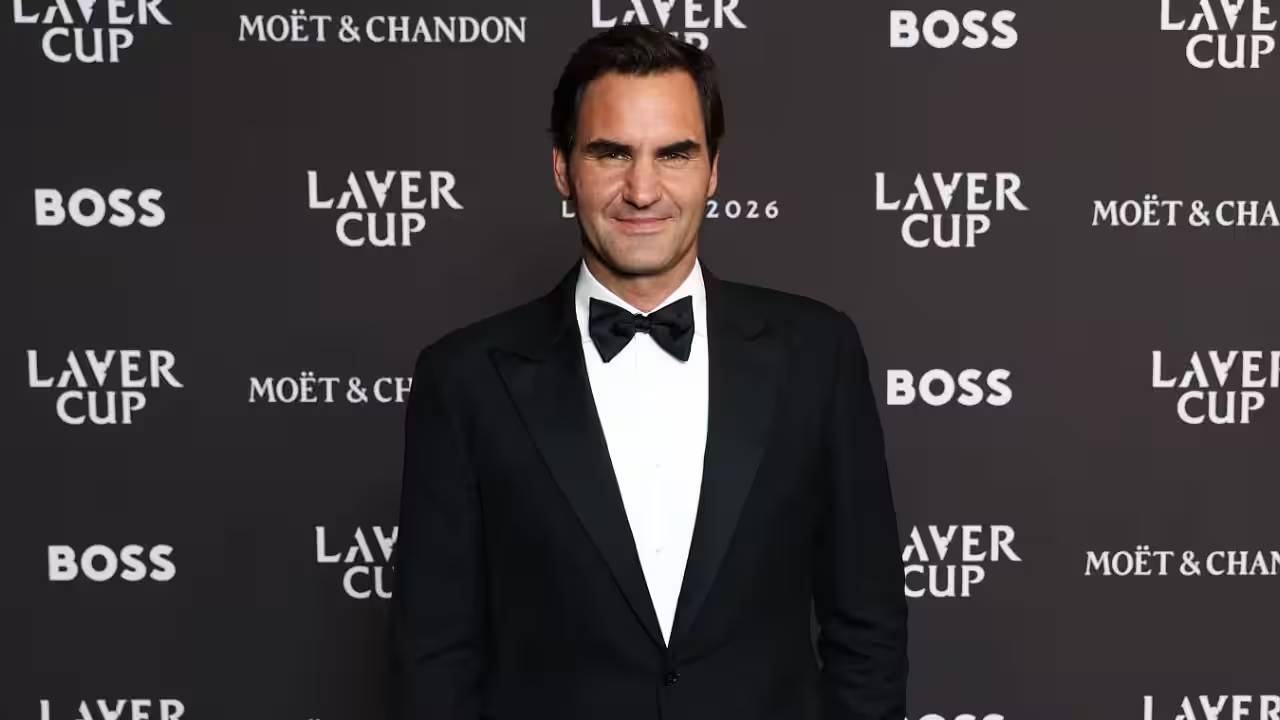
By the end of 2025, the foundation Roger Federer started in 2003 had reached 3.82 million children, supported 72,076 teachers and strengthened 18,445 educational institutions. It has put more than 100 million Swiss francs into projects over two decades. Federer retired from tennis in 2022, but the work kept growing. Here is how the numbers built up, what the money pays for, and why this quiet project may say more about him than any trophy count.How Roger Federer's education mission reached 3.82 million childrenThe climb was not a single leap. In 2012, the foundation spent over $3 million a year and reported more than 50,000 children helped. By 2018 it had set a goal of one million children. Federer later admitted it sounded almost out of reach. By May 2023 the count stood at 2.5 million. In July 2024, when the foundation won the Prize for a Better Tomorrow presented by Rolex, nearly 2.9 million children had benefited.Then came the jump. The end-of-2025 total means roughly 920,000 children were added in about eighteen months. That is close to a quarter of everything counted since 2003. My reading is that earlier projects, like the push in Lesotho that began in 2020, finally reached scale. The foundation says each child is counted only once, so the total is not padded by repeat enrolments.The other figures point the same way. Over 72,000 teachers now have training behind them. More than 18,000 schools and preschools have been strengthened. The 100 million franc figure clears $100 million in dollar terms, which is where the headline number comes from.What the money actually buysFederer's foundation does not build stadiums or hand out cash. It focuses on children aged 3 to 8, in Southern Africa and Switzerland. Those are the years when a child either gets ready for school or starts falling behind. Programmes run in six African countries: Lesotho, Malawi, Namibia, Zambia, Zimbabwe and South Africa. In Switzerland, it also backs disadvantaged children outside the classroom.It does not run schools itself. Local organisations carry out the work, and the foundation picks them carefully and stays with them for years. It tracks measures that are easy to check, such as repetition rates, absences and enrolment. It also says it keeps administration costs below 10%.Lesotho shows what this looks like on the ground. The foundation started there in 2020 and aimed to reach vulnerable children in 800 preschools by 2025, with a $3 million investment. During his May 2023 visit, Federer made a point that sounds technical but matters a lot. Early education, he argued, belongs inside public primary schools, because most of it in Lesotho is still provided by the private sector.That is the real bet. The foundation is not trying to replace a government's job. It is trying to help make early learning a normal part of the public system, so the gains stay after the money moves on.Why Roger Federer chose preschools over a more glamorous causeThe foundation was inspired by his mother, Lynette, and her South African upbringing. He was 22 when he started it, still early in a career that would bring 20 Grand Slam titles. Ten years on, he visited two preschools in Limpopo with his mother. He held up his calloused racquet hand and asked the children to guess his sport.His reasoning was plain. "I always liked the idea of education," he said, because in most of the world, school is simply the normal thing to do. He had travelled enough to see families who could not take that for granted.He also kept it low key. A 2018 profile noted that many people had not heard of the foundation because Federer does not trumpet his charity work. A 2012 Guardian headline summed up the style as maximum impact with minimum spin.That restraint is the surprise for fans used to the polished side of his brand. The tennis was all about precision and economy, and the foundation follows the same logic. It works in few countries, on one age group, with steady repetition. The money is large. The publicity is not.What the new name and 2026 strategy signalIn April 2026, the Roger Federer Foundation became the Federer Foundation as it launched its 2026 to 2030 strategy. The change is subtle but telling. Dropping the first name nudges the organisation toward something that can outlast its famous founder.The leadership is already shifting. Maya Ziswiler, former head of UBS Optimus Foundation, took over as CEO from Dr Janine Händel, who joined in 2010. Robert Federer, Roger's father, left the board at the end of 2025 after 22 years, to make room for new perspectives and skills. Roger, his wife Mirka and his mother Lynette remain members.The numbers deserve one honest caveat. They are reported by the foundation itself, and reaching a child is not the same as proving that child learned more. The measures it already tracks, repetition, absences and enrolment, are the right ones to watch. The next five years will show whether they improve across those 18,445 institutions, and that is the test worth following.Stay updated with the latest Asian Games 2026 news, check the Asian Games medal tally and complete Asian Games schedule.Get the latest Sports News and Live updates. Download the TOI app.
Topics in this story
Gathered from external sources. Rights to this text belong to whoever originally published it.